

What Is Live Resin? Fresh-Frozen Cannabis Extract Explained
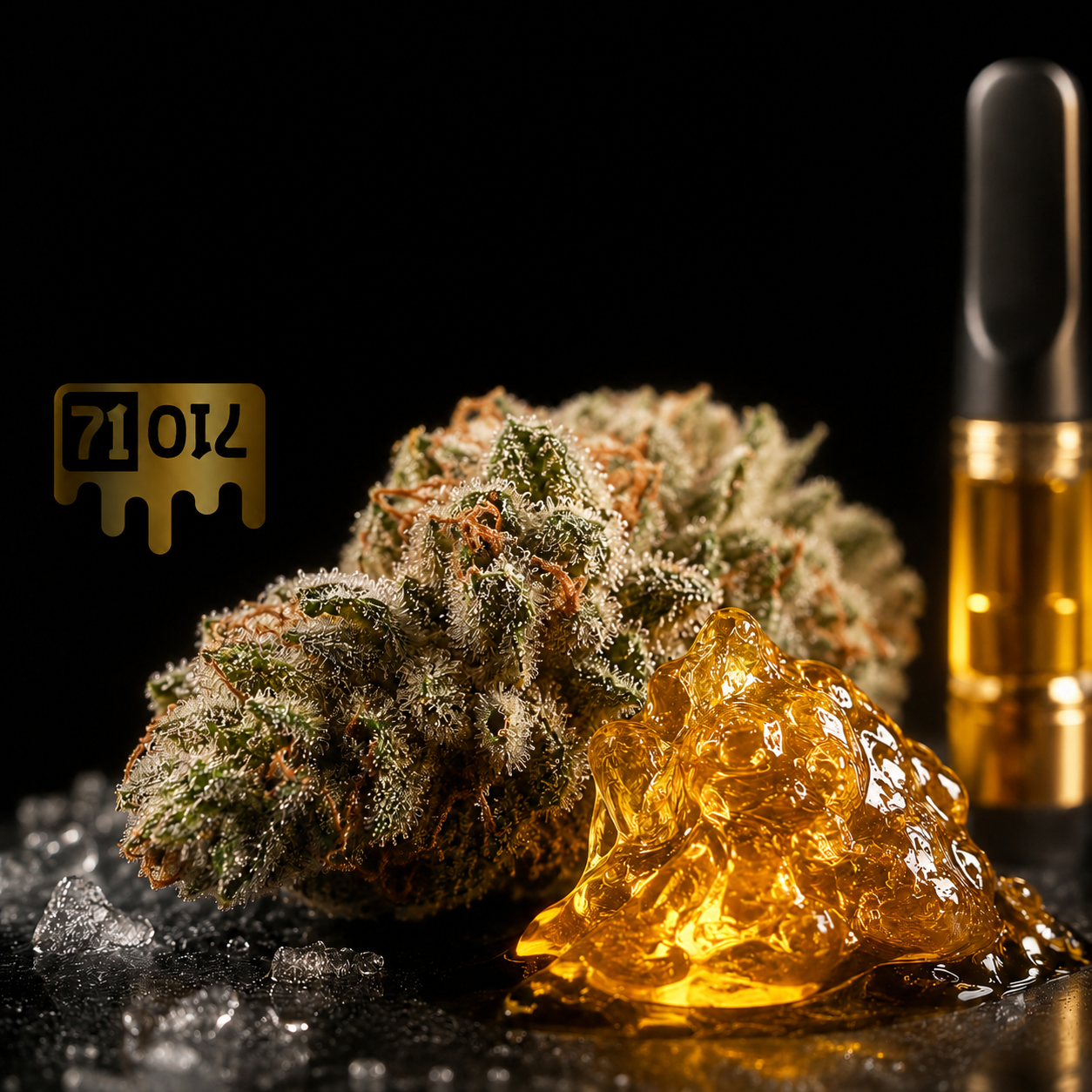
Live resin is a cannabis concentrate that uses fresh or freshly harvested cannabis frozen before conventional drying and curing, together with a generally solvent-based extraction process. The word “live” refers to the starting material and post-harvest handling—not to a separate extraction method. BC Cannabis Stores describes live resin as an extract made from fresh cannabis that is frozen before extraction.
Processors use this starting-material approach partly to limit changes to volatile aromatic compounds that can occur during drying and curing. However, the name live resin does not guarantee a specific terpene percentage, stronger flavour, greater potency, full-spectrum composition, or better quality. For the broader terminology framework, see 71 Oil’s guide to cannabis concentrates and extracts.
TL;DR: What Is Live Resin?
| Quick answer Live resin is a cannabis concentrate that generally uses fresh or freshly harvested cannabis frozen before conventional drying and curing, followed by solvent-based extraction. “Live” describes the starting material and post-harvest handling. Live resin can vary in texture, terpene content, cannabinoid levels, ingredients, and vape formulation. The name alone does not prove that one product is stronger, safer, full-spectrum, or higher quality. |
|---|
In This Guide
- What Does “Live” Mean in Live Resin?
- How Is Live Resin Made?
- Is Live Resin Solvent-Based?
- What Can Live Resin Look Like?
- Does Live Resin Have More Terpenes or Better Flavour?
- Live Resin vs. Distillate: What Changes?
- Live Resin vs. Live Rosin: What Is the Difference?
- Is Live Resin Stronger Than Other Concentrates?
- Is Live Resin Always Full-Spectrum?
- Can Live Resin Be Used in Vape Cartridges?
- What Should Canadian Adults Check Before Buying Live Resin?
- Frequently Asked Questions
- Conclusion: Read the Product, Not Just the Extract Name
What Does “Live” Mean in Live Resin?
In live resin terminology, “live” commonly means processors froze the cannabis after harvest before the conventional drying and curing stages. BC Cannabis Stores explains that live concentrates such as live resin and live rosin use frozen cannabis material before extraction.
This matters because drying and curing can change or reduce some volatile aromatic compounds. Freezing the starting material allows processors to work with a different post-harvest profile. That is why live resin is often positioned around aroma, flavour, and strain character rather than refinement alone.
Still, do not treat “live” as a quality stamp. The finished product still depends on the cultivar and on how producers handle, extract, formulate, package, and store the material. Two live resin products can therefore differ substantially from one another.
How Is Live Resin Made?
Live resin production can be explained at a high level without turning it into an extraction tutorial:
- Processors freeze fresh or freshly harvested cannabis before conventional drying and curing.
- A licensed processor uses a controlled solvent-based extraction system to separate cannabinoids, terpenes, and other resin components from the plant material.
- The extracted material may then undergo product-specific separation, refinement, texture development, or formulation before packaging.
The exact process varies by producer and product. The name live resin does not tell you the finished product’s cannabinoid content, ingredient list, terpene level, or overall quality. Health Canada’s composition requirements for cannabis products set regulatory requirements for cannabis extracts sold in Canada.
| Important This guide intentionally does not provide extraction temperatures, pressures, solvent ratios, equipment instructions, purging steps, or home-production procedures. Cannabis extraction should take place in appropriately licensed and controlled facilities. |
|---|
Is Live Resin Solvent-Based?
Yes. Cannabis-industry education generally classifies live resin as a solvent-based cannabis extract. Processors use a solvent or extraction medium to separate selected compounds from fresh/frozen plant material. For the broader distinction, read Solvent-Based vs. Solventless Cannabis Concentrates.
Do not use that processing category as a shortcut for judging the finished product. Solvent-based does not automatically mean lower quality or unsafe, just as solventless does not automatically mean safer, purer, stronger, or better. The individual product information remains more useful than the category label alone.
What Can Live Resin Look Like?
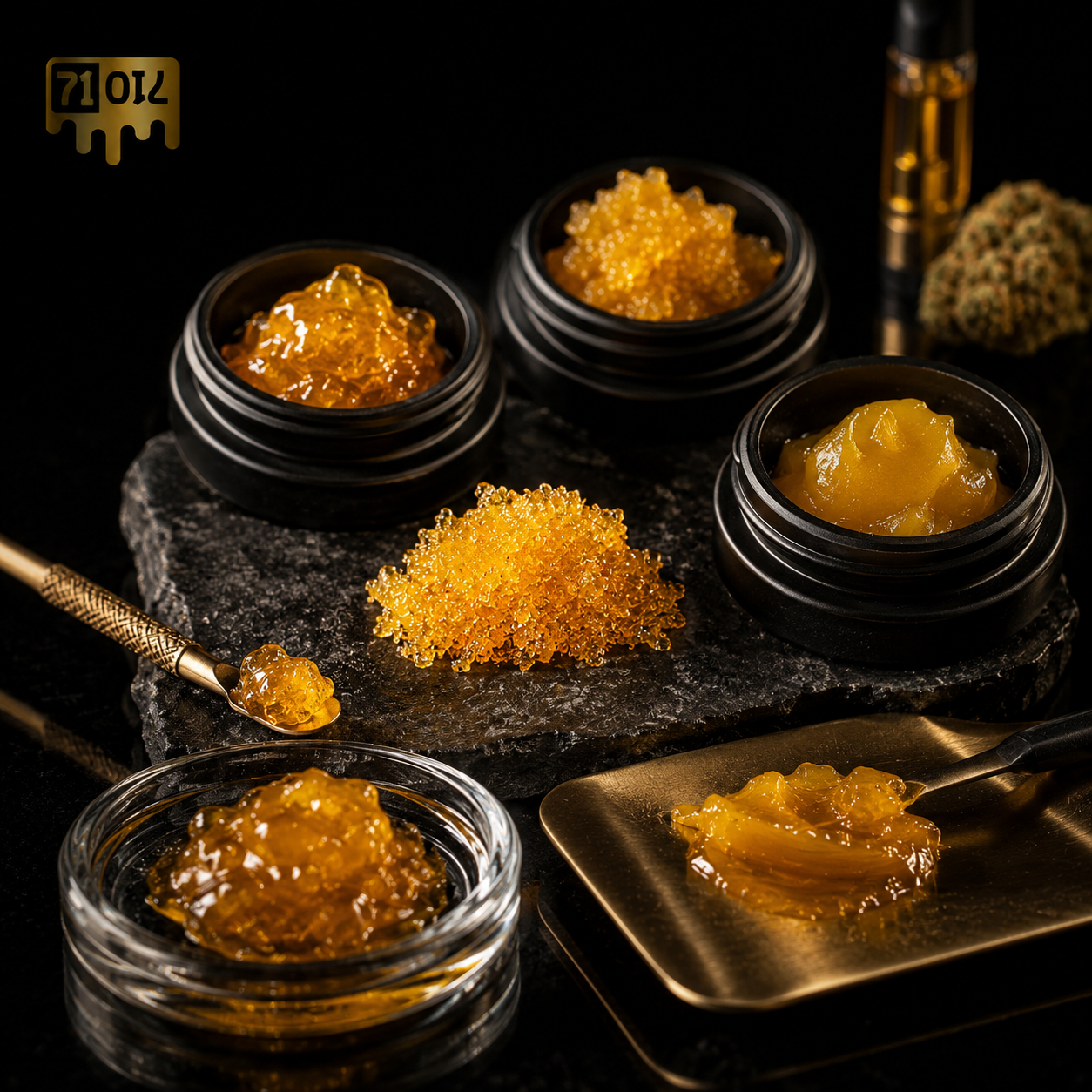
Live resin is a concentrate category, not one fixed texture. Product descriptions may use terms such as sauce, sugar, badder, or budder-style resin for consistency or presentation. BC Cannabis Stores notes more broadly that concentrate types can vary in texture and appearance.
These names mainly describe consistency or presentation. A more fluid product is not automatically higher quality, and a lighter or darker colour is not a reliable purity grade. When the exact composition matters, use the product label and producer information rather than appearance alone.
Does Live Resin Have More Terpenes or Better Flavour?
Live resin commonly emphasizes terpene and flavour retention because its starting material skips conventional drying and curing. BC Cannabis Stores notes that drying and curing can change terpenes, which helps explain why producers freeze the material before extraction.
That does not mean every live resin has a fixed terpene advantage. The actual terpene profile depends on the cultivar, harvest and freezing conditions, extraction, refinement, formulation, packaging, storage, and product age. If a product provides terpene information, compare the actual values and ingredient information rather than assuming the category name guarantees more terpenes.
The same caution applies to flavour. Brands may market live resin around strain-related aroma and flavour, but “live” does not guarantee that every consumer will prefer the profile or that one live resin will taste more intense than every distillate, rosin, or other extract.
Live Resin vs. Distillate: What Changes?
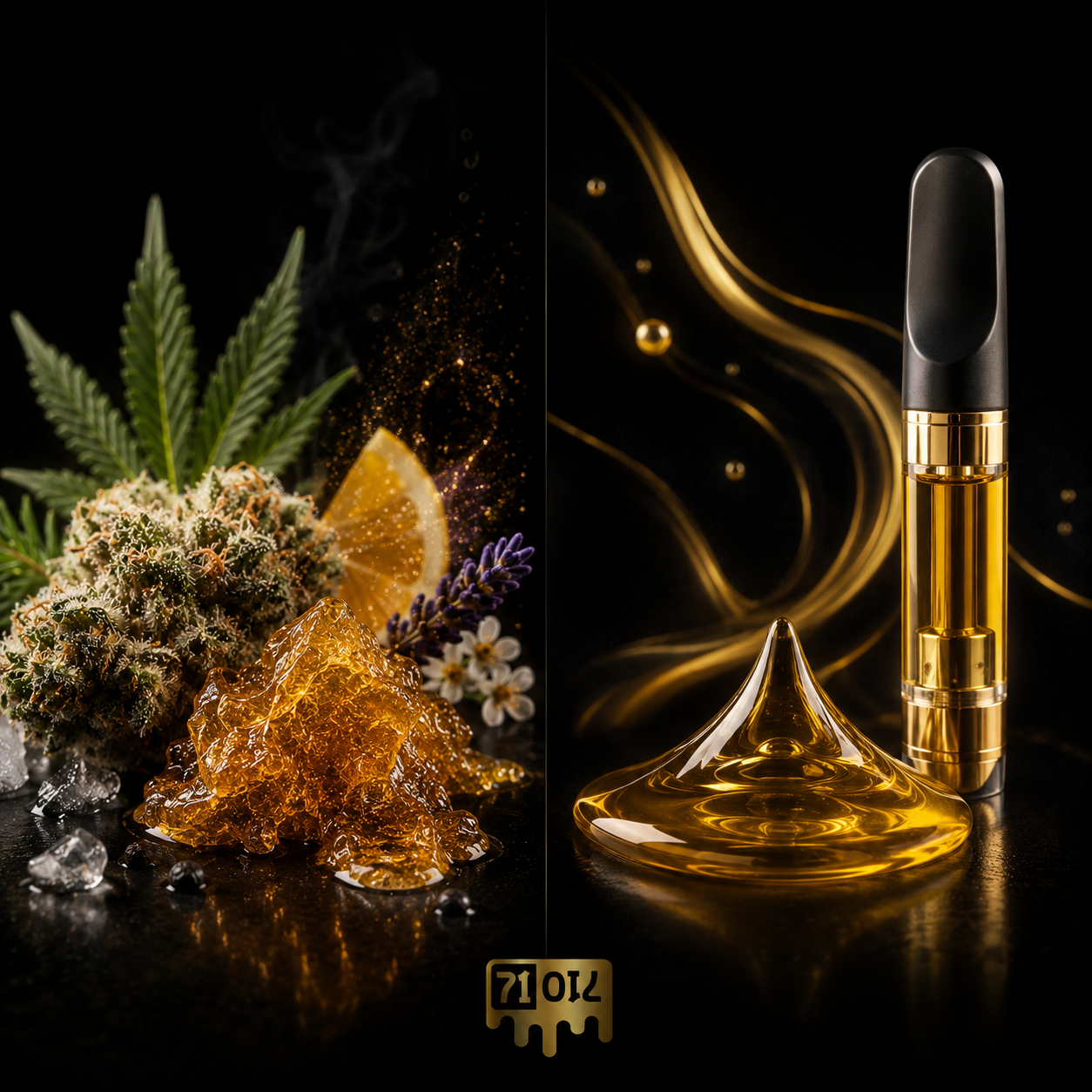
Live resin and distillate describe different extract approaches. Live resin focuses on fresh/frozen starting material and solvent-based extraction, while distillate relies on more extensive downstream refinement.
| Comparison | Live Resin | Distillate |
|---|---|---|
| Main defining idea | Fresh/frozen starting material plus generally solvent-based extraction. | Extensive refinement or distillation of an extracted cannabis material. |
| Profile emphasis | Often positioned around retaining more of the starting material’s aromatic and cannabinoid profile. | Typically more highly refined and centred on selected cannabinoids; final flavour/aroma can depend on formulation. |
| Texture / format | Can appear in multiple concentrate textures and some vape formulations. | Commonly used in vape, edible, and other formulations depending on the product. |
| What the name does not prove | Potency, terpene percentage, full-spectrum status, safety, or quality. | Purity, safety, potency superiority, flavour quality, or product suitability. |
Neither category is universally better. A useful comparison looks at the individual product’s intended use, ingredients, Total THC and Total CBD, flavour/aroma information, terpene data when available, formulation, and hardware format.
Live Resin vs. Live Rosin: What Is the Difference?
The main difference is the broad processing category. Live resin generally uses solvent-based extraction, while live rosin uses a solventless mechanical route. Both can begin with fresh/frozen cannabis. For a full side-by-side comparison, read Live Resin vs Live Rosin: What Is the Difference?.
The words resin and rosin do not establish which product is stronger, safer, cleaner, or higher quality. They mainly help explain different processing paths. Product-specific label information is still needed to compare cannabinoid content, ingredients, texture, and intended use.
Is Live Resin Stronger Than Other Concentrates?
Not necessarily. The term live resin does not determine potency. In Canada, legal cannabis labels display Total THC and Total CBD, and those values provide a better basis for comparing cannabinoid content than the extract name alone.
Higher THC also does not automatically mean higher quality, stronger flavour, more terpenes, or a better product. If potency matters to the comparison, use the actual label values and keep them separate from quality or flavour claims.
Is Live Resin Always Full-Spectrum?
No. “Live resin” and “full-spectrum” are related industry terms, but they are not interchangeable guarantees.
Some retailers and producers use full-spectrum language for extracts that aim to retain a broader plant profile. BC Cannabis Stores also notes that vape formulations can vary and may include blends or added ingredients. Because producers and retailers do not apply the terminology identically across every product, the words live resin alone do not prove that the finished formulation meets a particular full-spectrum definition.
If the distinction matters, review the product description, ingredients, and available extract information. For a separate terpene-focused term, see What Is HTFSE?.
Can Live Resin Be Used in Vape Cartridges?
Yes. Some producers formulate live resin for cannabis vape cartridges and integrated vape devices. However, producers do not formulate every live resin concentrate for cartridges, and not every cartridge uses live resin.
For Canadian cannabis extracts, the package and product information can identify intended use and ingredients. Health Canada’s packaging and labelling guidance explains the required information for cannabis extracts, including intended-use and ingredient details in relevant formats.
Do not transfer a concentrate sold for another purpose into a cartridge. Use only products that the producer identifies for the intended inhalation device, and follow the manufacturer’s hardware instructions.
Adults comparing cartridge-based products can browse 71 Oil 510 Cartridges after checking the extract type, strain/profile information, size, and hardware format for each listing.
What Should Canadian Adults Check Before Buying Live Resin?
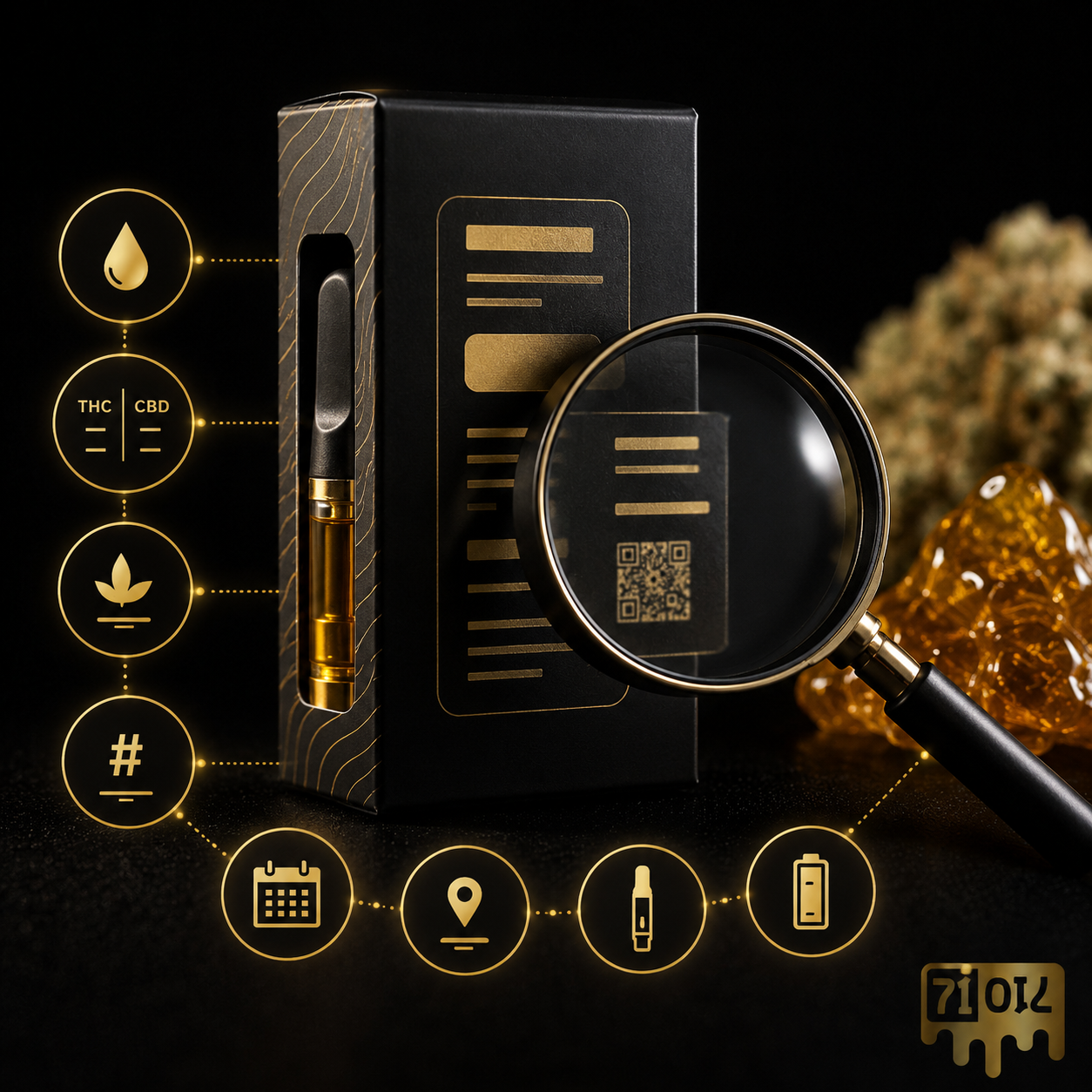
The words live resin are only the starting point. A Canadian product comparison should use the full package and verified product information.
- Authorized source. For non-medical cannabis, buy through a retailer authorized by the applicable province or territory. Health Canada explains how to recognize legal cannabis and the role of the excise stamp.
- Product class and intended use. Confirm whether the product is an inhaled cannabis extract, another extract format, or a vape product designed for specific hardware.
- Total THC and Total CBD. Use the labelled cannabinoid values to compare potency. Do not treat them as a complete quality score.
- Ingredients. Cannabis extract labels include an ingredient list. Review the finished formulation rather than relying on the words live resin alone.
- Net quantity and format. Compare the amount of product and whether the listing is a cartridge, disposable/all-in-one vape, jarred concentrate, or another format.
- Lot number and packaging date. These details support product identification and traceability. They do not, by themselves, guarantee freshness or quality.
- Licence-holder / producer information. Use the contact and producer details on the package if you need to verify or report a product issue.
- Storage and manufacturer instructions. Follow the stated storage, handling, charging, and hardware guidance for the specific product.
- Optional terpene or batch information. Review producer-provided terpene or batch details when available, and treat them as supplementary to the regulated label. Do not assume every product publishes a consumer COA.
- Vape compatibility. For cartridges, confirm the device format, connection, physical fit, and manufacturer requirements separately from the extract type.
For a complete walkthrough of regulated package information, read How to Read a Cannabis Vape Product Label in Canada.
Frequently Asked Questions
What is live resin made from?
Producers commonly make live resin from fresh or freshly harvested cannabis that they freeze before conventional drying and curing, then process through a generally solvent-based extraction method.
What does “live” mean in live resin?
“Live” refers to the starting material and post-harvest handling. Producers commonly freeze the cannabis after harvest instead of drying and curing it first. The term does not mean the extract skipped processing or automatically qualifies as full-spectrum.
Is live resin solvent-based?
Yes. Cannabis-industry sources generally classify live resin as a solvent-based cannabis extract. Live rosin differs because producers use solventless or mechanical processing.
Is live resin the same as live rosin?
No. Both can use fresh/frozen cannabis, but live resin is generally solvent-based while live rosin uses a solventless/mechanical process, often involving hash and controlled heat and pressure.
Does live resin always have more terpenes?
No. Producers use fresh/frozen starting material partly to retain aromatic compounds, but the final terpene level still depends on the cultivar, processing, formulation, packaging, storage, and product age. Compare actual product information when available.
Is live resin stronger than distillate?
Not necessarily. Compare the product-specific Total THC and Total CBD values rather than assuming one extract category is always stronger.
Is live resin always full-spectrum?
No. Some producers may position products as full-spectrum, but the term live resin alone does not prove the finished composition or formulation. Review the product description and ingredients.
Can live resin be used in a vape cartridge?
Yes, when the producer specifically formulates and identifies the product for that vape format. Do not put a concentrate into a cartridge unless the product and hardware information indicate that use is intended.
Conclusion: Read the Product, Not Just the Extract Name
Two ideas explain live resin most clearly: fresh/frozen starting material and generally solvent-based extraction. Together, they help explain the category’s focus on aroma, flavour, and strain-related product profiles.
But the name does not tell you everything. Live resin can vary in texture, cannabinoid content, terpene profile, ingredients, formulation, and intended use. It also does not automatically mean stronger, safer, purer, full-spectrum, or higher quality.
For the clearest comparison, read the individual product label and verified product information. Continue with the 71 Oil cannabis concentrates and extracts guide, the live resin vs live rosin comparison, or the cannabis vape label guide for more detail.
| Adult-use note This guide addresses legal-age adults where cannabis is legally available. Health Canada notes that cannabis can impair driving and carries short- and long-term health risks. Follow applicable laws and product information, do not drive while impaired, and store cannabis securely and out of reach of children and pets. |
|---|
Resources Used
- Health Canada — How to Read and Understand a Cannabis Product Label
- Health Canada — Packaging and Labelling Guide for Cannabis Products
- Health Canada — Guide on Composition Requirements for Cannabis Products
- Health Canada — Reduce Your Risk: Choose Legal Cannabis
- Health Canada — Safe Storage of Cannabis
- Health Canada — Cannabis Impairment and Safety Risk
- Health Canada — Cannabis and Your Health
- BC Cannabis Stores — Cannabis Concentrates 101: Extracting the Facts on Inhalable Concentrates
- BC Cannabis Stores — What Does Full-Spectrum Cannabis Mean?
0 Responses