

Beyond THC: Why Cannabis Brands Are Competing on Experience, Flavour, and Trust
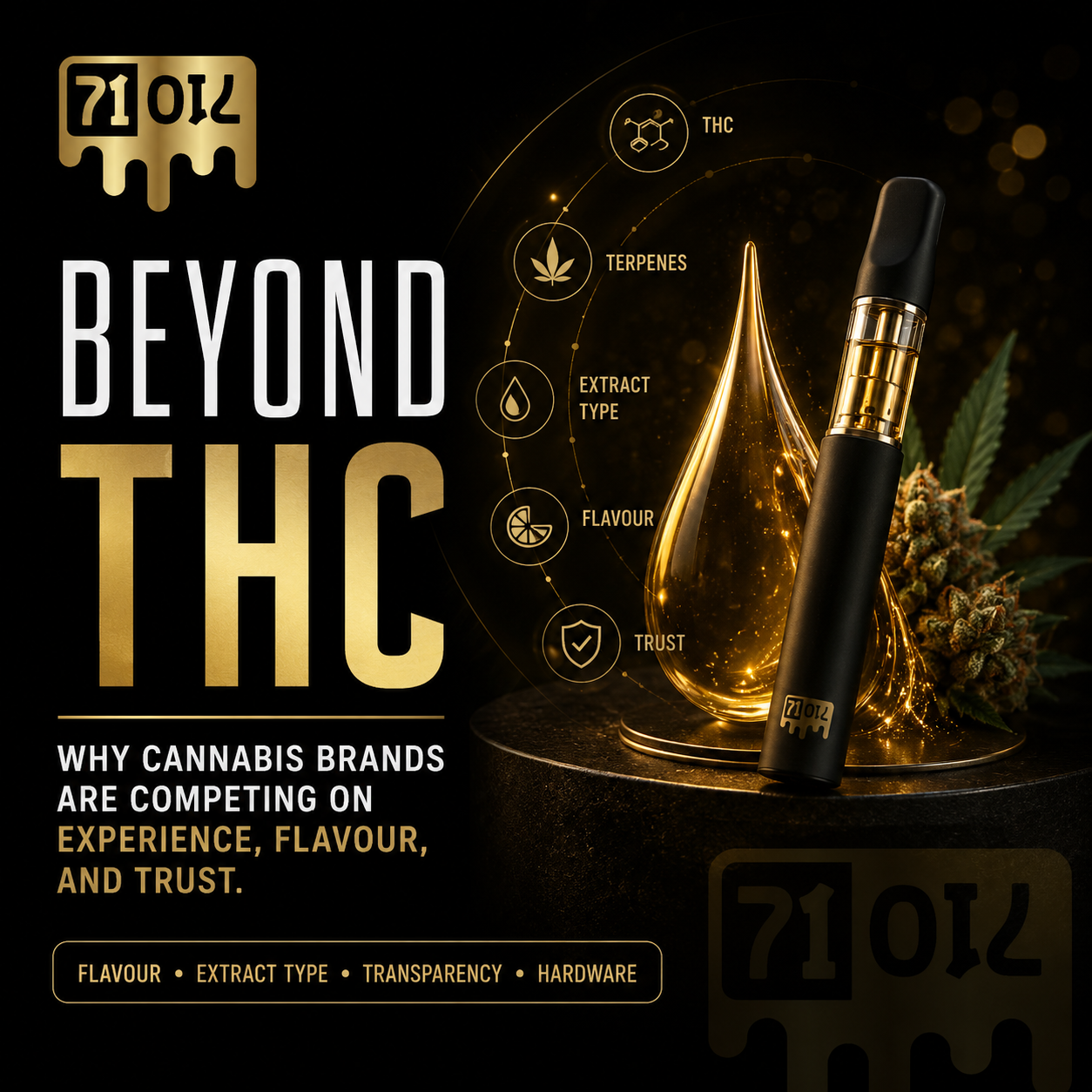
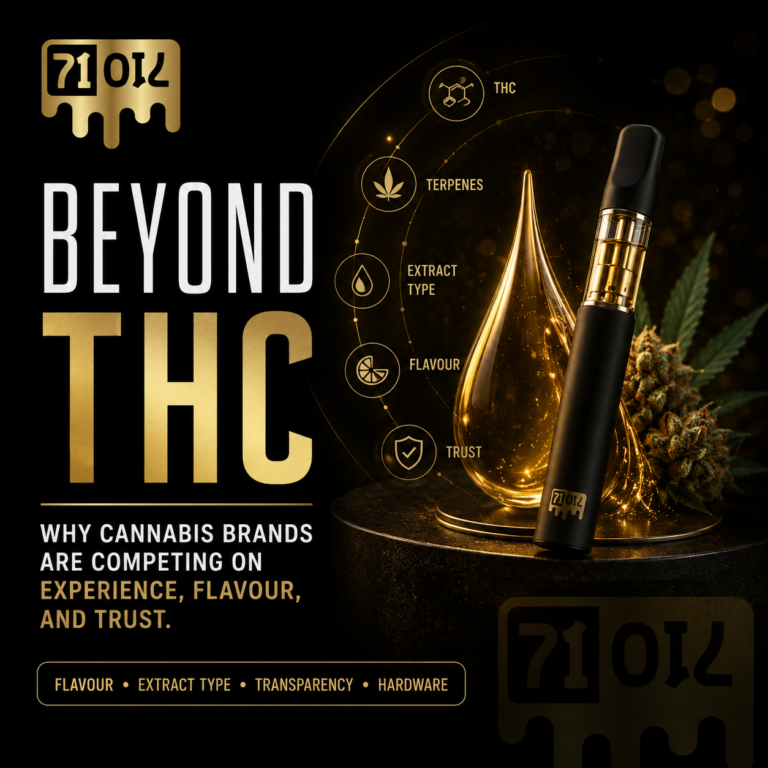
THC percentage is one of the easiest numbers to notice on a cannabis package, but it does not describe the entire product. For legal-age adults comparing cannabis in Canada, potency can sit alongside flavour and aroma, terpene information, extract type, ingredients, hardware, consistency, and traceability.
This broader beyond-THC trend is becoming more visible in Canadian cannabis retail. Recent industry reporting suggests that some retailers and shoppers are paying more attention to freshness, terpene profile, product quality, and consistency instead of relying on THC percentage alone. StratCann describes this as a gradual shift, not a rejection of potency.
Key point: “Beyond THC” does not mean ignoring THC. It means putting potency into context and comparing the complete product.
TL;DR: What Does “Beyond THC” Mean?
THC tells you about cannabinoid concentration. However, it does not tell you the extract type, flavour and aroma profile, ingredients, hardware design, lot information, or whether one product is a better fit than another. A complete comparison uses potency together with the rest of the verified product information. The goal is not to replace THC with another single metric. It is to compare the complete product.
In This Guide
- Are cannabis consumers looking beyond THC percentage?
- Why did THC percentage become such an important comparison point?
- Does higher THC mean better cannabis?
- What else are adults comparing besides THC?
- Why are full-spectrum and terpene-focused products part of this trend?
- How does product transparency build trust?
- What should adults compare besides THC?
- What does “beyond THC” mean for cannabis brands?
- Frequently asked questions
Are Cannabis Consumers Looking Beyond THC Percentage?
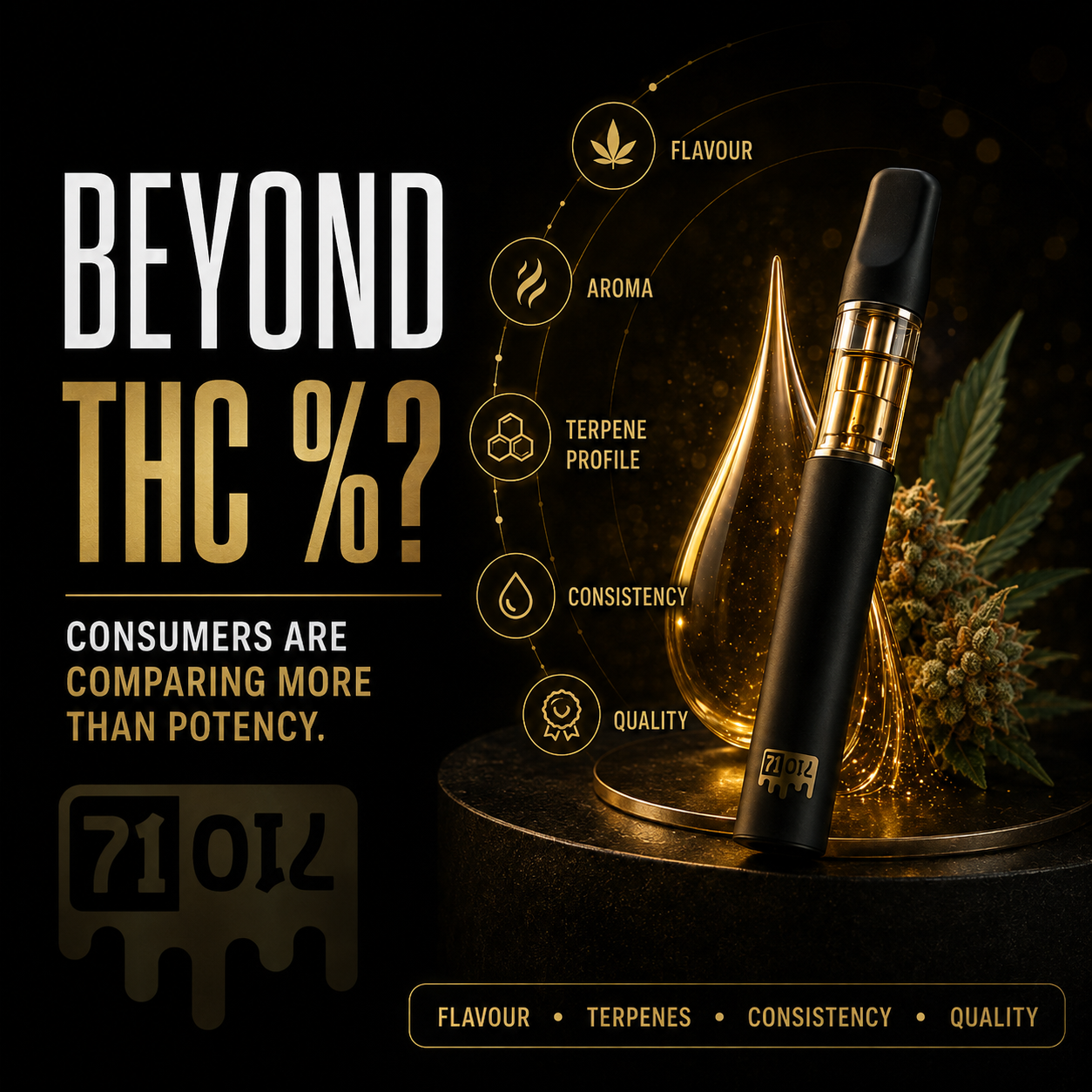
Some evidence from the Canadian retail market points in that direction. THC still matters, and it remains a highly visible shopping signal. At the same time, recent Canadian industry commentary highlights freshness, terpene profile, batch consistency, provenance, and product quality as additional factors receiving attention in some stores and product categories.
For example, an August 2026 StratCann analysis argues that THC often works as a convenient shorthand because it appears clearly on labels and menus. Other quality characteristics can be harder to assess before purchase.
This does not mean every Canadian consumer is moving away from potency. Instead, the market has more room for product education that explains what THC can tell you—and what it cannot.
Why Did THC Percentage Become Such an Important Comparison Point?
THC is easy to compare because it appears as a number. In Canada, legal cannabis labels must display Total THC and Total CBD on the front of the package. Health Canada’s consumer label guidance explains how those values appear for different product formats.
In addition, sealed packaging limits what adults can assess before opening a product. A shopper may see potency, price, format, brand, and a short product description before they can evaluate aroma or other sensory characteristics.
As a result, THC becomes a convenient comparison tool even when it is not a complete quality score. Adults can use THC and CBD information for what it represents, then review the other product details separately.
Does Higher THC Mean Better Cannabis?
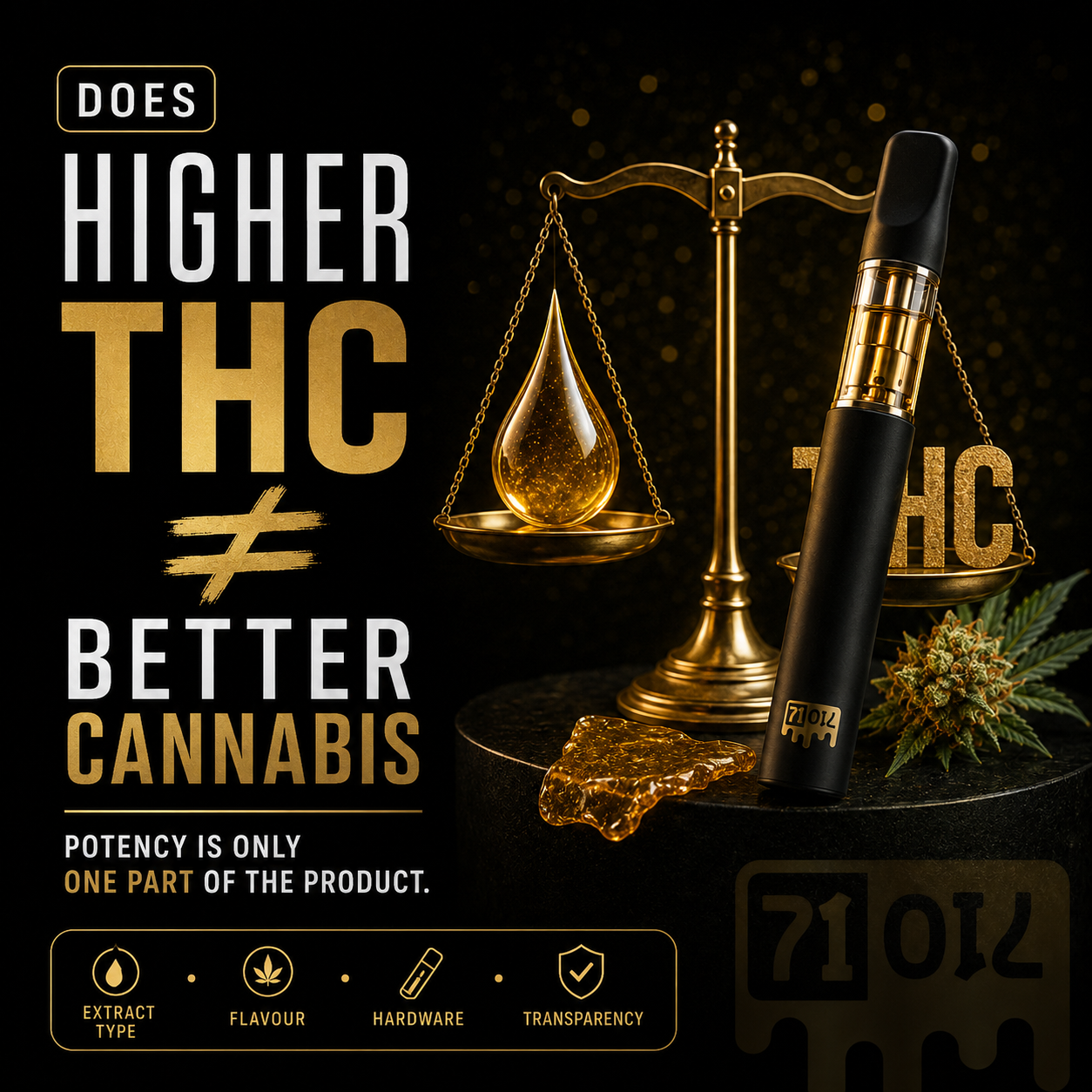
No. Higher THC means greater THC concentration. It does not automatically establish overall product quality.
A product can have a higher THC value and still differ from another product in extract type, flavour and aroma, terpene information, ingredients, hardware, packaging details, and formulation. Likewise, a lower THC number does not automatically make a product higher quality.
| Product characteristic | What it can tell you |
|---|---|
| THC | Cannabinoid potency or concentration—not a complete quality score. |
| CBD | Another major cannabinoid shown on regulated labels. |
| Terpenes | Aroma-related compounds and part of the product profile; not guaranteed effects. |
| Extract type | How the extract is represented or refined; categories are not automatic quality rankings. |
| Ingredients | What the formulation contains when an ingredient list is required. |
| Hardware | How a vape stores and heats the extract, plus how it fits the intended device format. |
| Lot/package information | Traceability and regulated product details. |
| Consistency | How clearly and predictably product characteristics are presented across purchases, without assuming identical effects. |
What Else Are Adults Comparing Besides THC?
Flavour and Aroma
Flavour and aroma give adults another way to distinguish products with similar THC values. Cannabis contains aromatic compounds called terpenes, and product descriptions may also identify strain-specific flavour or aroma notes.
Those details describe the product profile, but they do not guarantee specific effects. For example, citrus, pine, floral, earthy, or fuel-like notes describe sensory character—not a promised outcome.
Terpene and Cannabinoid Information
THC and CBD are the best-known cannabinoids, but cannabis products can contain other compounds as well. Some product information also lists terpene content or additional cannabinoids.
This information can make two products easier to compare, especially when they use different extracts or strain profiles. However, adults should use it as product information rather than a prediction of how every person will respond.
Extract Type
Extract type can shape what a vape or concentrate emphasizes. Distillation produces a highly refined extract. Live resin and live rosin are different concentrate categories. Full-spectrum products aim to retain a broader plant profile, while HTFSE places particular emphasis on terpene-rich full-spectrum extract characteristics.
Distillate is one example of why extract type adds context beyond THC alone. Our cannabis distillate guide explains the refinement-focused term in more detail.
For the specific terminology behind this extract type, see what live resin is and what the name does—and does not—tell you about a product.
None of those labels automatically makes one product better than another. For more detail, see 71 Oil’s guides to cannabis concentrates and extracts, solvent-based vs. solventless concentrates, and HTFSE, or High-Terpene Full-Spectrum Extract.
Ingredients and Formulation
For cannabis extracts, the ingredient list can add useful context. Health Canada’s packaging and labelling guide requires ingredient information for cannabis extracts and sets out other product identifiers and warnings.
However, a short ingredient list does not automatically prove purity, safety, or superiority. The useful question is simpler: what does the product say it contains, and does that match the format and description?
Hardware and Product Consistency
For vapes, the extract is only one part of the finished product. Adults may also compare cartridge or disposable format, compatibility, charging method, airflow design, and manufacturer instructions.
A higher THC number does not tell you whether a cartridge fits a particular battery or how manufacturers designed the hardware. 71 Oil’s guide to weed carts, THC carts, and vape cartridges separates terminology from the practical product details adults should check.
Product format is also becoming part of the comparison. Read why convenience is influencing cannabis vapes—including all-in-ones and other ready-to-use formats.
Consistency matters in a different way. Clear specifications, stable product descriptions, traceable lot information, and predictable format details can make repeat comparisons easier. Still, adults should not treat those details as guarantees of identical effects.
Why Are Full-Spectrum and Terpene-Focused Products Part of This Trend?
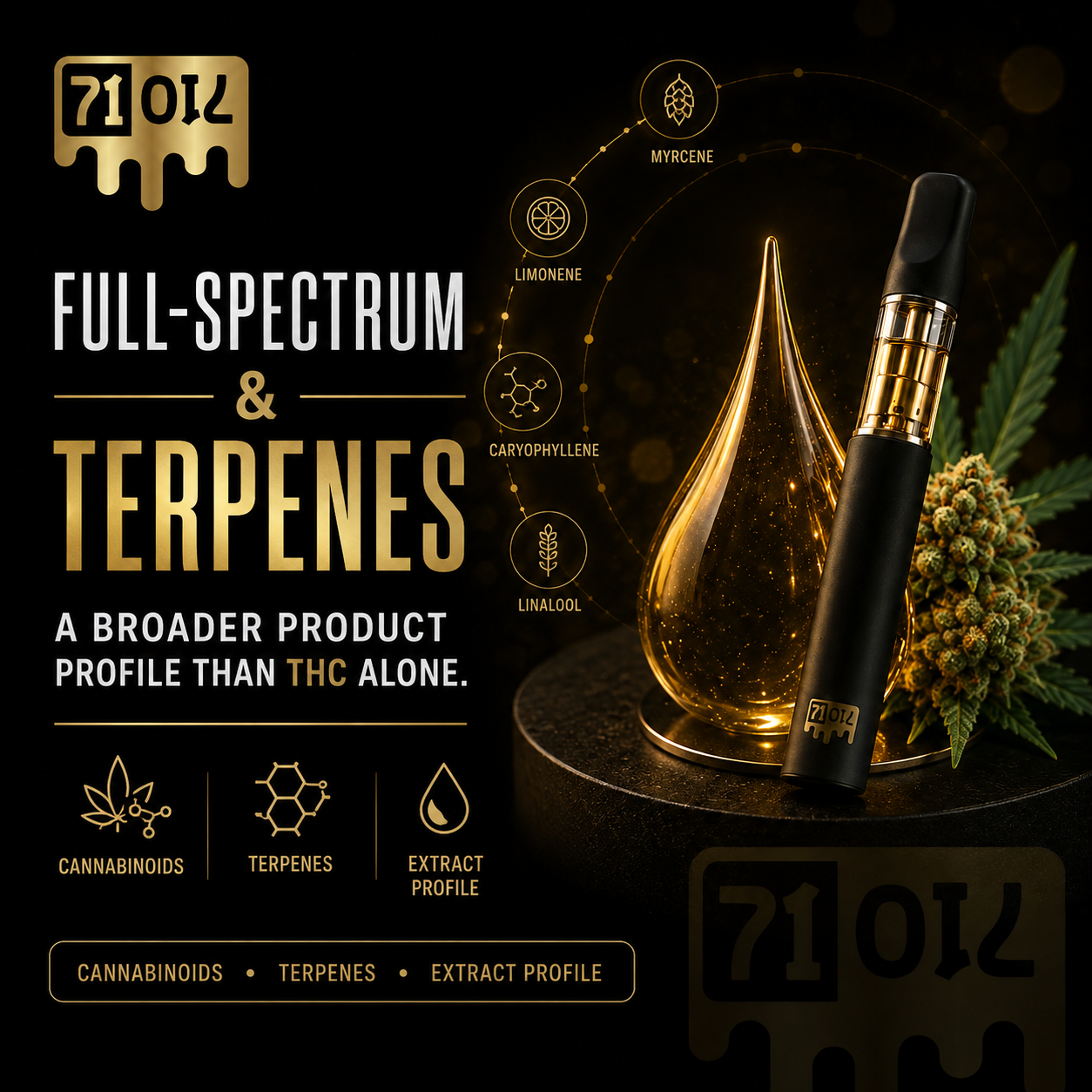
Full-spectrum products fit naturally into the “beyond THC” discussion because the term points to a broader plant profile rather than THC concentration alone.
BC Cannabis Stores describes full-spectrum products as retaining a wider phytochemical profile, including cannabinoids and terpenes. It also notes that vape formulations can differ. Some may combine full-spectrum extract with distillate, botanical terpenes, or other ingredients.
Therefore, “full-spectrum” should describe a product profile, not function as an automatic quality ranking. The same principle applies to terpene-forward extracts.
HTFSE is one example. It stands for High-Terpene Full-Spectrum Extract and provides a useful contrast with more highly refined extract formats. Readers who want the full comparison can continue to the 71 Oil HTFSE guide.
How Does Product Transparency Build Trust?
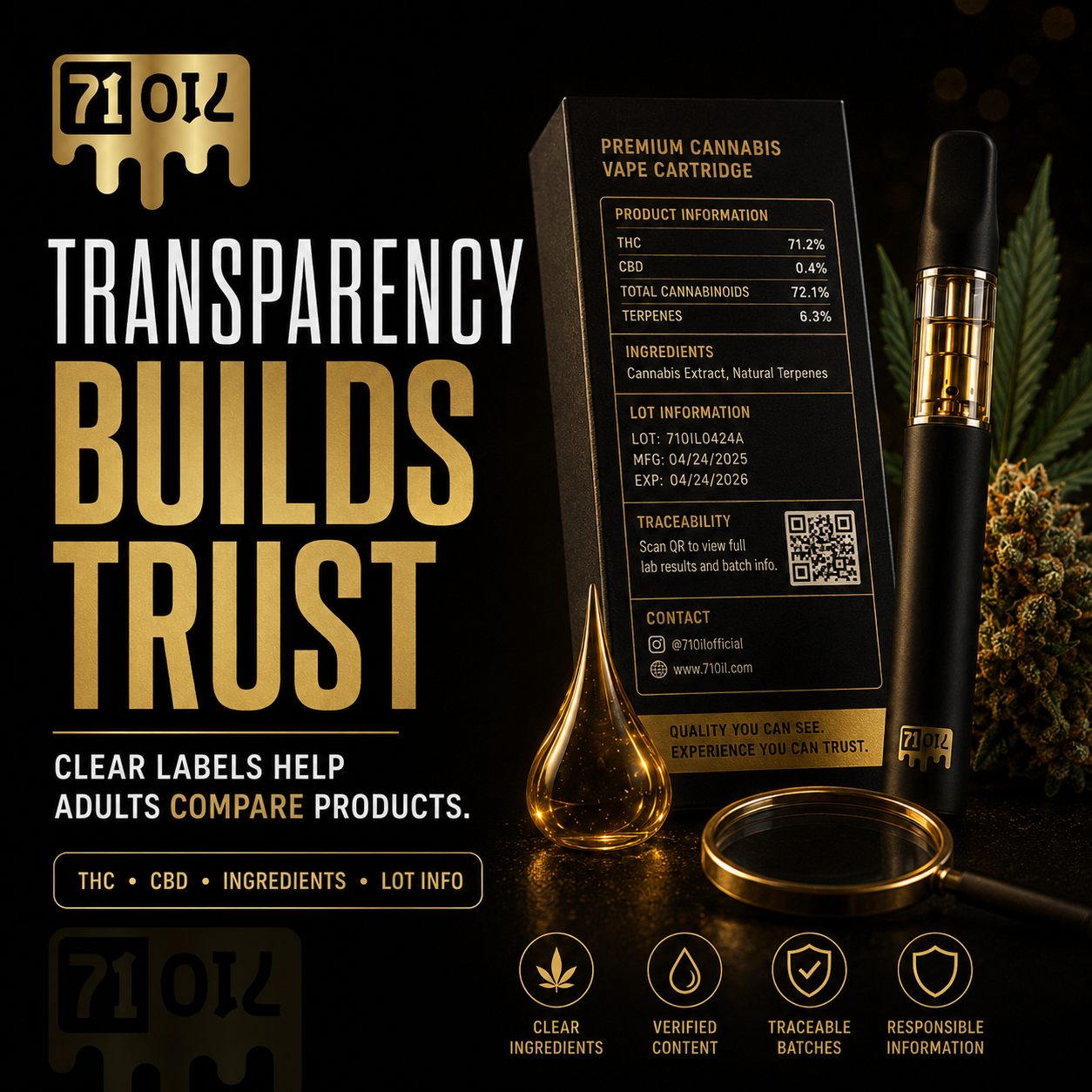
Trust becomes more useful when it rests on information that adults can verify.
On legal Canadian cannabis products, shoppers can review Total THC and Total CBD, the health warning, net quantity, lot number, packaging date, licence-holder contact information, intended use, and other required details. Cannabis extract labels also include an ingredient list. Health Canada explains how these items help identify and trace a product.
This information can support comparison and accountability. However, it does not prove that a product is superior, healthy, or risk-free.
For a step-by-step walkthrough, read How to Read a Cannabis Vape Product Label in Canada. It explains Total THC, Total CBD, ingredients, warnings, lot information, packaging dates, and optional product details.
What Should Adults Compare Besides THC?
When comparing two legal cannabis products, adults can look beyond a single potency number and review the following:
- Total THC and Total CBD
- Extract type
- Ingredients
- Flavour and aroma information when provided
- Terpene information when available
- Product format
- Hardware specifications and compatibility where relevant
- Net quantity
- Legal product source
- Lot, packaging, and producer information
The goal is not to replace THC with another single metric. It is to compare the complete product.
Once potency is in context, the next question is what actually supports a premium claim. See what makes cannabis premium beyond price and THC.
What Does “Beyond THC” Mean for Cannabis Brands?
For cannabis brands, competing beyond potency means giving adults more useful information instead of relying on one number or one marketing claim.
For example, brands can provide clear extract descriptions, accurate flavour and aroma language, transparent ingredients, traceable product details, consistent hardware specifications, and straightforward explanations of product format.
Canadian rules also limit how companies can market cannabis. Health Canada prohibits false or misleading promotion about characteristics such as potency, purity, quality, safety, or health effects. The rules also restrict testimonials, endorsements, and lifestyle associations. Health Canada’s cannabis promotion guidance provides the current federal framework.
Because of those limits, product literacy offers a more defensible path than exaggerated positioning. Competing beyond THC means helping adults understand verifiable differences—not replacing one oversimplified claim with another.
Frequently Asked Questions
Does higher THC mean higher-quality cannabis?
No. THC indicates cannabinoid concentration, but it does not by itself determine extract type, flavour, aroma, ingredients, formulation, hardware, freshness, or overall product consistency.
Does THC percentage determine how cannabis will affect everyone?
No. THC contributes to intoxication and impairment, but individual responses can vary. A label percentage cannot guarantee the same experience for every person.
Why do terpenes matter when comparing cannabis products?
Terpenes are aromatic compounds that contribute to cannabis flavour and aroma. Terpene information can help distinguish product profiles. However, individual terpenes do not guarantee specific effects.
Is full-spectrum cannabis better than distillate?
Not automatically. They represent different extract approaches. Full-spectrum products aim to retain a broader plant profile, while distillate involves greater refinement. The better comparison depends on the individual product and the verified characteristics that matter to the buyer.
What should you check besides THC on a cannabis vape?
Review the extract type, ingredients, Total CBD, terpene information when available, product format, hardware specifications, net quantity, legal source, and regulated package information.
Conclusion: Compare the Complete Product
THC remains an important part of cannabis product information, but it is only one part. Adults can make a more complete comparison by looking at flavour and aroma, terpene information, extract type, ingredients, hardware, consistency, and regulated label details.
In other words, the beyond-THC approach does not reject potency. It gives THC the right role: one useful metric among several.
Continue with the 71 Oil HTFSE guide, the cannabis concentrates and extracts guide, or the cannabis vape label guide to compare product terminology and regulated information in more detail.
Resources Used
- Health Canada — How to Read and Understand a Cannabis Product Label
- Health Canada — Packaging and Labelling Guide for Cannabis Products
- Health Canada — Promotion of Cannabis: Prohibitions and Permissions
- BC Cannabis Stores — What Does Full-Spectrum Cannabis Mean?
- StratCann — Beyond the THC Number: How Cannabis Retail Can Make Room for Quality
- StratCann — Cannabis Retail in Canada: What 2025 Revealed and What 2026 May Bring
0 Responses