

What Makes Cannabis Premium? Quality Beyond the Price Tag
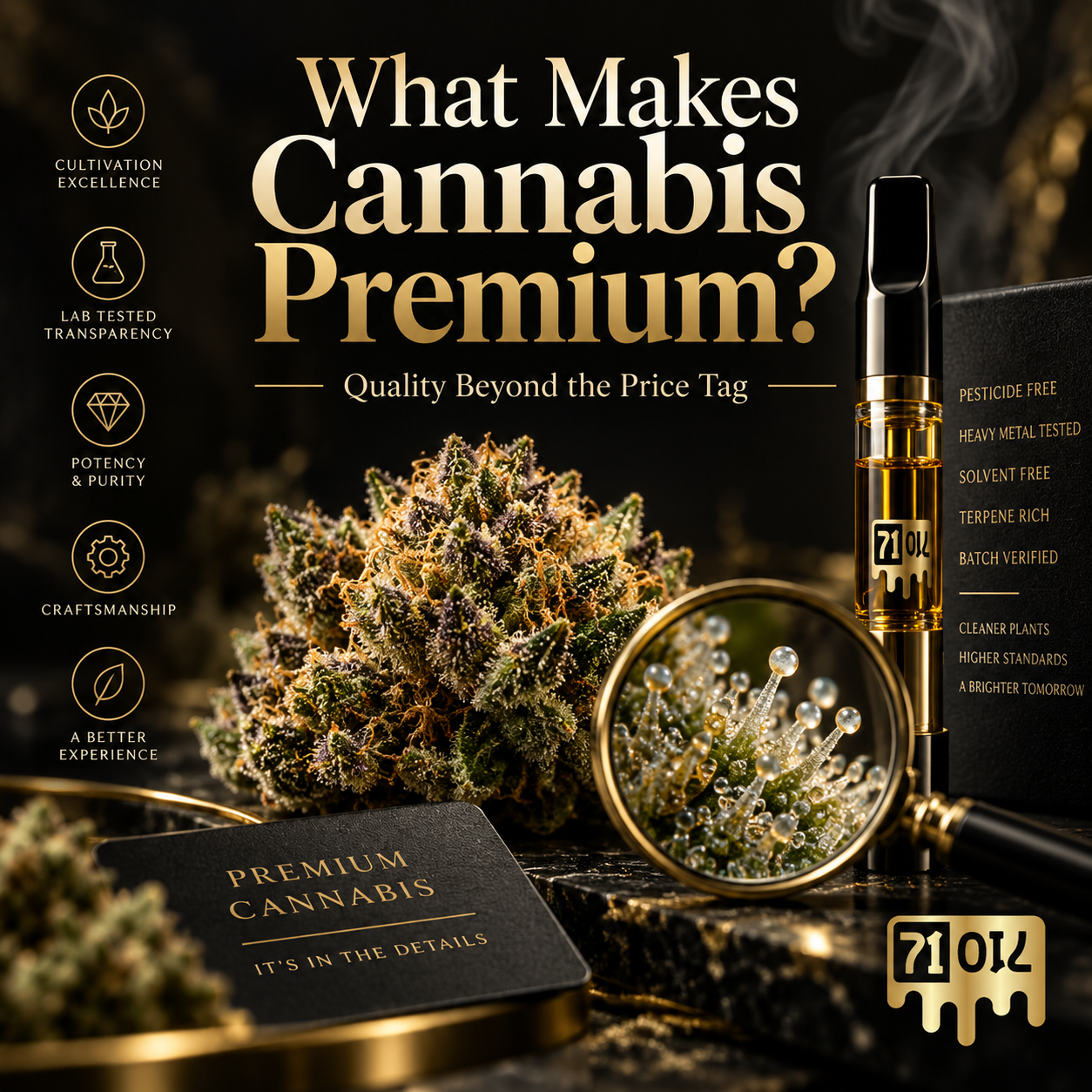
What makes cannabis premium? Price, a high THC number, polished packaging, or a fashionable extract term cannot answer that question by itself. A stronger comparison looks at the complete product: extract type, formulation, regulated label information, flavour and aroma details, hardware, consistency, traceability, legal-market controls, and the accuracy of the claims used to describe it.
For legal-age adults in Canada, the product label is a practical starting point because it standardizes important information. Still, a label is not a universal quality score, and “premium” should never be read as a guarantee that cannabis is safer, stronger, purer, or better for every buyer.
Quick Answer: What Makes Cannabis Premium?
| Quick answer: “Premium” is most useful when it is supported by verifiable product information. Compare extract type and formulation, Total THC and Total CBD, ingredients, flavour or terpene information when available, hardware, lot and packaging details, legal-market testing and traceability, and whether the product description makes clear, supportable claims. Price or potency alone is not a quality grade. |
In This Guide
- Is “premium cannabis” an official quality grade?
- Does a higher price mean better cannabis?
- What makes cannabis premium? Seven product factors to compare
- Does higher THC mean higher-quality cannabis?
- Premium cannabis vape checklist
- How 71 Oil approaches “premium”
- Frequently asked questions
Is “Premium Cannabis” an Official Quality Grade?
No. Canada’s federal cannabis framework defines regulated product classes and packaging and labelling requirements, but it does not present “premium” as a consumer-facing cannabis grade. Health Canada lists classes such as dried cannabis, edible cannabis, cannabis extracts, and cannabis topicals; “premium” is a marketing or positioning term rather than one of those legal product classes.
Health Canada’s cannabis product label guidance explains the information adults can check on legal products, including Total THC, Total CBD, product class, warnings, net quantity, lot number, packaging date, storage conditions, and licence-holder contact details. Cannabis extracts also require an ingredient list.
That distinction matters. A premium claim becomes more meaningful when it points to specific characteristics a buyer can verify. Without that evidence, the word itself does not tell you much about the finished product.
Does a Higher Price Mean Better Cannabis?
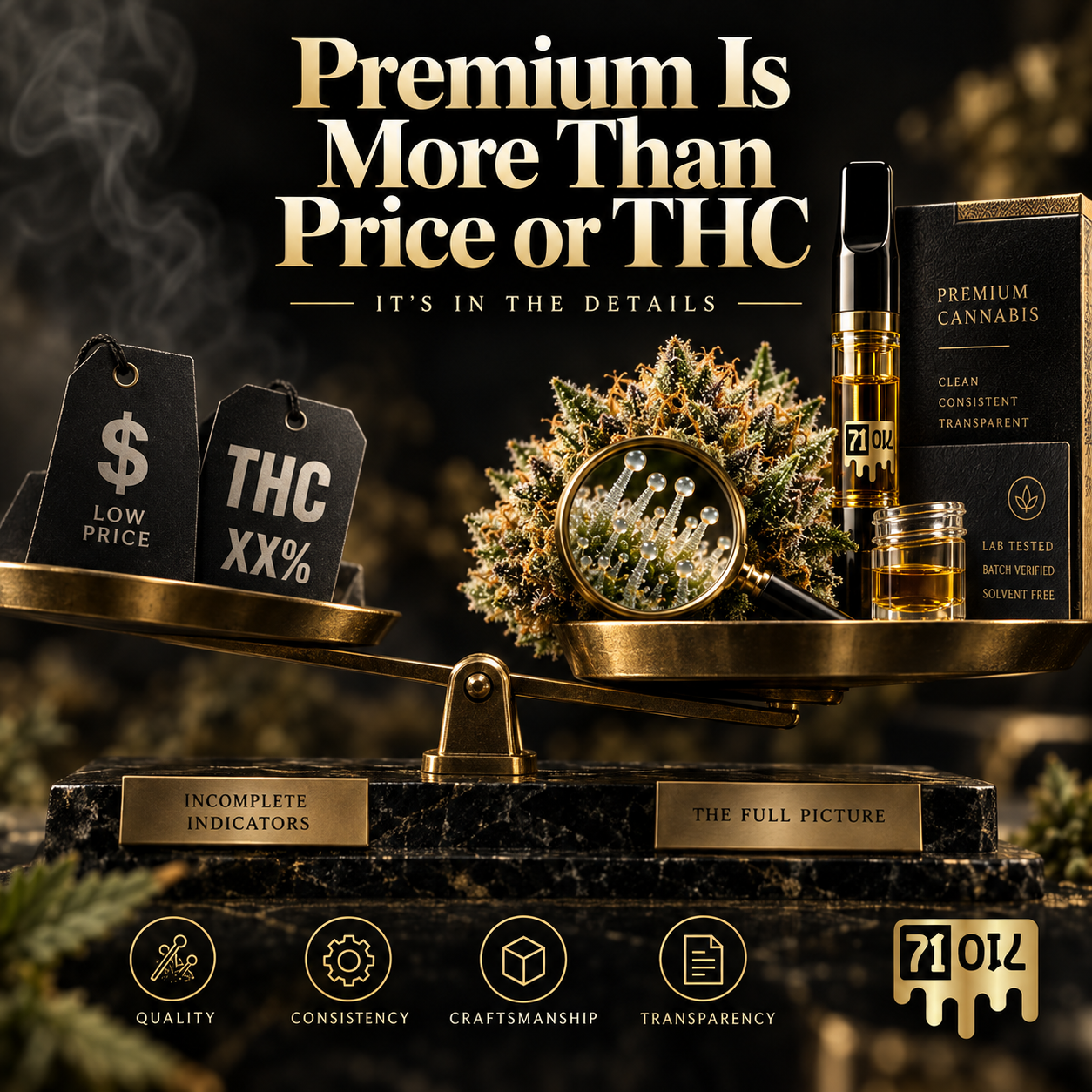
Not necessarily. A higher price may reflect the extract, hardware, package size, production costs, retail pricing, brand positioning, or other market factors. None of those variables proves overall product quality on its own.
The reverse also applies: a lower price does not automatically mean lower quality. Instead of using price as a shortcut, compare the information that is actually available for the product.
| Better question: What does this product disclose about its formulation, label information, hardware, traceability, and quality controls – and does that evidence support the way it is positioned? |
What Makes Cannabis Premium? 7 Product Factors to Compare
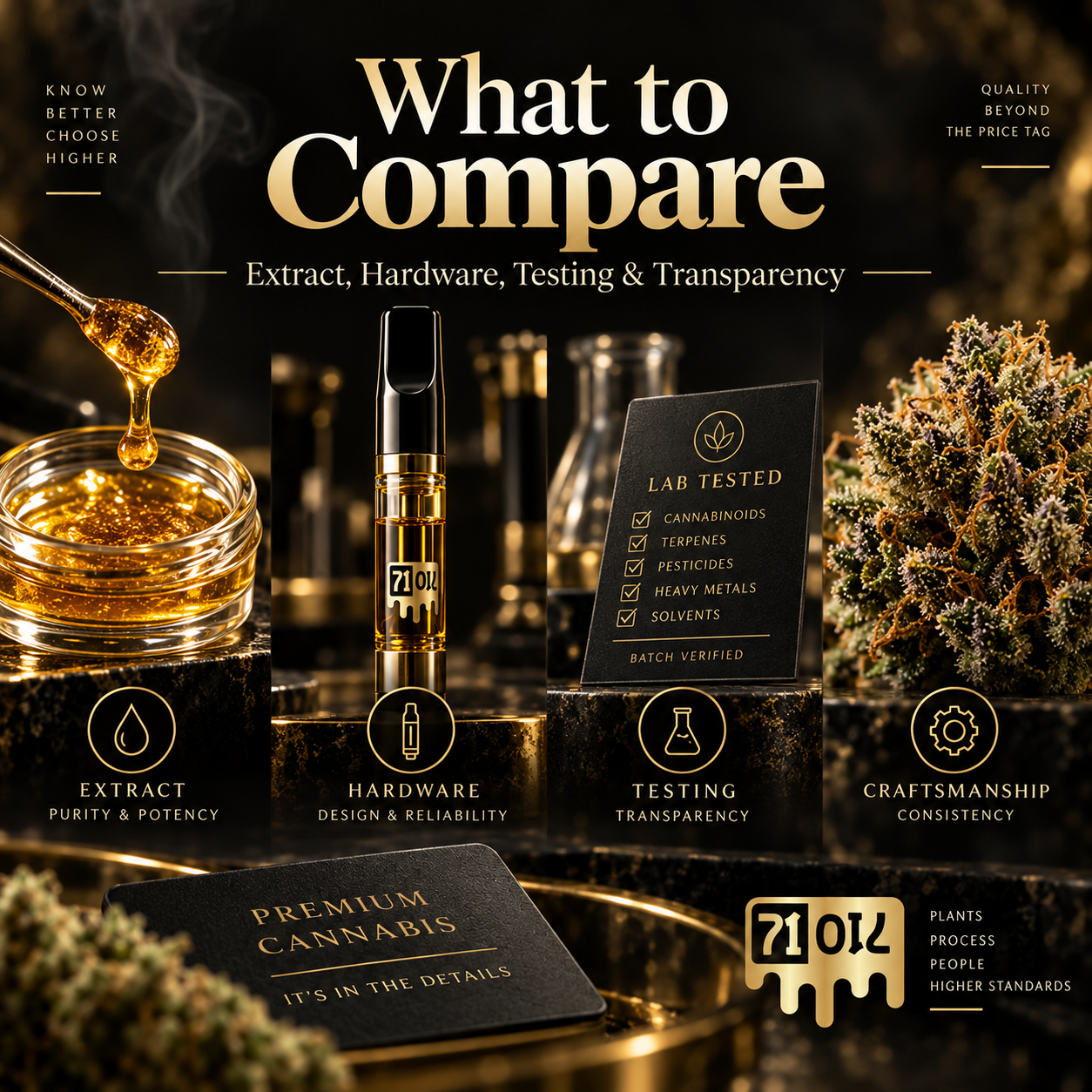
No single factor creates a complete quality score. The strongest comparison uses several pieces of verified information together.
1. Extract Type and Formulation
For cannabis vapes, extract type is one of the clearest product differences. Distillate, full-spectrum extract, HTFSE, live resin, and related terms describe different aspects of processing, refinement, or extract profile. They should not be treated as automatic quality rankings.
For the definition behind that extract label, see our full-spectrum cannabis extract guide and the product details buyers should verify beyond the name alone.
Our cannabis concentrates and extracts guide explains the broader terminology. If you are comparing a highly refined extract with a broader-profile vape formulation, continue to distillate vs. full-spectrum cannabis vapes.
HTFSE is a more specific industry term for High-Terpene Full-Spectrum Extract. It is commonly used to describe a terpene-focused full-spectrum extract profile, but the name alone does not prove that one HTFSE product is stronger, safer, purer, or higher quality than another extract.
Read the 71 Oil HTFSE guide for the dedicated explanation of that extract category.
2. Clear Cannabinoid and Ingredient Information
Legal cannabis labels in Canada display Total THC and Total CBD. Cannabis extracts also require an ingredient list. Those fields give adults a regulated basis for comparing cannabinoid concentration and declared formulation instead of relying only on a product name or front-of-package wording.
Health Canada’s detailed packaging and labelling guide explains how required cannabis information must appear. For a consumer-focused walkthrough, see how to read a cannabis vape product label in Canada.
A shorter ingredient list is not automatically cleaner, safer, purer, or higher quality. The useful question is what the product declares in its formulation and how that information fits with the rest of the verified product details.
3. Terpene, Flavour, and Aroma Information in Context
Terpenes are aromatic compounds that contribute to cannabis taste and smell. Product-specific terpene information, when available, can add context to the extract and flavour profile. It should not be turned into a promise about mood, medical benefit, or a guaranteed experience.
Flavour and aroma descriptions are most useful when they are specific and restrained. Terms such as earthy, citrus-forward, floral, herbal, resinous, or gassy can describe sensory character without pretending that the description is a laboratory result or a predictable effect.
For a premium claim, the sensory language should match the disclosed formulation and product information rather than replace them.
4. Vape Hardware and Compatibility
For cannabis vapes, hardware is part of the finished product. A practical comparison can include the device format, cartridge connection, charging requirements, activation method, manufacturer instructions, and compatibility information where relevant.
Extract quality and hardware quality are separate questions. A carefully described formulation does not tell you whether a cartridge fits a particular battery. Likewise, polished device design does not prove that the extract inside is superior.
Compare vape cartridges and disposable vape pens if you need to separate modular cartridge systems from integrated all-in-one hardware.
Product-specific manufacturer instructions should remain the final reference for compatibility, charging, operation, and device handling.
5. Consistency and Traceability
Consistency is easier to evaluate when the product information stays clear from one purchase to the next. Stable specifications, accurate descriptions, identifiable lots, and package information make products easier to compare and easier to identify if there is a quality problem.
Health Canada’s label guidance requires information such as the lot number and packaging date and provides manufacturer or licence-holder contact details. Those fields support traceability, but they do not guarantee identical effects, device performance, or a universal freshness score.
A premium position has more substance when the company can describe the product clearly and consistently instead of changing the story around it.
6. Legal Source, Testing, and Quality Controls
Health Canada advises adults to choose legal cannabis from authorized provincial or territorial retail channels. The agency says legal products are quality controlled, tested for harmful levels of contaminants, tested for the accuracy of THC and CBD information, and can be recalled when there is a potential safety or quality issue.
These are important legal-market controls, but they do not make cannabis risk-free and they do not create a premium ranking among legal products. Think of them as a regulated baseline for product accountability.
Health Canada’s good production practices framework sets requirements and guidance for federally regulated licence holders, including production, testing, quality assurance, and handling of results that fall outside specifications.
If a brand provides a certificate of analysis or QR-linked test information, check that it corresponds to the correct product and lot or batch. A COA can add useful product-specific context, but a QR code or document should not be treated as automatic proof of every marketing statement.
7. Transparent Claims and Useful Product Information
Premium products should be easier to understand, not harder. Clear extract descriptions, restrained flavour and aroma language, transparent ingredients, specific hardware information, and traceable product details give adults concrete points to compare.
Health Canada’s current cannabis promotion guidance prohibits false, misleading, or deceptive promotion about characteristics such as composition, strength, potency, purity, quality, merit, safety, and health effects. It also restricts promotion that is appealing to young persons and certain lifestyle-oriented associations.
That makes evidence-first communication especially important in Canada. The strongest premium positioning explains what the product is and what supports the claim instead of relying on vague superiority language.
Does Higher THC Mean Higher-Quality Cannabis?
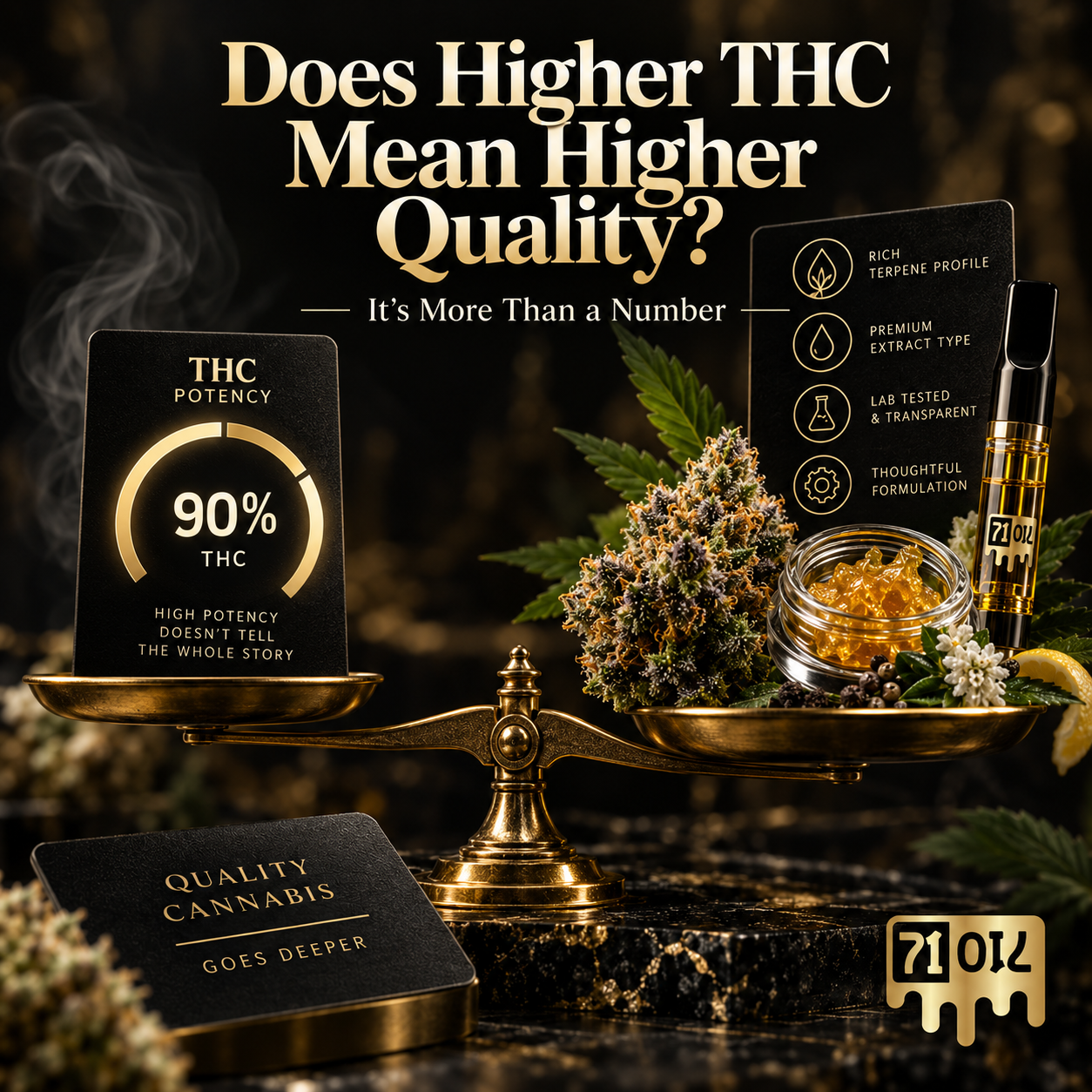
No. A higher THC value indicates a greater concentration of THC. It does not automatically establish extract quality, flavour, terpene content, ingredients, hardware performance, consistency, traceability, or overall product value.
A high THC number is not a quality grade, and potency can also change the risk picture. See our guide to high-THC cannabis vape risk.
The 71 Oil Beyond THC guide owns the broader “potency in context” discussion. The practical point here is narrower: THC can be one useful comparison value without becoming a universal quality score.
The same caution applies to shorthand terms such as full-spectrum, HTFSE, live resin, ceramic, craft, or luxury. Each term may add context when it is accurate, but none of them should replace product-specific information.
Premium Cannabis Vape Checklist
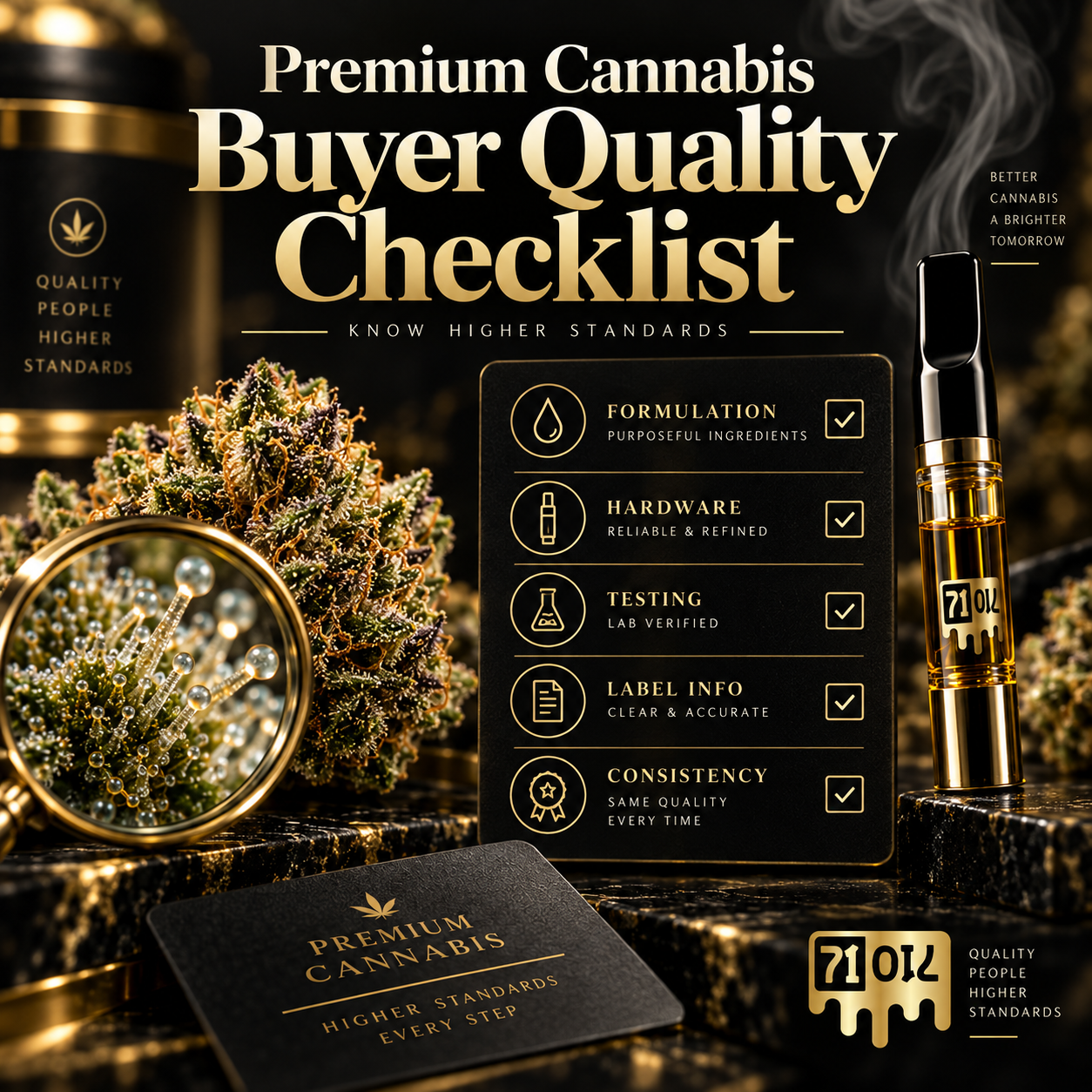
Before treating a cannabis vape as premium, compare the product against a consistent set of checks rather than one headline claim.
| What to Compare | What to Check |
|---|---|
| Legal source | Is the non-medical cannabis product sold through a retailer authorized by the applicable province or territory? |
| Total THC and Total CBD | Are the regulated cannabinoid values clear, with comparable units? |
| Extract type | Does the product identify distillate, full-spectrum, HTFSE, live resin, or another extract when that information is provided? |
| Ingredients | Does the cannabis extract label clearly disclose the declared formulation ingredients? |
| Terpene / flavour information | Are the sensory or terpene descriptions specific, product-relevant, and free from guaranteed effect claims? |
| Hardware | Are the device format, compatibility, charging requirements, and manufacturer instructions clear? |
| Traceability | Can you identify the lot number, packaging date, and manufacturer or licence-holder contact details? |
| Testing / COA | If additional test documentation is provided, does it match the correct product and lot or batch? |
| Claims | Does the product avoid unsupported promises about safety, purity, effects, or superiority? |
| Consistency | Are the specifications and descriptions clear enough to compare across purchases? |
Convenience can matter to buyers, but it is separate from product quality. See how ready-to-use cannabis formats are changing what adults compare.
Capacity is another specification that needs context. Our 5G disposable vape guide explains why size alone is not a quality grade and what product details should be compared with it.
How 71 Oil Approaches “Premium”: Evidence Before Adjectives
At 71 Oil, the editorial standard is to support quality language with specific product information. When a detail is confirmed, that can mean naming the extract type, cannabinoid information, terpene or flavour profile, hardware format, compatibility details, or testing information. When a detail is not verified, it should be left out rather than invented.
The same rule applies to product education. We do not use “premium” as a substitute for facts, and we do not turn THC, terpenes, extract terms, hardware features, or COAs into guaranteed-effect or safety claims.
| 71 Oil principle: The product facts should earn the positioning. The adjective should not have to do the work by itself. |
Frequently Asked Questions
What makes cannabis premium?
There is no official “premium cannabis” quality grade. In practical comparison, premium positioning is stronger when it is supported by verifiable product details such as extract type, cannabinoid and ingredient information, hardware, traceability, legal-market controls, consistency, and transparent claims.
Does expensive cannabis mean better quality?
Not automatically. Price can reflect format, hardware, production costs, retail pricing, or brand positioning. Compare the actual product information before using price as a quality signal.
Does higher THC mean premium cannabis?
No. THC describes cannabinoid concentration, not overall product quality. A higher THC value does not prove better extract quality, flavour, hardware, consistency, or a better fit for every adult.
Is full-spectrum cannabis more premium than distillate?
Not by definition. Full-spectrum and distillate describe different extract approaches. Neither term alone proves stronger, safer, purer, more flavourful, or higher-quality cannabis.
What makes a cannabis vape premium?
There is no official premium vape grade. Compare the extract and ingredients together with Total THC and Total CBD, flavour or terpene information when available, hardware specifications, compatibility, traceability, legal source, testing information, and the accuracy of the product description.
Premium Without the Hype
What makes cannabis premium is not one number, one extract term, or one design detail. A stronger quality comparison looks at the complete product and asks whether the formulation, hardware, regulated information, traceability, legal-market controls, and claims support the way it is positioned.
For adults comparing cannabis vapes, that means putting THC and price in context. Start with the regulated label and legal source, confirm the extract and ingredients, review the hardware, and use terpene, flavour, COA, or batch information as supporting context when it is available and product-specific.
Continue with Beyond THC, the HTFSE guide, the cannabis concentrates and extracts guide, or the cannabis vape label guide for deeper comparisons of the product details behind premium positioning.
Resources Used
- Health Canada – How to Read and Understand a Cannabis Product Label
- Health Canada – Packaging and Labelling Guide for Cannabis Products
- Health Canada – Reduce Your Risk: Choose Legal Cannabis
- Health Canada – Good Production Practices Guide for Cannabis
- Health Canada – Promotion of Cannabis: Prohibitions and Permissions
Source check: Regulatory statements were rechecked against current Government of Canada pages on 9 September 2026. Recheck the linked guidance during future substantive refreshes because federal guidance can change.
0 Responses