Weed Carts, THC Carts, and Vape Cartridges: What’s the Difference?
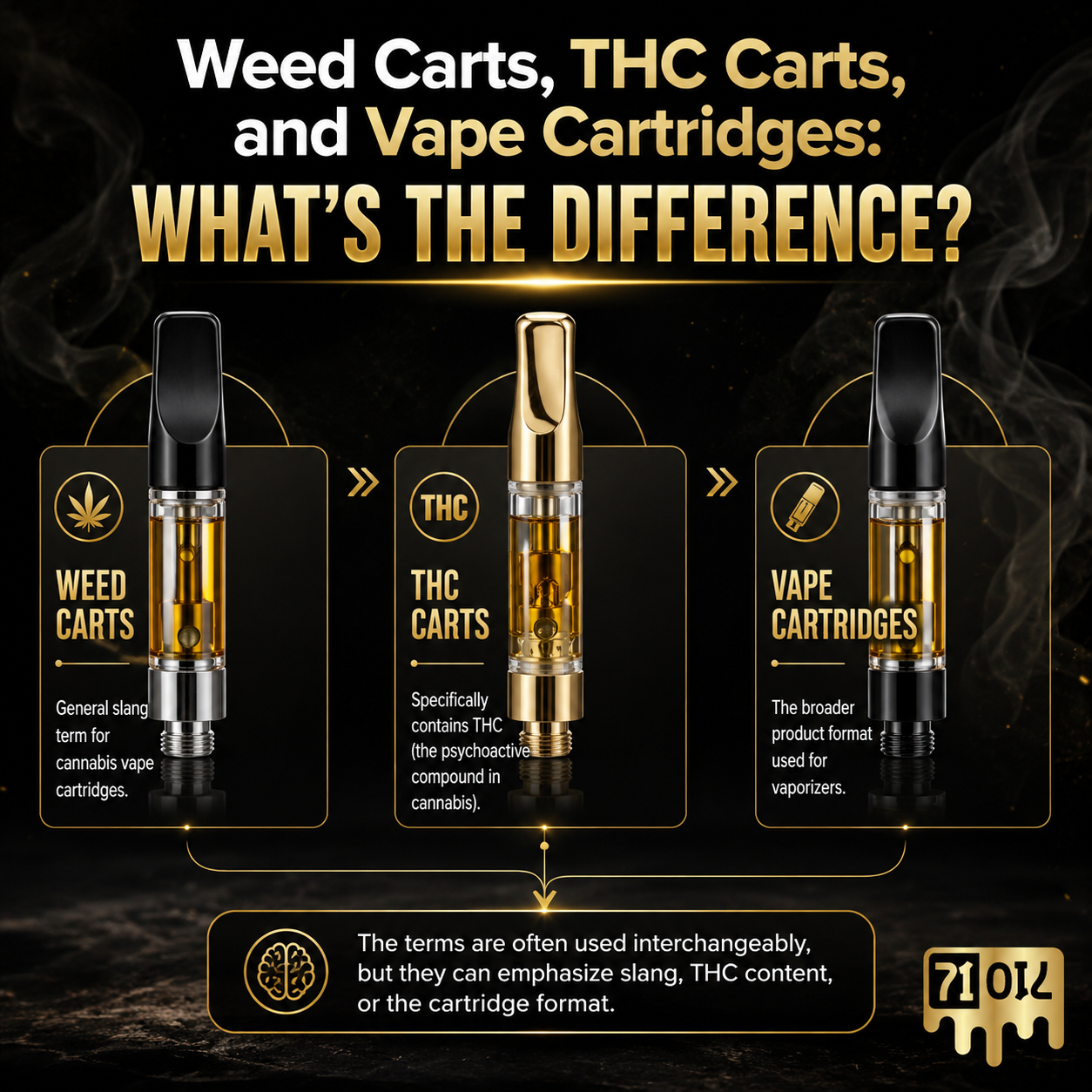
Weed cart vs THC cart and vape cartridges are related terms, but they are not always interchangeable.
A weed cart usually means a pre-filled cannabis vape cartridge. A THC cart refers more specifically to a cannabis cartridge containing THC. A vape cartridge is the broadest term.
Depending on the context, it may describe a cannabis cartridge containing THC and/or CBD, a nicotine cartridge, or another cartridge made for a vape device.
This guide explains the differences, how cannabis vape cartridges work, and what legal-age adult consumers should check before purchasing one.
TL;DR: Weed Cart vs THC Cart vs Vape Cartridge
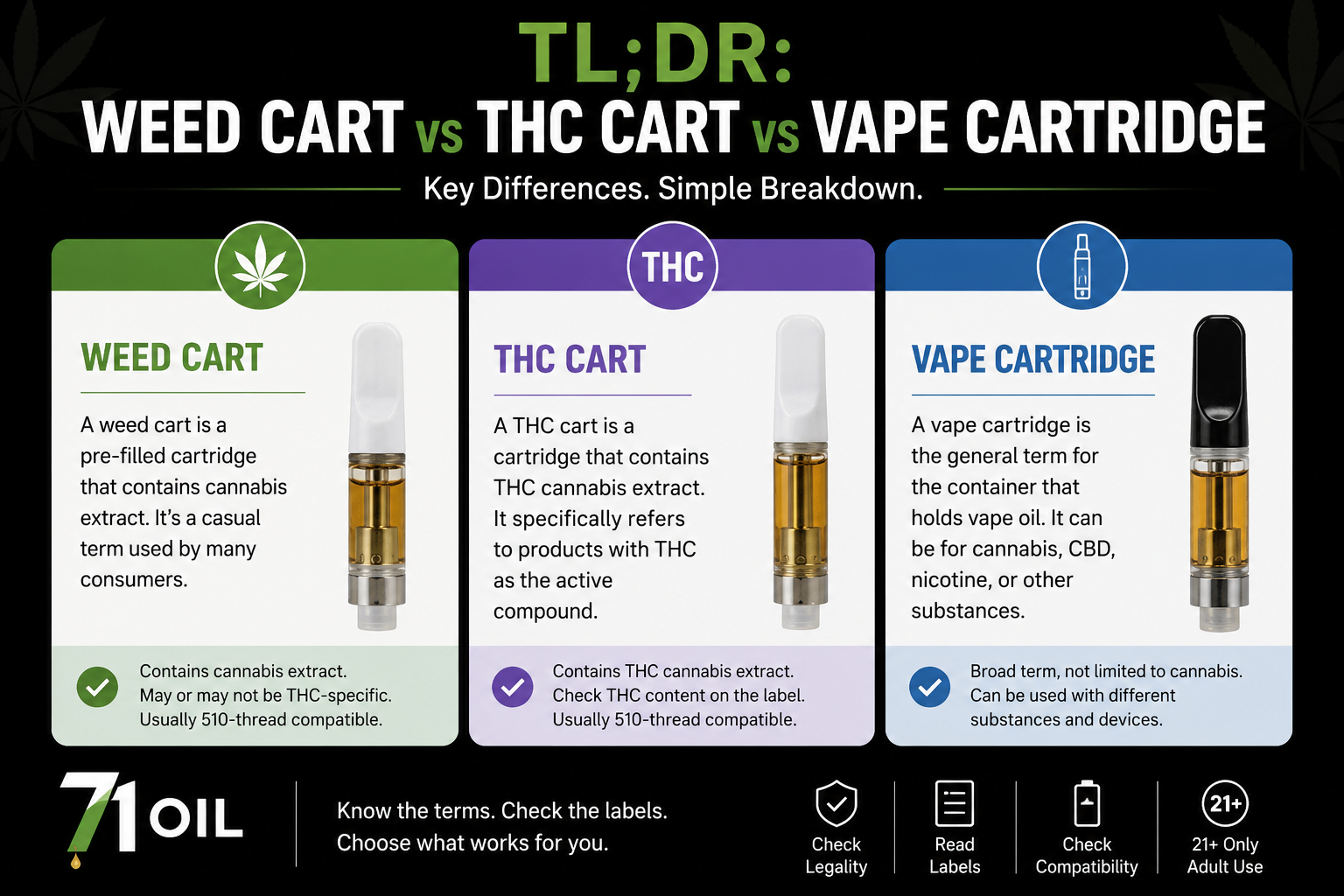
Weed cart: An informal term commonly used for a pre-filled cannabis vape cartridge.
THC cart: A cannabis vape cartridge containing THC.
Vape cartridge: A broader term for a cartridge designed for use with a vape device.
Terminology is only part of the comparison. Adults can also learn how to read a cannabis vape product label before comparing cartridge claims, cannabinoid values, or optional strain information.
71 Oil Tip: Check the product label and listing to confirm the cannabinoid content, net quantity, ingredients, extract type when provided, and device compatibility.
Why Do Weed Carts Have So Many Names?
Cannabis vape cartridges do not have one universally used name.
Consumers often use weed cart as a casual term for a cannabis cartridge. Brands and retailers may use THC cart to clarify that the cartridge contains THC.
The term vape cartridge describes the hardware format and may apply to cannabis and non-cannabis products.
Context determines what each term means.
When discussing cannabis products, weed cart vs THC cart often refer to the same general format: a cartridge containing cannabis extract that attaches to a compatible battery.
However, vape cartridge is less specific. It may describe a pre-filled cannabis cartridge, an empty refillable cartridge, or a cartridge containing another vape formulation.
For adult cannabis consumers, the product label and specifications are more reliable than the nickname used in a search result or product title.
Weed Cart vs. THC Cart vs. Vape Cartridge
These terms overlap, but each one has a slightly different meaning.
| Term | What It Usually Means | Common Use |
| Weed cart | A pre-filled cannabis vape cartridge | Informal cannabis shopping term |
| THC cart | A cannabis vape cartridge containing THC | More specific cannabis product term |
| Vape cartridge | A cartridge designed for a vape device | Broad hardware and product-format term |
A weed cart vs THC cart may describe the same cartridge. However, not every vape cartridge contains THC.
A cannabis cartridge may contain THC, CBD, or a combination of cannabinoids.
CBD is a cannabinoid found in cannabis, including hemp. In Canada, CBD products are regulated under the Cannabis Act and its regulations.
Unlike THC, CBD does not produce the same intoxicating effect, although it can still affect the body and brain. Health Canada provides more information in its guide to reading and understanding cannabis product labels.
When comparing products, confirm what the cartridge contains rather than relying only on the term used to describe it.
What Do the Numbers on a Weed Cart Mean?
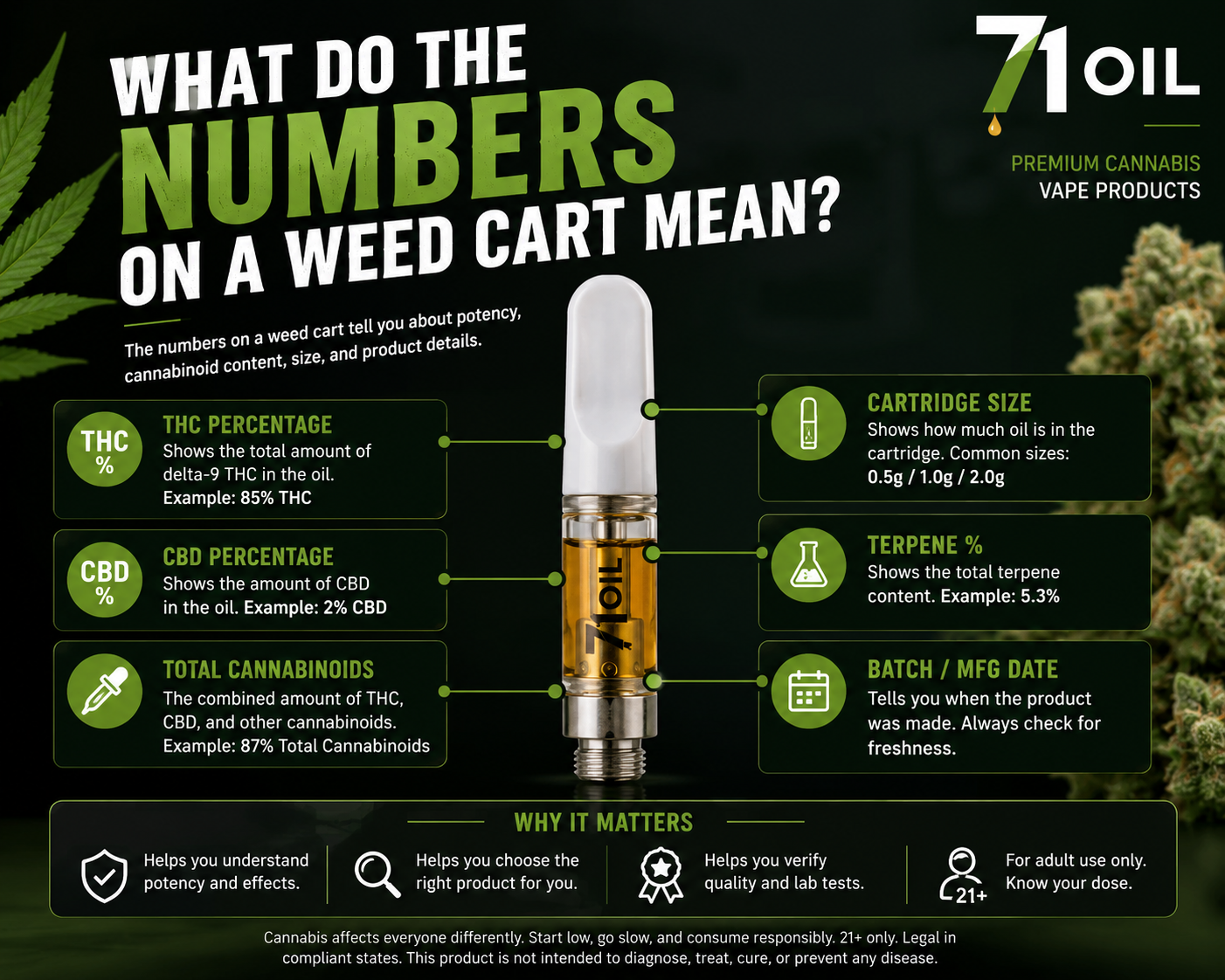
Cannabis cartridge labels may include numbers for THC, CBD, net quantity, lot information, and other product details.
THC Content
THC, or delta-9-tetrahydrocannabinol, is the main intoxicating cannabinoid in cannabis.
Legal Canadian cannabis labels must display Total THC and Total CBD on the front of the package. These values help consumers compare cannabinoid content across products. Learn more from Health Canada’s cannabis label guide.
A higher THC number does not automatically make one cartridge a better choice. Extract type, formulation, terpene information, hardware, serving size, tolerance, and individual response may also shape the experience.
For a broader explanation, see why adults may look beyond THC when comparing product quality and characteristics.
CBD Content
CBD, or cannabidiol, does not produce the same intoxicating effect as THC. However, it remains an active cannabinoid and may affect the product’s overall cannabinoid profile.
Review the Total CBD information when comparing cartridges, especially when products contain different THC-to-CBD ratios. Health Canada explains how these amounts appear on legal cannabis product labels.
Cartridge Size
Cartridge size refers to the net quantity of cannabis extract inside the cartridge. Check the package to confirm how much extract the product contains.
Also review:
- THC and CBD content
- Extract type
- Ingredients
- Cartridge hardware
- Battery compatibility
- Product source
Extract Type
The product package or listing may identify the extract used in the cartridge.
Common examples include:
- Distillate
- Live resin
- HTFSE
- Other full-spectrum or terpene-focused extracts
The extract type may influence the cartridge’s flavor, aroma, terpene character, and overall formulation.
However, terms such as distillate, live resin, and HTFSE may be voluntary product information rather than required wording on every regulated label.
When this information does not appear on the package, check the authorized retailer’s listing or the producer’s official product specifications.
Lot Number and Package Information
Legal cannabis products sold in Canada carry required information that helps consumers identify and compare products.
For a cannabis extract such as a vape cartridge, the package must include required information such as:
- Brand name
- Cannabis product class
- Total THC and Total CBD
- Net quantity
- Lot number
- Packaging date
- Recommended storage conditions
- Licence-holder contact information
- Mandatory health warning
- “Keep out of reach of children” warning statement
- Ingredient list
Additional information, such as the strain name, extract subtype, terpene content, or expiry date, may be included voluntarily and may not appear on every product.
Health Canada outlines the required elements in its packaging and labelling guide for cannabis products.
Will Every Weed Cart Work With Every Vape Pen?
No. Not every cannabis cartridge works with every vape battery.
Many cannabis cartridges use a 510-thread connection and require a compatible 510-thread battery. However, having the same connection does not guarantee that every cartridge will perform properly with every battery.
For the full system behind a cartridge, see how a cannabis vape works from battery power and the heating element to the extract, aerosol, and mouthpiece.
Compatibility can also depend on:
- Cartridge dimensions
- Battery design
- Contact-point placement
- Airflow
- Voltage range
- Manufacturer instructions
Some products use brand-specific pod systems. These pods only work with the matching device.
Disposable vape pens use a different setup. The battery, heating element, and extract chamber are built into one integrated device. They do not require a separate cartridge or reusable battery.
Before purchasing a cartridge, check three details.
Connection Type
Confirm whether the cartridge uses a 510-thread connection, a proprietary pod system, or another hardware format.
Battery Compatibility
Review the cartridge and battery specifications. A cartridge may use a common connection but still be unsuitable for a particular battery design.
Voltage Recommendations
Follow the recommended voltage range when the producer or hardware manufacturer provides one. Excessive heat may affect vapor production, flavor, and cartridge performance.
Compatibility is also relevant when flavour changes during use. See why a cart can taste burnt and which warning signs should end troubleshooting.
71 Oil Tip: A cartridge may attach to a battery but still perform poorly when the voltage, airflow, or hardware design does not suit the formulation. Review both the cartridge and battery instructions before use.
How to Choose the Right Weed Cart
The right cannabis cartridge depends on its formulation, hardware, product information, and compatibility with your device.
Purchase From an Authorized Source
In Canada, legal non-medical cannabis is sold through retailers authorized by provincial or territorial governments.
Health Canada maintains information about authorized cannabis retailers in each province and territory. Legal products are produced by federal licence holders and sold through authorized channels, subject to applicable exceptions for medical cannabis.
Review the THC and CBD Information
Compare the Total THC and Total CBD values on the package.
Potency is important, but it is only one part of the product. Also consider the extract type, formulation, ingredients, cartridge hardware, and your individual tolerance.
Check the Extract and Ingredients
The product listing may identify whether the cartridge contains distillate, live resin, HTFSE, or another cannabis extract.
Cannabis extract labels also include an ingredient list. Review it to understand what the formulation contains and identify ingredients you may prefer to avoid.
Health Canada’s packaging and labelling guide shows the required information for cannabis extracts.
Confirm the Net Quantity
Check how much cannabis extract the cartridge contains.
A larger cartridge contains more extract, but net quantity alone does not determine product suitability. Compare size with the cannabinoid information, formulation, hardware, price, and expected use.
Check Device Compatibility
Confirm that the cartridge works with your battery.
A 510-thread cartridge requires a compatible 510-thread battery. A proprietary pod requires the matching device. When compatibility is not stated on the package, check the retailer listing, product page, or manufacturer instructions.
Inspect the Packaging and Hardware
Before use, check that the packaging is sealed and the cartridge is not visibly damaged.
Do not use a cartridge that:
- Is cracked or leaking
- Appears opened or altered
- Has severely damaged hardware
- Does not attach securely or according to the manufacturer’s instructions
Clear product information should identify the cartridge contents and explain which device or connection type it requires.
What to Avoid When Buying a Weed Cart
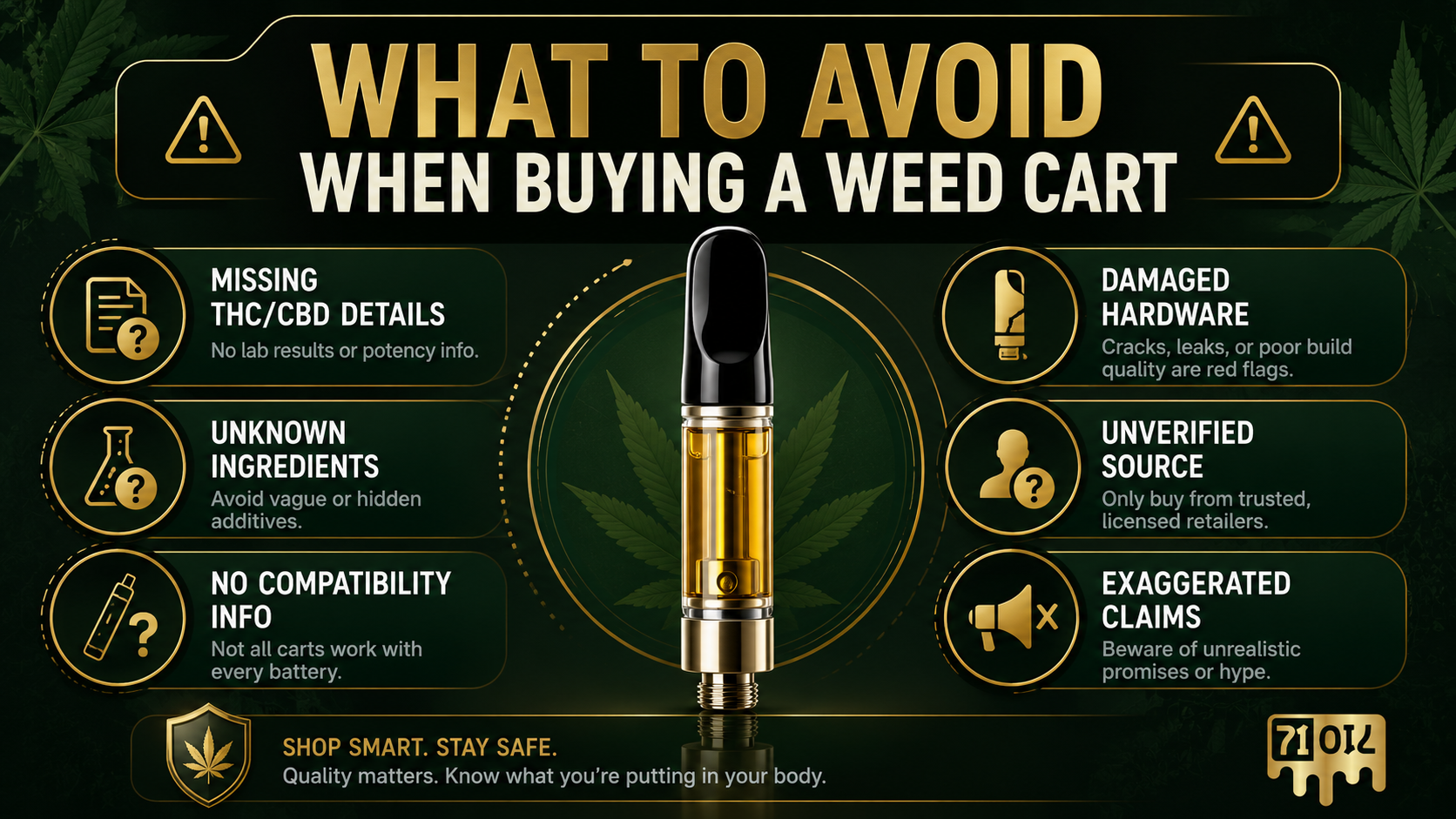
Avoid cannabis cartridges with unclear sourcing, altered packaging, damaged hardware, or missing required information.
Warning signs may include:
- Missing Total THC or Total CBD information
- No identifiable brand or licence-holder details
- Missing lot number or packaging date
- No ingredient list
- Damaged, opened, or leaking packaging
- Cracked or altered hardware
- Sale through an unauthorized source
- Unsupported medical, therapeutic, or safety claims
Legal cannabis packaging generally includes plain, child-resistant packaging, a bilingual health warning, an excise stamp, and the standardized cannabis symbol when required. Health Canada explains these indicators in its guide to identifying legal cannabis products.
Some exceptions apply. For example, certain low-THC products may not require an excise stamp or standardized cannabis symbol. Review the full package rather than relying on one feature alone.
Extract subtype and device compatibility may not appear on every regulated label. Check the authorized retailer listing or producer instructions when those specifications are not shown.
Do not use price alone as a measure of cartridge quality. Instead, review the source, label information, ingredients, package condition, and product specifications.
A complete label does not remove the potential risks associated with cannabis vaping. However, it gives legal-age adults important information that can support a more informed purchasing decision.
Learn more in our guide to the main health risks of vaping cannabis, including respiratory concerns, product-quality risks, and responsible-use considerations.
Weed Cart vs. Disposable Vape Pen
A weed cart is a separate cannabis vape cartridge that attaches to a compatible battery. A disposable or all-in-one vape pen integrates the battery, heating system, and extract chamber into one device.
For a full hardware comparison, see our guide to a vape cartridge vs. disposable vape pen, including battery setup, charging, compatibility, maintenance, and replacement requirements.
The main difference is the hardware setup.
Weed Cart
A separate cartridge-and-battery system may provide:
- The option to reuse a compatible battery
- More flexibility when selecting cartridges
- Access to compatible voltage settings
- Separate replacement of the cartridge and battery
Disposable Vape Pen
An integrated disposable vape may provide:
- A ready-to-use format
- No separate battery purchase
- Fewer compatibility decisions
- A self-contained design
Both formats may contain THC cannabis extract. The individual experience can vary based on cannabinoid content, extract type, formulation, hardware, serving size, tolerance, and personal sensitivity.
Frequently Asked Questions
What is the difference between a weed cart and a vape cartridge?
A weed cart usually refers to a pre-filled cannabis vape cartridge. Vape cartridge is a broader term that may describe a cannabis, nicotine, or other cartridge designed for a vape device.
What is a THC cart?
A THC cart is a vape cartridge containing THC cannabis extract. Review the product label for Total THC, Total CBD, ingredients, net quantity, and other product information.
What should I check before buying a weed cart?
Check the authorized product source, Total THC and Total CBD, ingredients, net quantity, packaging condition, lot number, packaging date, extract information when provided, and battery compatibility.
Do weed carts need a battery?
Most pre-filled cannabis cartridges require a separate compatible battery. Many use a 510-thread connection, while others require a brand-specific pod device.
Is a disposable vape pen the same as a weed cart?
No. A weed cart is a separate cartridge that attaches to a compatible battery. A disposable vape pen combines the battery, heating system, and extract chamber in one device.
Does cartridge size affect which weed cart to choose?
Cartridge size determines how much cannabis extract the product contains. However, size should not be the only consideration. Also review the cannabinoid content, extract type, ingredients, hardware, product source, and compatibility.
Compare Cannabis Vape Formats Using Clear Product Information
Weed cart and THC cart often describe similar cannabis products, while vape cartridge is the broader term. Before purchasing, confirm the cartridge contents, legal source, label information, extract details, and device compatibility.
Explore 71 Oil’s cannabis vape cartridges and 5G disposable vape pens to compare available product formats. You can also read our guide to 510-thread batteries before selecting a separate cartridge-and-battery setup.
0 Responses