

What Happens If You Vape Cannabis Every Day?
Vaping cannabis every day or almost every day is a higher-risk use pattern than less frequent use. Health Canada advises avoiding daily or near-daily cannabis use because risks to mental health and brain function are greatest at this frequency. With cannabis vapes, concentrated THC and repeated aerosol exposure add further considerations.
The outcome is not the same for everyone. Product strength, amount used, age, health history, other substances, and individual sensitivity can all affect risk. Long-term evidence specific to cannabis vaping is still developing, so the evidence does not support saying that daily vaping will inevitably cause a particular disease in every person.
TL;DR: What Happens If You Vape Cannabis Every Day?
| QUICK ANSWER
Daily or near-daily cannabis vaping increases repeated exposure to THC and inhaled aerosol. Over time, frequent use can increase the likelihood of tolerance, dependence, THC-related adverse effects, impairment, and respiratory symptoms. High-THC products can add to some of these risks. Daily use alone does not diagnose cannabis use disorder, and individual outcomes vary. |
In This Guide
- What daily or near-daily cannabis vaping means
- How frequent use can change risk
- Tolerance and dependence
- Lung and aerosol exposure
- Why THC strength matters
- Memory, attention, and mental health
- Impairment and safety-sensitive activities
- Long-term evidence limits
- Signs that use may be becoming a problem
- When to seek medical help
- Ways adults can reduce risk
- Frequently asked questions
What Does Daily or Near-Daily Cannabis Vaping Mean?
Public-health guidance commonly treats daily and near-daily cannabis use as a higher-risk frequency pattern. Health Canada specifically recommends avoiding daily or near-daily use as a way to reduce cannabis-related health risks.
Frequency matters more than an arbitrary puff count. A puff is not a standardized cannabis dose. THC concentration can differ widely between products, while device output, draw length, aerosol production, temperature, and user technique can change how much is inhaled. Two people taking the same number of puffs may therefore receive very different amounts of THC.
This is why a question such as “How many puffs a day is safe?” does not have a reliable universal answer. No puff count can establish a risk-free daily amount.
What Can Change When You Vape Cannabis Every Day?
Daily use creates repeated exposure to both THC and cannabis-vape aerosol. That frequency can change the risk picture in several ways.
Repeated THC exposure can contribute to tolerance. Frequent use also creates more opportunities for impaired judgment, coordination, or reaction time to affect driving and other activities. Over time, some people may find it harder to reduce their use or may continue despite problems, which can be signs of cannabis use disorder.
At the same time, daily vaping means repeated inhalation of aerosol. Vaping avoids combustion, but it still exposes the respiratory system to substances produced or carried in the aerosol.
Can Daily Cannabis Vaping Increase Tolerance?
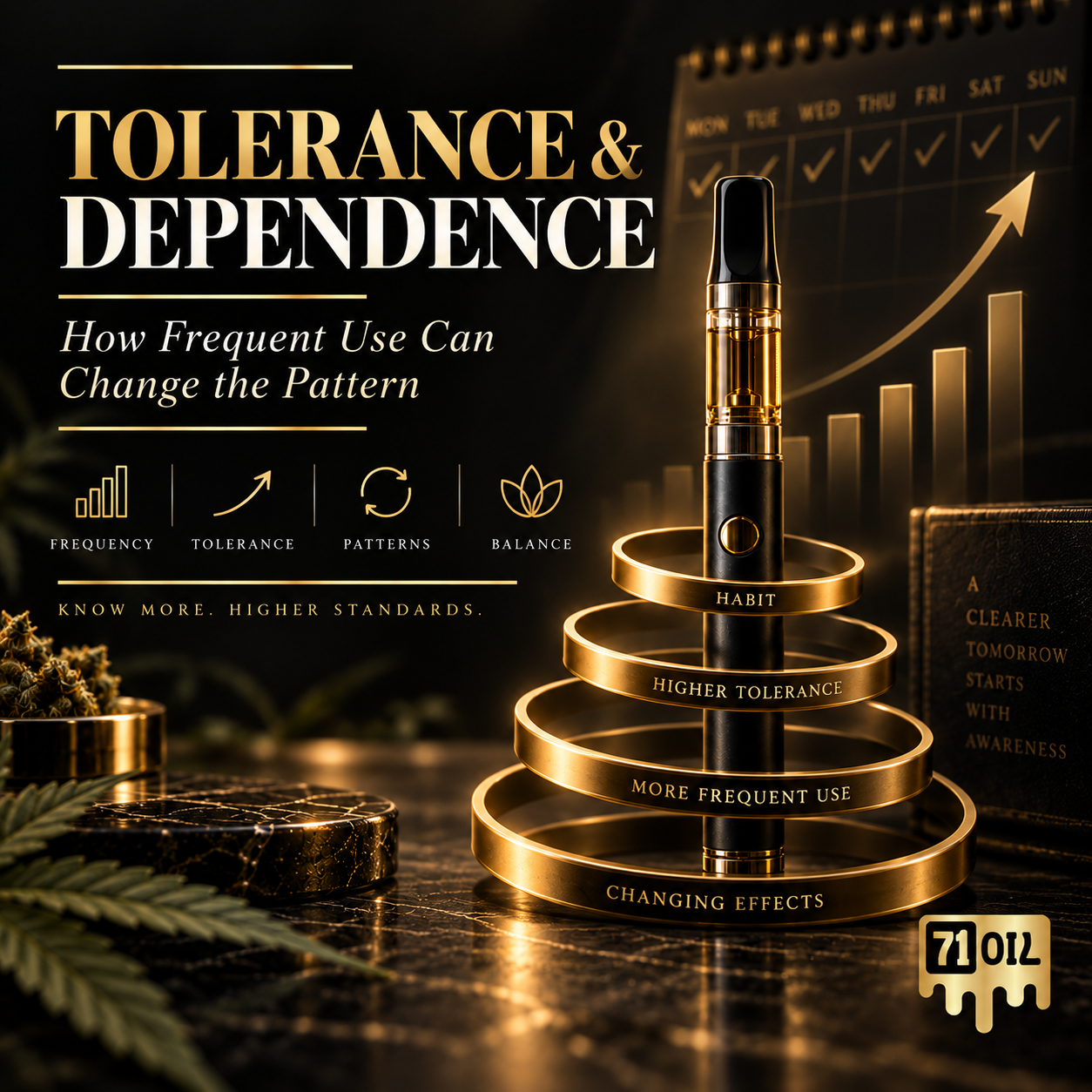
Yes. Tolerance can develop with repeated cannabis use. In simple terms, tolerance means a person may need more cannabis to achieve effects similar to those they experienced before.
Health Canada lists increased tolerance among signs that can appear with cannabis dependence. The CDC also includes needing more cannabis to get the same effect among signs of cannabis use disorder.
Rising tolerance is not proof that someone has a disorder, but it can be a reason to look more closely at the pattern of use, especially if it appears together with cravings, using more than intended, or difficulty cutting down.
Tolerance also does not make driving or other safety-sensitive activities reliably safe. A person may feel accustomed to cannabis while THC can still affect attention, coordination, reaction time, judgment, and decision-making.
Does Vaping Cannabis Every Day Cause Addiction?
Not automatically. Daily use by itself does not diagnose cannabis use disorder. However, frequent cannabis use increases the risk.
Cannabis use disorder describes a pattern in which cannabis becomes difficult to control or continues despite meaningful problems. The CDC identifies signs such as using more than intended, trying but failing to quit, craving cannabis, continuing despite problems at home or work, using in high-risk situations, and needing more cannabis to get the same effect.
Health Canada also lists signs of dependence that can include cravings, difficulty stopping or reducing use, feeling a need to use cannabis, increased tolerance, and feeling restless, moody, or anxious when not using cannabis.
An online article cannot diagnose cannabis use disorder. Adults who are concerned about loss of control, withdrawal-like symptoms, or the effect of cannabis on daily responsibilities should consider speaking with a healthcare professional or substance-use support service.
What Can Daily Cannabis Vaping Mean for Your Lungs?
Cannabis vaping avoids burning plant material, but it still produces an inhaled aerosol. Health Canada states that cannabis-vaping aerosol can contain harmful substances and that contaminants such as heavy metals may leach into cannabis extract and be inhaled.
Cannabis-vaping-specific respiratory research is still limited. One cross-sectional study of young adults found that cannabis vaping was associated with higher odds of bronchitic symptoms, and more frequent recent cannabis vaping was associated with wheeze. Because the study was observational and cross-sectional, it cannot prove that vaping caused those symptoms in every participant.
That distinction is important. The evidence supports caution, not a claim that daily cannabis vaping will inevitably produce a specific lung disease.
For fuller respiratory coverage, read How Does Vaping Cannabis Affect Your Lungs?.
Frequent indoor use can also increase aerosol exposure for people sharing the space. Our secondhand cannabis vape aerosol guide explains what is known about bystander exposure and indoor air.
Why Does THC Strength Matter With Daily Vaping?
Frequency is only one part of the risk picture. THC concentration matters too.
Health Canada notes that cannabis vape extracts can contain very high levels of THC. Higher THC exposure can increase the likelihood of stronger intoxication and other adverse effects. Health Canada also warns that higher-THC products can increase mental-health and dependence risks, especially when cannabis is used every day or most days.
This makes the combination of frequent use and high THC particularly important. Adults should read legal cannabis product labels and compare THC information instead of assuming that cartridges, disposables, or extracts have similar strength.
Choosing a lower-THC product may reduce some THC-related risks. It does not make cannabis vaping safe or risk-free.
Can Daily Cannabis Use Affect Memory and Attention?
Yes, cannabis can affect brain functions involved in memory, concentration, attention, learning, and decision-making. Health Canada specifically warns that daily or near-daily use can affect mental health and brain function over time.
The degree of effect is not identical for everyone. THC exposure, frequency, duration of use, age, other substances, and individual factors can influence how cannabis affects a person.
This is another reason that feeling “used to” cannabis should not be treated as evidence that attention, judgment, or reaction time is unaffected.
What About Anxiety, Depression, and Mental Health?
Mental-health risk requires careful wording because cannabis does not affect every person in the same way.
Health Canada states that daily or near-daily cannabis use over time can increase the chances of disorders related to anxiety and depression. Frequent use can also contribute to dependence and difficulty regulating emotions. In severe cases, daily or near-daily use can increase the chance of psychosis and schizophrenia, with risk influenced by factors such as personal or family history and age.
Higher THC can add to this risk. Health Canada advises choosing products with lower THC levels as one way to reduce mental-health and brain-function risks.
These associations do not mean that every daily cannabis user will develop a mental-health disorder. They do mean that frequent and high-THC use should not be treated as harmless simply because cannabis is legal.
Does Daily Use Change Cannabis Impairment?
Frequent users may develop tolerance to some subjective effects, but tolerance does not establish a safe driving threshold.
Health Canada states that THC can affect coordination, reaction time, attention, decision-making, and the ability to judge distances. Cannabis-related impairment can also last after the obvious feeling of intoxication has faded.
Adults should not drive or operate machinery while impaired. Combining cannabis with alcohol or other psychoactive substances can increase impairment further. [5]
Are the Long-Term Effects of Daily Cannabis Vaping Fully Known?
No. Long-term evidence specific to cannabis vaping remains incomplete.
Researchers have stronger evidence about some risks of frequent cannabis use in general, including tolerance, dependence, impairment, and mental-health concerns. They also know that cannabis vaping can expose the lungs to aerosol constituents and contaminants.
What remains less certain is how years of daily cannabis-vape use affect the lungs across different devices, formulations, THC concentrations, temperatures, and individual patterns of use.
A responsible health article should preserve that uncertainty. Findings from cigarette smoking or nicotine vaping should not be used as substitutes for cannabis-vaping evidence when the products, exposures, and study populations differ.
What Signs Can Suggest Daily Use Is Becoming a Problem?
No single sign proves cannabis use disorder. Patterns become more concerning when they repeat, intensify, or begin to affect health, safety, relationships, or responsibilities.
| Pattern or sign | Why it deserves attention |
|---|---|
| Needing more cannabis to get a similar effect | May indicate rising tolerance. |
| Using more or more often than intended | Can suggest reduced control over use. |
| Repeated unsuccessful attempts to cut down | A recognized sign of cannabis use disorder. |
| Strong cravings or frequent thoughts about cannabis | Can occur with dependence. |
| Continuing despite problems at work, home, or in relationships | Suggests cannabis use is interfering with daily life. |
| Using cannabis before driving or other high-risk activities | Increases impairment and injury risk. |
| Persistent cough, wheeze, chest discomfort, or breathing changes | Deserves professional evaluation rather than self-diagnosis. |
Dependence signs and respiratory symptoms are not the same thing. A person can have one without the other, and an online checklist cannot provide a diagnosis.
When Should You Seek Medical Help?
Persistent cough, wheeze, chest discomfort, or breathing changes after vaping deserve professional evaluation, especially if they are new, worsening, or do not resolve.
Seek urgent medical attention for severe symptoms such as trouble breathing, chest pain, loss of consciousness or fainting, seizures, severe confusion, repeated vomiting, or rapid deterioration. Tell the healthcare professional that cannabis or a vaping product was used, because that history can help with assessment.
For more context on respiratory warning signs, read Early Warning Signs of Lung Problems After Vaping and What Is VALI or EVALI? Vaping-Associated Lung Injury Explained.
Can Adults Reduce the Risks of Frequent Cannabis Vaping?
The lowest-risk option is not using cannabis. For adults who choose to use it, Health Canada recommends avoiding daily or near-daily use as an important risk-reduction step.
Other practical considerations include reducing frequency, choosing products with lower THC, reading legal product labels, avoiding cannabis before driving or other safety-sensitive activities, and using products from legal regulated sources. Adults should also stop using a product and seek professional advice if concerning symptoms develop.
Legal status does not make a cannabis vape harmless. Lower THC does not make it risk-free. These choices can reduce some risks, but they do not remove them.
For practical precautions, read our Cannabis Vaping Tips for Responsible Adult Use guide.
Frequently Asked Questions
Is it safe to vape cannabis every day?
Daily or near-daily cannabis use is a higher-risk pattern. Frequent use is associated with greater risks involving tolerance, dependence, mental health, cognition, and impairment. Cannabis vaping also exposes the lungs to aerosol. No daily vaping pattern can be described as risk-free.
Does vaping cannabis every day mean you are addicted?
No. Daily use alone does not diagnose cannabis use disorder. Frequent use does increase the risk. Cravings, difficulty cutting down, using more than intended, rising tolerance, and continuing despite problems are signs that deserve attention.
Can cannabis vape tolerance increase with daily use?
Yes. Repeated cannabis use can increase tolerance, meaning a person may need more cannabis to achieve similar effects. Rising tolerance can occur without a disorder, but it can also appear alongside other signs of dependence.
Are high-THC vapes riskier with daily use?
Higher THC can increase intoxication and the likelihood of some adverse effects. Health Canada identifies high THC and daily or near-daily use as important risk factors, particularly for mental-health and dependence-related harms.
Can daily cannabis vaping affect your lungs?
Daily vaping increases repeated aerosol exposure. Cannabis-vaping aerosol can contain harmful substances and contaminants, and observational research has linked cannabis vaping with respiratory symptoms such as bronchitic symptoms and wheeze. Long-term cannabis-vaping-specific evidence is still developing.
Is occasional cannabis vaping risk-free?
No. Less frequent use may reduce some frequency-related risks compared with daily or near-daily use, but cannabis vaping still involves THC-related impairment and inhalation of aerosol. Less frequent does not mean risk-free.
Daily Cannabis Vaping Deserves More Attention Than Puff Count
The main question is not whether someone takes an exact number of puffs. Frequency, THC concentration, individual response, aerosol exposure, and signs of tolerance or dependence matter more than an arbitrary puff total.
Daily or near-daily cannabis use is a higher-risk pattern. Adults who choose to use cannabis can reduce some risks by using less often, choosing lower-THC products, avoiding impaired driving, using legal regulated products, and paying attention to concerning symptoms or loss of control.
Those steps reduce risk; they do not make cannabis vaping safe.
Related reading: review the main health risks of vaping cannabis and our Cannabis Vaping Tips for Responsible Adult Use.
Resources Used
- Health Canada – Cannabis and your health
- Health Canada – Cannabis and mental health
- Health Canada – Canada’s Lower-Risk Cannabis Use Guidelines
- Health Canada – Cannabis accessories for inhalation
- Health Canada – Cannabis impairment and safety risk
- CDC – Understanding Your Risk for Cannabis Use Disorder
- PubMed – Assessment of Nicotine and Cannabis Vaping and Respiratory Symptoms in Young Adults
- Health Canada – Risks of vaping
- Health Canada – Cannabis for medical purposes: Side effects
- Public Health Agency of Canada – Vaping-associated lung illness
0 Responses