

Early Warning Signs of Lung Problems After Vaping Cannabis
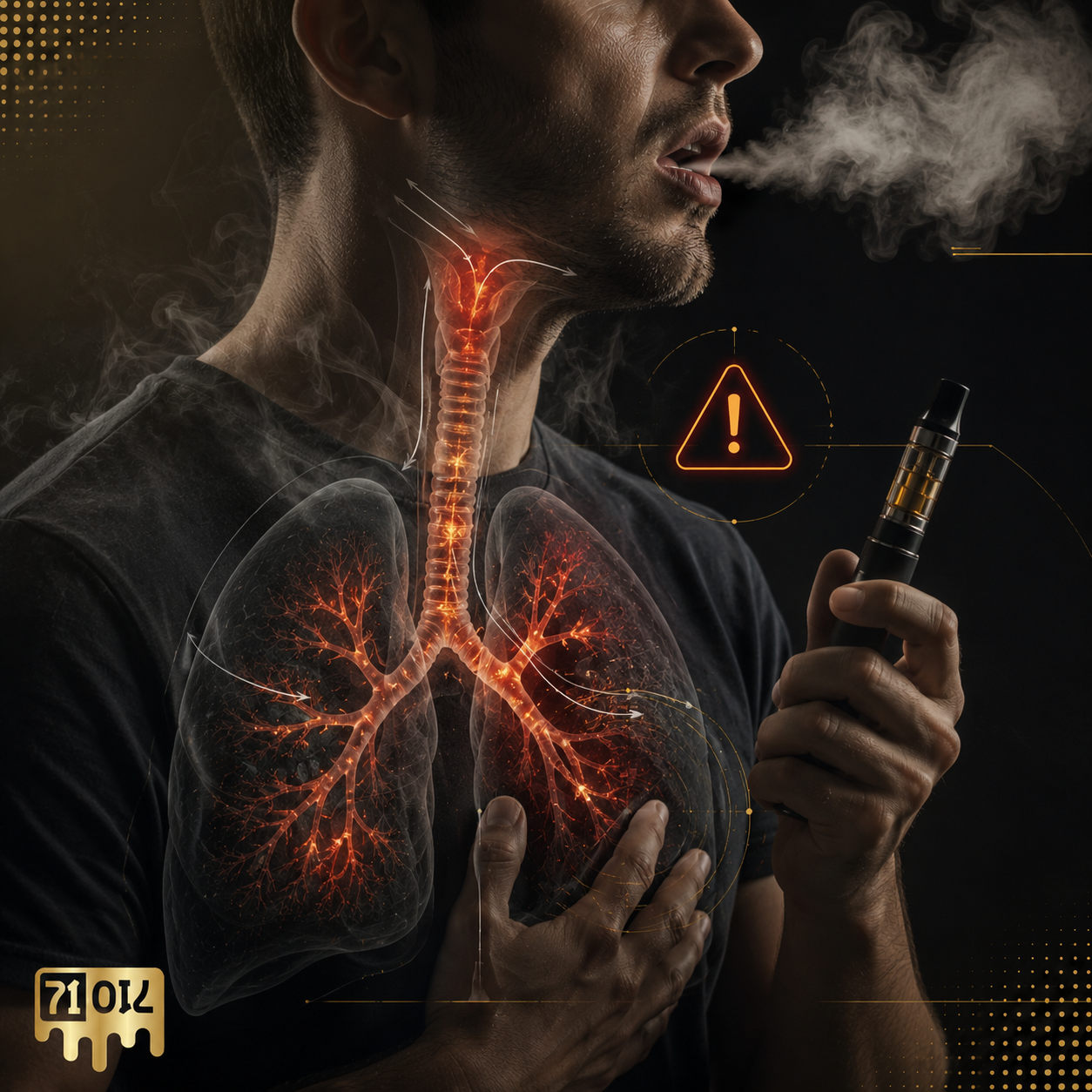
Early signs of lung problems from vaping can include persistent coughing, wheezing, chest discomfort, shortness of breath, or other respiratory changes.
These symptoms do not prove that vaping caused lung damage, but persistent, worsening, severe, or combined symptoms should not be ignored. Health Canada lists several respiratory effects associated with smoking or vaping cannabis.
There is no reliable symptom checklist that can tell you at home whether your lungs are injured or what caused a symptom.
Cough, breathlessness, chest discomfort, fever, and fatigue can occur with many unrelated conditions. The pattern, severity, and progression of symptoms matter, and a healthcare professional is needed to assess the cause.
| Medical information notice
This article provides general educational information and is not medical advice. Seek professional medical care for symptoms or concerns related to cannabis vaping. |
Key Takeaways
- A new or worsening cough, wheeze, shortness of breath, chest discomfort, or throat/lung irritation can deserve attention after cannabis vaping.
- Symptoms alone cannot diagnose lung injury, bronchitis, asthma, pneumonia, VALI/EVALI, or another condition.
- Fever, chills, fatigue, nausea, or diarrhea can occur with vaping-associated lung illness, especially alongside respiratory symptoms.
- Chest pain, trouble breathing, loss of consciousness, seizures, or a serious allergic reaction are medical emergencies.
- PHAC advises people who currently vape or have vaped in the past and develop listed symptoms or feel generally unwell to see a healthcare provider or visit the nearest Emergency Department.
In This Guide
- What are the early warning signs of lung problems after vaping cannabis?
- Does a cough after vaping mean your lungs are damaged?
- What about wheezing or shortness of breath?
- Is chest pain or chest discomfort a warning sign?
- Can fever, chills, fatigue, nausea, or diarrhea matter?
- Could these symptoms be VALI or EVALI?
- When should you seek medical care after cannabis vaping?
- What should you tell a healthcare provider?
- What should adults do if symptoms start or worsen?
- Frequently asked questions
- What adults should remember
What Are the Early Warning Signs of Lung Problems After Vaping Cannabis?
The phrase “early warning signs” can be misleading because vaping-related respiratory problems do not follow one fixed sequence.
A cough may appear before breathlessness for one person, while another person may notice chest discomfort or wheezing first. The important question is whether a symptom is new, persistent, worsening, severe, or occurring with other signs of illness.
Health Canada identifies cough, shortness of breath, chest pain or discomfort, and throat and lung irritation as possible side effects from smoking or vaping cannabis. These symptoms are not specific to one diagnosis and should not be treated as proof that the lungs are “damaged.”
- New or worsening cough, especially when it keeps returning or becomes more intense.
- Wheezing or a whistling sound in the chest.
- Shortness of breath or increasing difficulty breathing, including with activity.
- Chest pain or chest discomfort.
- Persistent throat or lung irritation after vaping.
Does a Cough After Vaping Mean Your Lungs Are Damaged?
No. A cough after vaping can reflect airway irritation, but a cough by itself cannot establish whether there is lung injury, what caused it, or how serious it is.
Avoid labels such as “normal vape cough” or “harmless cough,” because those phrases can give false reassurance when symptoms are persistent or changing.
There is also no reliable universal number of hours or days that a person should wait for a cough to disappear. A persistent, worsening, recurrent, or severe cough deserves more attention, particularly when it occurs with shortness of breath, chest symptoms, fever, chills, marked fatigue, nausea, diarrhea, or a general feeling of being unwell.
What About Wheezing or Shortness of Breath?
Wheezing and breathlessness are airflow symptoms that deserve attention when they are new or increasing. In a cross-sectional study of U.S. adults, researchers found that lifetime e-cigarette use with marijuana was associated with self-reported wheeze, exercise-related wheeze, and nighttime dry cough. The Xie and Li study was observational and cross-sectional, so it cannot prove that cannabis vaping caused those symptoms in individual participants.
Increasing shortness of breath or trouble breathing is more concerning than a brief mild sensation. It should not be self-diagnosed or managed solely from an online article, especially if breathing becomes difficult, symptoms worsen, or chest pain is present.
Is Chest Pain or Chest Discomfort a Warning Sign?
Chest pain or discomfort can occur for many reasons, and an online article cannot determine the cause. Health Canada includes chest pain or discomfort among possible side effects from smoking or vaping cannabis, and it lists chest pain and trouble breathing among examples of medical emergencies related to cannabis.
Do not keep vaping to test whether the symptom happens again. If chest pain is severe, persistent, or accompanied by trouble breathing, fainting, loss of consciousness, or another emergency sign, seek emergency care.
Can Fever, Chills, Fatigue, Nausea, or Diarrhea Matter?
Yes, but these symptoms are non-specific.
Public Health Agency of Canada guidance on VALI lists nausea, diarrhea, chills, fatigue, fever, and poor appetite among symptoms that may occur with the illness. During Canada’s outbreak investigation, respiratory symptoms such as cough and shortness of breath were central, and many cases also involved gastrointestinal or constitutional symptoms.
Stomach symptoms or fatigue alone are not evidence of a vaping-related lung injury. They become more relevant when they appear alongside respiratory symptoms, especially if the overall illness is worsening or the person feels generally unwell.
Could These Symptoms Be VALI or EVALI?
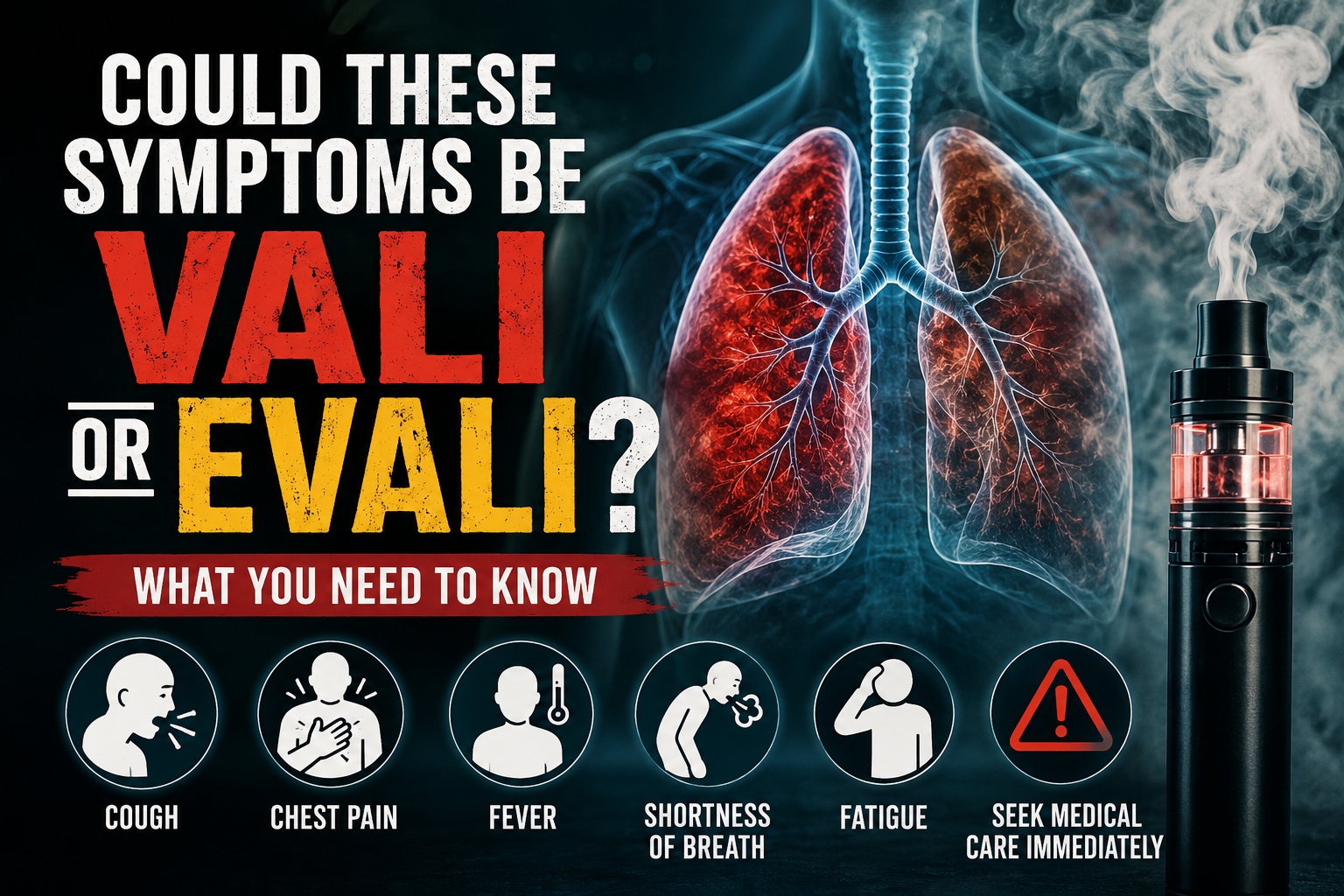
VALI is the term used in Canadian public-health guidance for vaping-associated lung illness. EVALI is the U.S. term commonly used in research and reporting for e-cigarette or vaping product use-associated lung injury. PHAC describes VALI as a serious acute respiratory illness associated with a history of vaping that may require hospitalization.
A symptom checklist cannot confirm VALI or EVALI. Diagnosis requires clinical evaluation and consideration of other possible causes.
Canada did not identify one specific cause for all VALI cases. Vitamin E acetate was linked to many U.S. outbreak cases involving THC-containing vaping products, particularly unregulated products, but PHAC states that vitamin E acetate was not identified in Canadian VALI cases.
| Important diagnostic boundary
A cough, fever, chest discomfort, or shortness of breath does not automatically mean VALI/EVALI. These symptoms can have many causes, and only a healthcare professional can assess whether vaping-associated lung illness or another condition is present. |
For the outbreak history, vitamin E acetate evidence, and Canadian context, read our full explanation of EVALI and VALI.
When Should You Seek Medical Care After Cannabis Vaping?
PHAC advises people who currently vape or have vaped in the past and develop symptoms such as cough or shortness of breath, or who are generally feeling unwell, to see a healthcare provider or visit the nearest Emergency Department. The guidance also emphasizes telling the healthcare provider about current or past vaping.
Prompt medical assessment is particularly important when a cough is persistent or worsening, shortness of breath is increasing, chest discomfort continues, or respiratory symptoms occur with fever, chills, marked fatigue, nausea, diarrhea, or a general sense of illness.
| Emergency warning signs
Health Canada lists chest pain, trouble breathing, loss of consciousness, seizures, and a serious allergic reaction among examples of cannabis-related medical emergencies. If a medical emergency is occurring, call 9-1-1 and tell the operator that cannabis was used. |
What Should You Tell a Healthcare Provider?
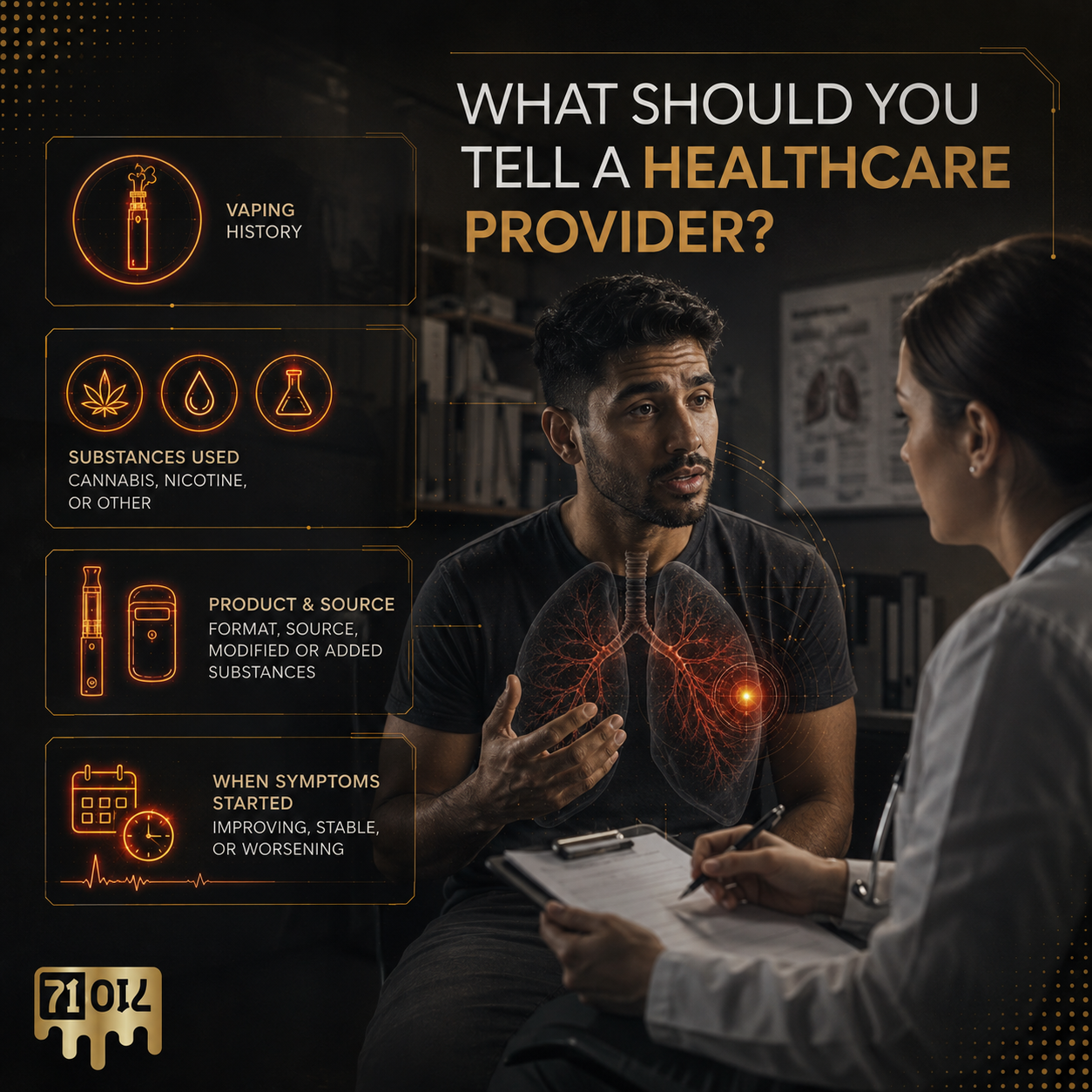
A clear exposure history can help a healthcare professional evaluate respiratory symptoms. Keep the information factual and include what you know rather than trying to interpret the symptoms yourself.
- Whether you currently vape or have vaped in the past.
- Whether the product contained cannabis, nicotine, or another substance, if known.
- The product format and source, and whether it was modified or used with added substances, if known.
- When the symptoms began and whether they are stable, improving, or worsening.
Do not try to diagnose yourself from home measurements, online symptom scores, imaging examples, or laboratory information. The purpose of sharing the vaping history is to give the clinician relevant context.
What Should Adults Do if Symptoms Start or Worsen?
Do not continue using a product simply to see whether the symptom repeats. Health Canada advises people who experience cannabis side effects that are a significant concern to stop using cannabis and seek immediate medical attention. For less urgent concerns, discuss symptoms with a healthcare professional rather than relying on a product change as a substitute for assessment.
For adults who choose to use cannabis, Health Canada recommends choosing legal cannabis from authorized retailers and following manufacturer instructions for vaping accessories. Legal products are regulated and tested for specified requirements, but legal status does not make cannabis vaping risk-free. Avoid modifying a vape product or adding substances not intended by the manufacturer, and stop using damaged or malfunctioning hardware.
For a broader explanation of respiratory exposure, read How Does Vaping Cannabis Affect Your Lungs? For a wider view of lung, potency, impairment, dependence, and product-quality concerns, continue to What Are the Main Health Risks of Vaping Cannabis?
Frequently Asked Questions
What are the first symptoms of vaping-related lung problems?
There is no fixed “first symptom.” New or worsening cough, wheezing, shortness of breath, chest discomfort, and throat or lung irritation can occur after cannabis vaping. Fever, chills, fatigue, nausea, or diarrhea can also occur with VALI. Symptoms are not a diagnosis, so severity and progression matter more than their order.
Can cannabis vaping make you wheeze?
Wheezing has been reported in association with marijuana vaping. A cross-sectional study found associations with wheeze, exercise-related wheeze, and nighttime dry cough, but the design cannot prove causation. New or increasing wheeze should be assessed in context, particularly if it occurs with breathlessness or chest symptoms.
How long should a cough after vaping last?
There is no reliable universal timeline that makes a cough “normal” or confirms that it is harmless. A cough that persists, worsens, keeps returning, becomes severe, or occurs with shortness of breath, chest symptoms, fever, or feeling unwell deserves medical attention rather than a fixed wait-and-see period.
Can you tell at home if vaping damaged your lungs?
No. Symptoms such as cough, wheeze, shortness of breath, and chest discomfort can have many causes. An online checklist or home observation cannot determine whether there is lung injury or identify its cause. A healthcare professional is needed to evaluate concerning respiratory symptoms.
What are the symptoms of VALI or EVALI?
Canadian VALI guidance lists respiratory symptoms such as cough and shortness of breath, and it also lists nausea, diarrhea, chills, fatigue, fever, and poor appetite. These symptoms are non-specific. VALI/EVALI cannot be confirmed from symptoms alone and requires clinical evaluation.
Should I go to the emergency room after vaping?
PHAC advises people who vape or have vaped and develop listed symptoms or feel generally unwell to see a healthcare provider or visit the nearest Emergency Department. For a medical emergency – including chest pain, trouble breathing, loss of consciousness, seizures, or a serious allergic reaction – call 9-1-1.
What Adults Should Remember About Warning Signs After Cannabis Vaping
Respiratory symptoms after cannabis vaping deserve a measured response: do not panic, but do not assume a persistent or worsening symptom is harmless. A cough, wheeze, shortness of breath, chest discomfort, or throat/lung irritation cannot diagnose lung injury on its own. Fever, chills, fatigue, nausea, or diarrhea may also matter when they occur with respiratory symptoms or a general feeling of illness.
People who vape frequently should also consider how their overall use pattern may affect risk. Read about vaping cannabis every day and why frequency matters.
VALI/EVALI is a clinical diagnosis, not something that can be confirmed from a checklist. If symptoms are persistent, worsening, severe, or concerning, seek professional medical care and mention any current or past vaping. For emergency symptoms such as chest pain, trouble breathing, loss of consciousness, seizures, or a serious allergic reaction, call 9-1-1.
Resources Used
- Public Health Agency of Canada – Vaping-associated lung illness (VALI) – Canadian terminology, symptoms, care guidance, and vitamin E acetate context.
- Health Canada – Cannabis for medical purposes: Side effects – Cannabis-specific respiratory side effects and emergency examples.
- Health Canada – Risks of vaping – Current Canadian vaping-risk language and evidence limits.
- Health Canada – Cannabis accessories for inhalation: Minimizing your risk – Cannabis-vaping definition and manufacturer-instruction guidance.
- Health Canada – Reduce your risk: Choose legal cannabis – Authorized-source and legal-product quality-control context.
- Xie Z, Li D. Cross-Sectional Association Between Lifetime Use of Electronic Cigarettes With or Without Marijuana and Respiratory Symptoms – Cannabis-associated wheeze and nighttime dry cough; observational, cross-sectional evidence.
0 Responses