

What Are the Main Health Risks of Vaping Cannabis?
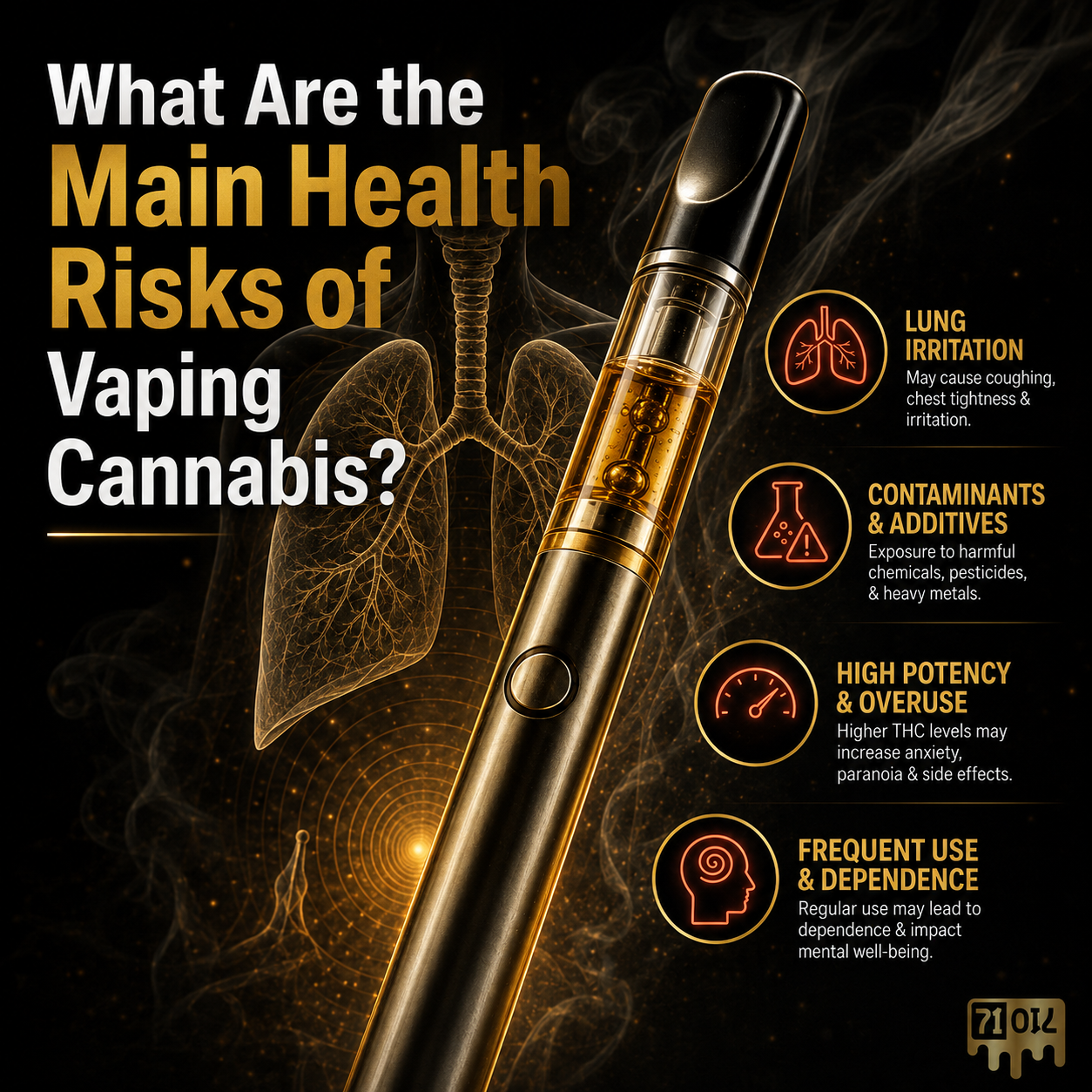
Vaping has risks, including cannabis vaping.
Understanding the health and safety of vaping can help adult cannabis customers make more informed choices about what they use, where it comes from, and how the device should be handled.
We’ll cover vaping risks, legal product checks, battery safety, and what to review before choosing a vape cartridge, vape pen, or disposable vape.
TL;DR: Health & Safety of Vaping
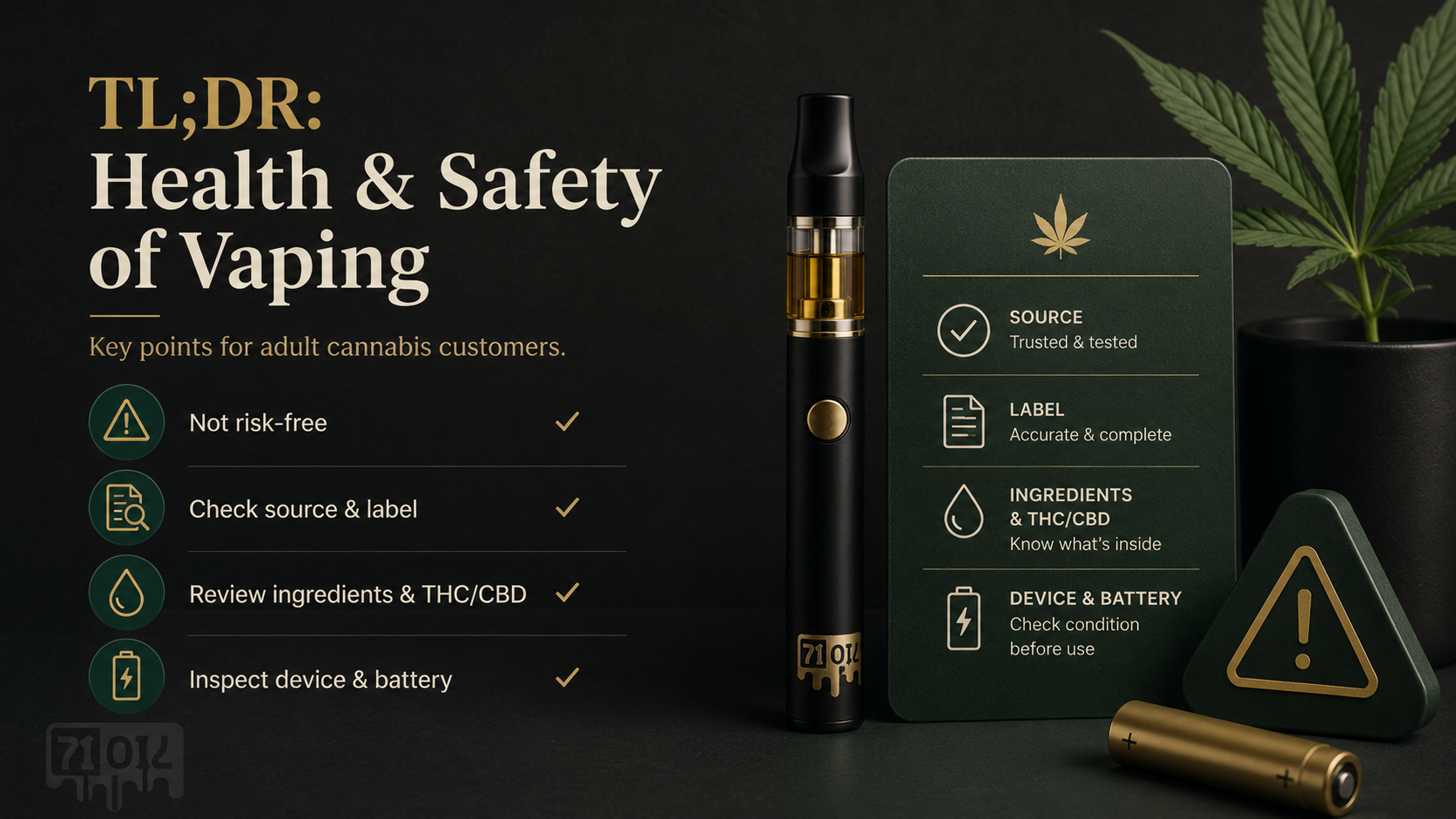
Vaping is not risk-free. This applies to cannabis vape products as well.
Adult customers should check the product source, label, ingredients, THC/CBD details, device type, and battery instructions before use.
Choose legal cannabis products when available.
Avoid unverified vape products, damaged devices, damaged chargers, and unclear product information.
What Are the Main Health Risks of Vaping?
Vaping means inhaling aerosol into the lungs. Health Canada notes that vaping aerosol can expose users to chemicals, metals, and contaminants, including formaldehyde, acrolein, nickel, and lead.
It also says some long-term effects are still being studied.
Respiratory symptoms deserve separate attention. See the early warning signs of lung problems after vaping cannabis and when adults should seek medical care.
For cannabis vape products, THC content also matters.
Canada’s Lower-Risk Cannabis Use Guidelines state that higher THC potency is strongly linked with higher short-term and long-term risks, including impairment and other adverse outcomes.
Frequency also affects the risk picture. Learn what happens if you vape cannabis every day, including tolerance, dependence, impairment, and what the evidence can currently tell us.
Cannabis dependence is one part of the broader risk picture. Review the signs of cannabis use disorder and difficulty controlling use.
Unregulated vape products may add extra risk.
CDC research on EVALI linked vitamin E acetate with serious lung injury and warned especially against THC-containing vape products from informal sources.
One serious but distinct respiratory concern is vaping-associated lung injury. Learn what VALI and EVALI mean and what investigators found during the 2019 outbreak.
Respiratory exposure is one of the main concerns associated with inhaled cannabis products. Learn more about how vaping cannabis may affect the lungs, including aerosol composition, respiratory symptoms, and warning signs.
Note: The main risks include lung irritation, exposure to unwanted chemicals or metals, stronger-than-expected THC effects, impairment, unverified ingredients, and device or battery problems.
Cannabis-related effects and impairment do not necessarily follow the same timeline. Learn how long cannabis vape effects can last, including onset, lingering effects, and impairment.
Exposure questions are not limited to the person using the device. See what current research says about secondhand cannabis vape aerosol and indoor bystander exposure.
Why Legal and Regulated Products Matter
Legal cannabis vape products are not risk-free, but they give customers more product information to review before use.
Health Canada says legal cannabis products are subject to rules for production, packaging, labelling, and sale. Legal products can also be recalled if there is a potential safety or quality issue.
Product labels also matter.
Health Canada notes that cannabis product labels must follow specific requirements and include health & safety of vaping warning messages.
Labels can help adults check details such as THC/CBD content, product type, ingredients, and intended use.
Unverified vape products may not offer the same level of transparency.
They may contain unknown ingredients, additives, or contaminants.
For this reason: adult cannabis customers should avoid illegal or unclear vape products and choose legal sources when available.
What Vape Ingredients Should Customers Check?
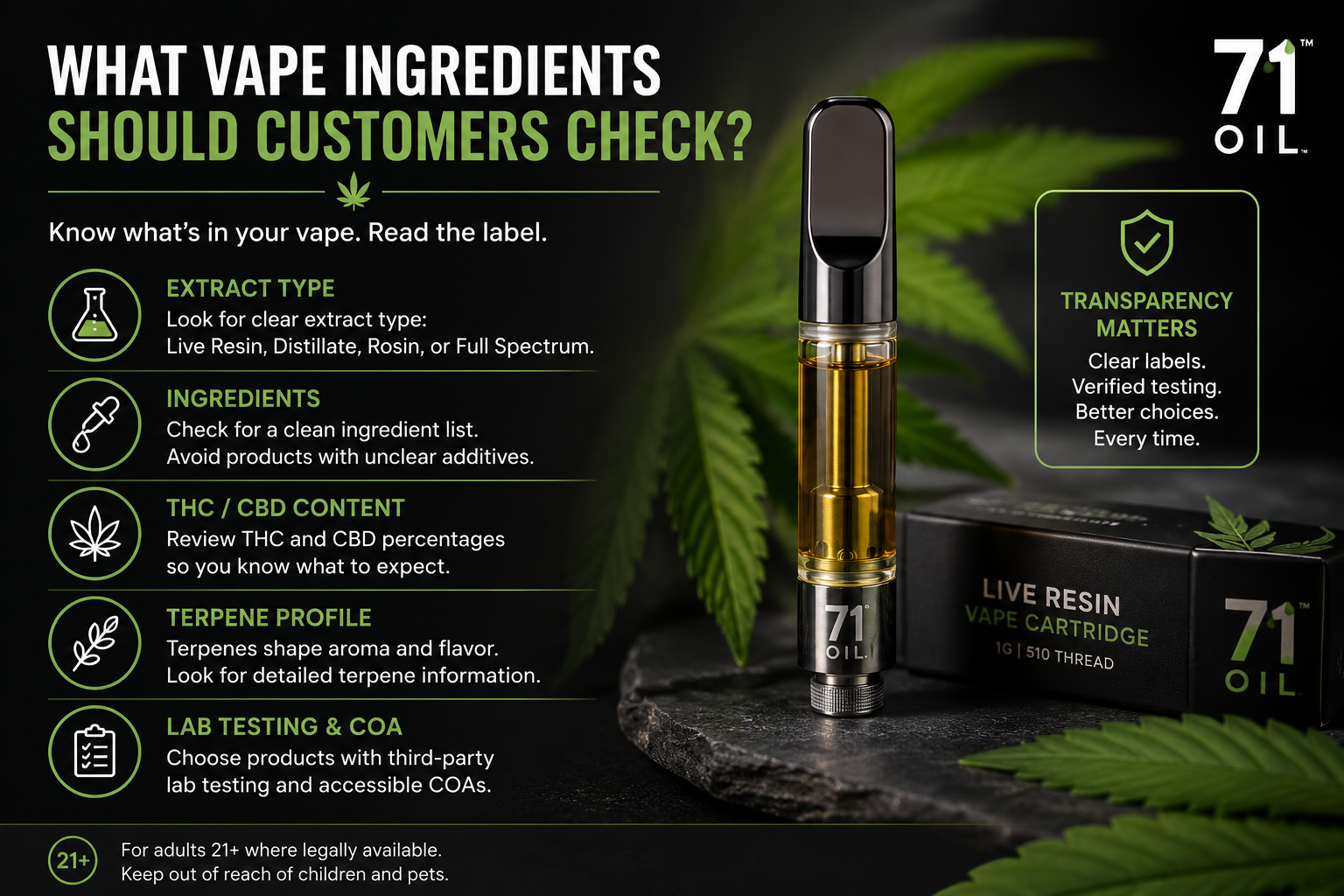
Adult cannabis customers should review the product label before using any vape product.
Health Canada says cannabis labels can include details such as THC and CBD content, product class, ingredients, health warnings, and licence holder information.
This helps customers understand what they are buying before use.
For vape products, Health Canada also notes that labels should list ingredients, including flavours.
Customers should avoid products with unclear labels, unknown ingredients, or unverified additives.
One ingredient to know is vitamin E acetate.
CDC research linked vitamin E acetate to the EVALI lung injury outbreak, especially in some THC-containing vape products from informal sources.
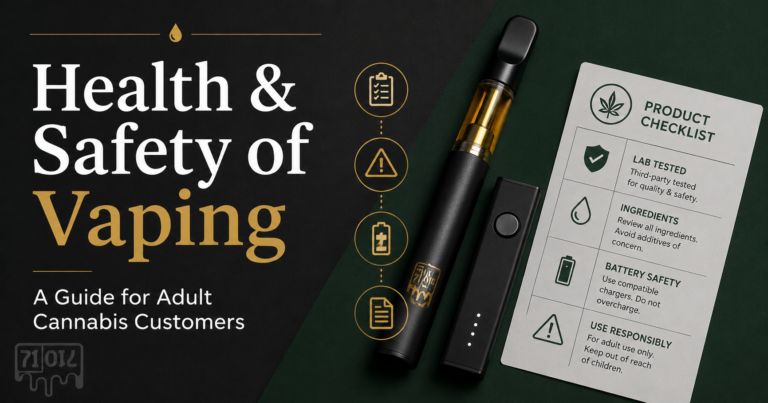
Before choosing a cannabis vape, check:
- THC and CBD content
- product type
- extract type
- ingredient list
- terpene details, if available
- lab testing or COA details, if available
- brand and legal source
Note: A clear label does not make vaping risk-free. However, it gives adult customers more information to review before choosing a vape product.
Vape Device and Battery Safety
Vape safety is not only about the extract. The device also matters.
Many vape products use rechargeable lithium-ion batteries.
Health Canada advises users to follow battery safety precautions, including using the original battery and charger when possible, avoiding damaged or modified batteries, and checking that replacement chargers match the device’s voltage and current.
For cannabis vaping accessories, adult cannabis customers should understand proper device use, battery precautions, and disposal before using rechargeable accessories.
Before using a vape device, check for:
- damaged batteries
- damaged charging cables
- overheating
- loose connections
- blocked airflow
- unclear charging instructions
- cartridge and battery compatibility
71 Oil Tip: Do not use a device that looks damaged, swollen, overheated, or modified. Follow the manufacturer’s instructions and keep vape devices away from heat, children, and pets.
Cannabis Vape Cartridges vs Disposable Vape Pens
Cannabis vape cartridges and disposable vape pens use different hardware setups. A cartridge normally requires a separate compatible battery, while a disposable or all-in-one vape integrates the battery and extract hardware into one device.
Neither format is risk-free. For the full hardware decision, compare a vape cartridge vs. disposable vape pen without treating either format as risk-free.
71 Oil Tip: Adult customers should choose based on product source, label details, device instructions, and the level of setup they are comfortable handling.
Safety Precautions for Adult Cannabis Vape Customers
Adult cannabis customers should review the product label before using any vape product.
Start Low and Wait
For THC products, use a small amount first and wait before using more. This can help reduce the risk of overconsumption and stronger-than-expected effects.
Do Not Drive After Cannabis Use
Do not drive or operate machinery after using cannabis. THC can affect attention, reaction time, coordination, and decision-making.
Buy From Legal Sources
Choose legal cannabis products when available. Legal products provide more product information, including THC/CBD details, ingredients, and label warnings.
Check the Device Before Use
Do not use damaged batteries, damaged chargers, loose connections, or devices that overheat. Follow the manufacturer’s instructions before charging or using any vape device.
Store Products Properly
Keep vape products away from heat, children, and pets. Store cartridges, vape pens, batteries, and chargers in a secure place.
Note: These steps do not remove all risks. However, they help adult customers make more informed choices before using cannabis vape products.
When Should Someone Avoid Vaping?
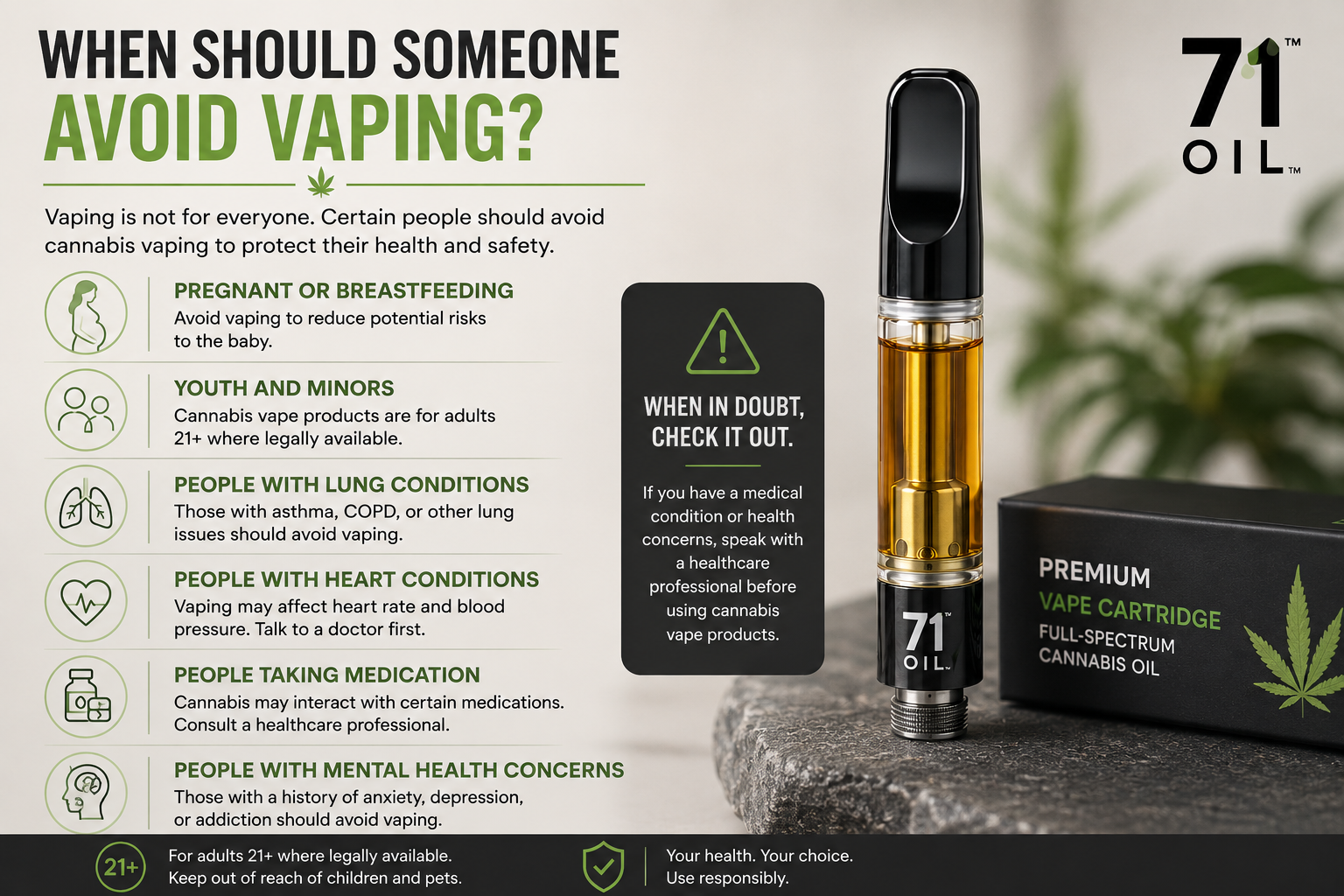
Some people should avoid vaping or speak with a healthcare professional before using cannabis vape products.
People Who Are Pregnant or Breastfeeding
Cannabis use during pregnancy or breastfeeding may carry risks and should be avoided.
Youth and Young Adults
Cannabis vape products are for adults in legal markets only. Young people may face higher risks because the brain continues developing into early adulthood.
People With Heart or Lung Concerns
Cannabis may affect heart rate, and vaping can affect the lungs. People with respiratory, cardiovascular, or other health concerns should speak with a healthcare professional before using cannabis products.
People Using Unverified Products
Avoid vape products from illegal or unregulated sources. These products may create added health and safety risks because the ingredients, additives, or device quality may be unclear.
Disclaimer: This section is not medical advice. Anyone with health concerns should ask a qualified healthcare professional before using cannabis vape products.
How To Choose a More Safety-Aware Vape Product
Choosing a cannabis vape product starts with checking the source, label, device, and product details.
Choose Legal Products
Buy cannabis vape products from legal sources when available. This gives you more product information to review before use.
Review THC and CBD Details
Check the THC and CBD content before choosing a vape product. THC-forward products may feel stronger, especially for people with lower tolerance. THC concentration changes more than product strength. See why high-THC cannabis vapes require extra caution, especially when potency and frequent use overlap.
Check the Extract Type
Look at the extract type listed on the product page or label. This may include HTFSE, distillate, live resin, or another cannabis extract format.
Review Ingredients and Terpenes
Check the ingredient list and terpene details when available. Avoid products with unclear ingredients or unknown additives.
Check Lab Testing or COA Details
Review lab testing or COA information when available. These details can help confirm product information such as cannabinoid content, extract profile, or testing status.
Match the Product to the Right Device
For vape cartridges, check battery compatibility before use. For disposable vape pens, review charging, storage, and disposal instructions.
Note: A more safety-aware choice does not remove all risk. However, it helps adult customers understand what they are using before choosing a cannabis vape product.
Frequently Asked Questions
What are the main health risks of vaping?
The main risks include lung irritation, exposure to unwanted chemicals or metals, impairment, stronger-than-expected THC effects, and risks from damaged devices or unverified products.
Is vaping cannabis safe?
Cannabis vaping is not risk-free. Adult customers should review the product source, label, THC/CBD details, device instructions, and battery condition before use.
What safety precautions should I follow when using a vape?
Buy from legal sources, read the product label, check the device, avoid damaged batteries or chargers, store products properly, and do not drive after using cannabis.
What vape ingredients should I avoid?
Avoid products with unclear labels, unknown additives, or unverified ingredients. Legal cannabis products provide more information for customers to review before use.
Is a legal cannabis vape product safer than an unregulated vape?
Legal cannabis products give customers more product information, including label details, ingredients, and THC/CBD content. However, legal products are still not risk-free.
Can vaping affect the lungs?
Yes. Vaping means inhaling aerosol into the lungs, which may cause irritation or expose users to substances they should understand before use.
How should I store vape cartridges and batteries?
Store vape cartridges, disposable vape pens, batteries, and chargers in a cool, dry, secure place. Keep them away from heat, children, and pets.
Who should avoid vaping?
People who are pregnant or breastfeeding, youth, and people with lung, heart, or other health concerns should avoid vaping or speak with a healthcare professional first.
Make a More Informed Cannabis Vape Choice
Vaping has health and safety risks. That is why product source, label details, ingredients, device condition, and battery use all matter.
Before choosing a cannabis vape product, check the THC/CBD details, extract type, ingredient list, device format, storage instructions, and available lab testing or COA information.
For adults in legal markets, 71 Oil offers vape cartridges, disposable vape pens, and 510 cart batteries with clear product details to help customers compare options before choosing a vape format.
Always review product information and follow manufacturer instructions before use.
References:
- Health Canada. (2026). Consider the consequences of vaping. Government of Canada. https://www.canada.ca/en/services/health/campaigns/vaping.html
- Health Canada. (2019). Canada’s lower-risk cannabis use guidelines. Government of Canada. https://www.canada.ca/en/health-canada/services/drugs-medication/cannabis/resources/lower-risk-cannabis-use-guidelines.html
- Krishnasamy, V. P., Hallowell, B. D., Ko, J. Y., Board, A., Hartnett, K. P., Salvatore, P. P., Danielson, M., Kite-Powell, A., Twentyman, E., Kim, L., Cyrus, A., Wallace, M., Melstrom, P., Haag, B., King, B. A., Briss, P., Jones, C. M., Pollack, L. A., Ellington, S., & Lung Injury Response Epidemiology/Surveillance Task Force. (2020). Update: Characteristics of a nationwide outbreak of e-cigarette, or vaping, product use–associated lung injury — United States, August 2019–January 2020. Morbidity and Mortality Weekly Report, 69(3), 90–94. https://doi.org/10.15585/mmwr.mm6903e2
- Health Canada. (2026, May 19). Reduce your risk: Choose legal cannabis. Government of Canada. https://www.canada.ca/en/health-canada/services/drugs-medication/cannabis/personal-use/reduce-risk-choose-legal.html
- Health Canada. (2026). How to read and understand a cannabis product label. Government of Canada. https://www.canada.ca/en/health-canada/services/drugs-medication/cannabis/personal-use/how-read-understand-cannabis-product-label.html
- Health Canada. (2022, June 28). Packaging and labelling guide for cannabis products. Government of Canada. https://www.canada.ca/en/health-canada/services/cannabis-regulations-licensed-producers/packaging-labelling-guide-cannabis-products.html
- Health Canada. (2026). Vaping product safety. Government of Canada. https://www.canada.ca/en/health-canada/services/smoking-tobacco/vaping/product-safety.html
- Health Canada. (2025). Battery safety: Lithium-ion batteries. Government of Canada. https://www.canada.ca/en/health-canada/services/household-products/battery-safety/lithium-ion.html
0 Responses