

What Are the Signs of Cannabis Vape Dependence or Addiction?
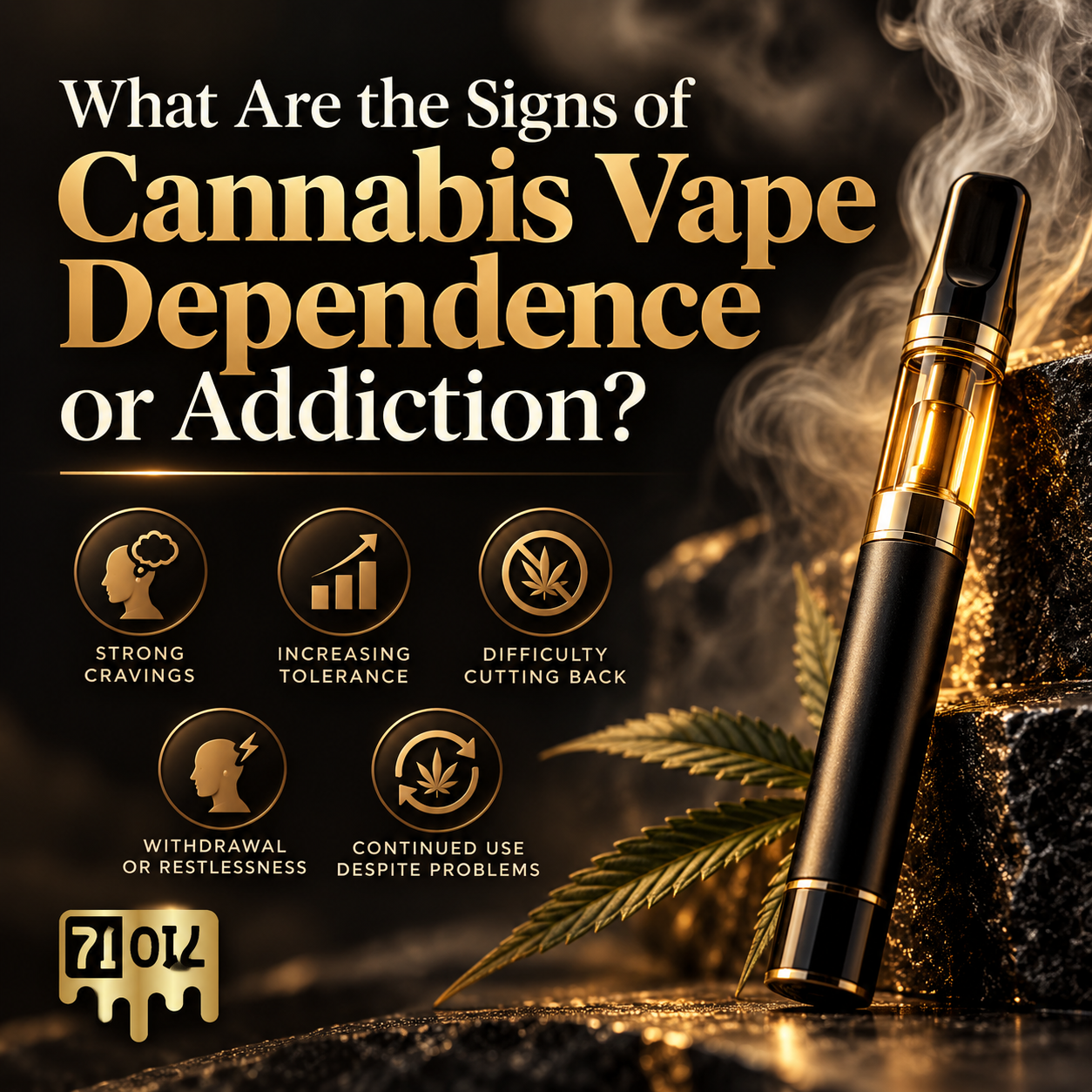
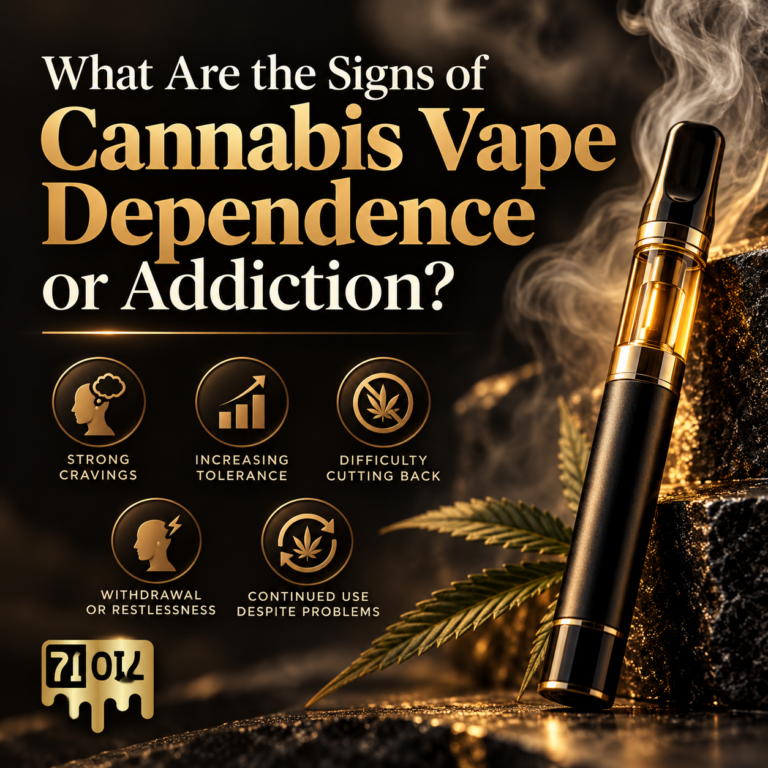
Cannabis vape use can become difficult to control for some adults, especially when use is frequent or THC exposure is high. Signs of cannabis vape addiction or dependence can include strong cravings, using more than intended, repeated difficulty cutting down, rising tolerance, withdrawal-like symptoms, or continuing to use despite meaningful problems.
These patterns do not affect everyone in the same way, and no single sign proves that someone has an addiction. Health Canada and the U.S. Centers for Disease Control and Prevention (CDC) describe problematic cannabis use in terms of control, consequences, tolerance, withdrawal, and the impact on daily life.
| MEDICAL INFORMATION NOTICE This article provides general adult-use education. It cannot diagnose Cannabis Use Disorder (CUD) and does not replace advice from a qualified healthcare professional. |
In This Guide
Quick Answer: What Are the Signs of Cannabis Vape Addiction?
| QUICK ANSWER: Warning signs can include strong cravings, using more cannabis than intended, repeated unsuccessful attempts to cut down, rising tolerance, withdrawal-like symptoms, and continued use despite problems. When these patterns interfere with health, relationships, work, school, finances, or safety, a healthcare professional can assess for Cannabis Use Disorder (CUD). |
Cannabis Dependence, Addiction, and Cannabis Use Disorder: What Is the Difference?
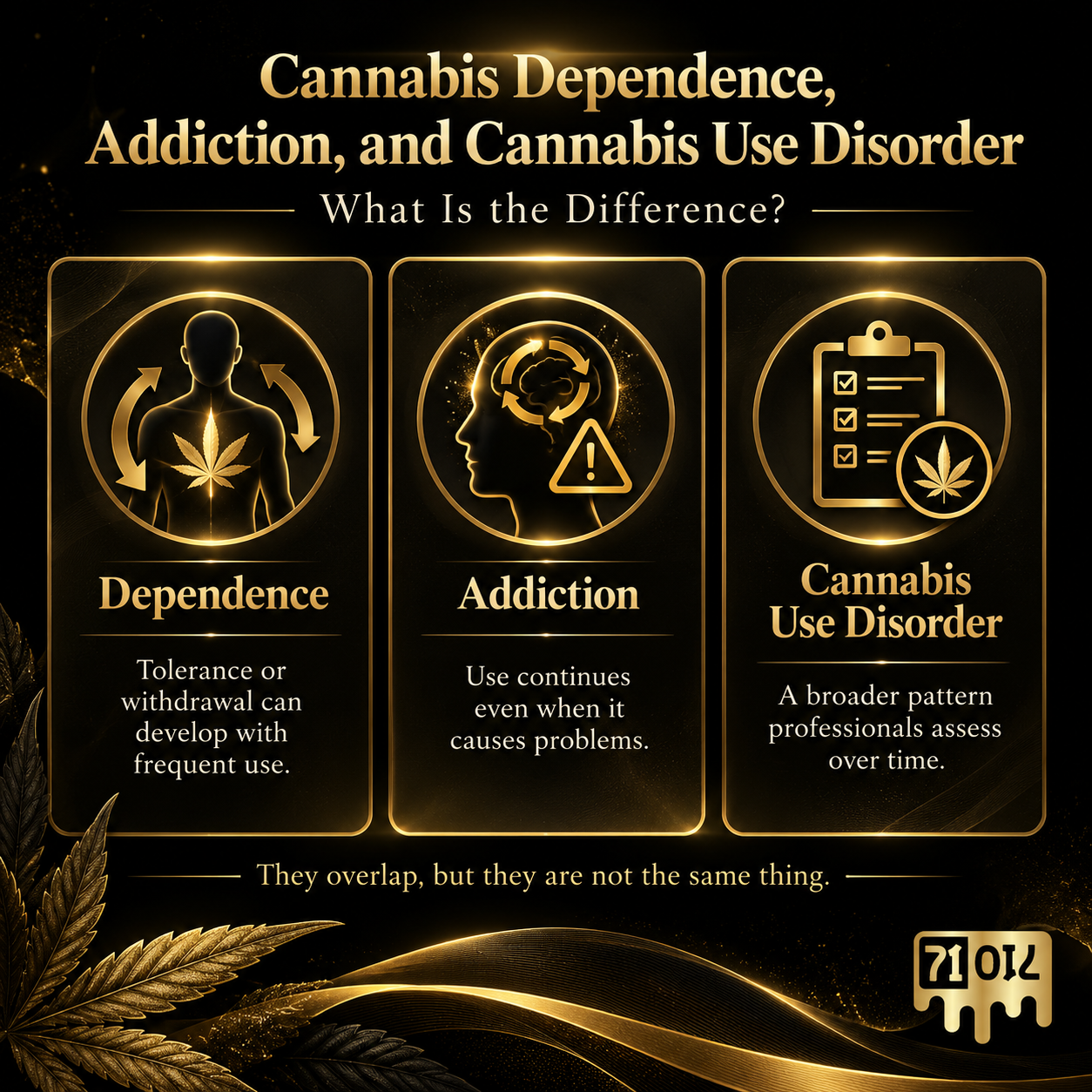
These terms overlap, but they are not interchangeable. Separating them helps avoid treating tolerance or withdrawal as proof of addiction.
| Term | What it means | Important distinction |
|---|---|---|
| Tolerance | The body adapts to repeated cannabis exposure, so a person may need more cannabis to experience similar effects. | Tolerance can occur without addiction. It becomes more concerning when it appears with loss of control or other problems. |
| Physical dependence / withdrawal | After frequent or prolonged use, reducing or stopping cannabis may produce mental or physical symptoms. | Withdrawal alone does not establish Cannabis Use Disorder. |
| Cannabis Use Disorder (CUD) | A problematic pattern of cannabis use that causes significant impairment or distress. | Diagnosis depends on a broader pattern over time and should be made by a qualified professional. |
Health Canada describes cannabis addiction as a loss of control that can affect health, social life, school, work, and finances. The CDC similarly focuses on patterns such as craving, failed attempts to quit, continued use despite problems, and high-risk use.
Tolerance
Needing more cannabis to produce an effect similar to what was previously experienced can indicate tolerance. Tolerance is a biological adaptation; it is not, by itself, a diagnosis of addiction. It is worth paying closer attention when rising tolerance appears alongside cravings, more frequent use, or difficulty reducing use.
Physical Dependence and Withdrawal
Physical dependence can become noticeable when a person significantly reduces or stops cannabis after frequent or prolonged use. Symptoms may include irritability, anxiety, restlessness, changes in sleep or appetite, depressed mood, headache, sweating or chills, or stomach discomfort. These symptoms can have other causes, so context matters.
Cannabis Use Disorder (CUD)
Cannabis Use Disorder is the clinical term for a problematic pattern of cannabis use that causes meaningful impairment or distress. An online article cannot determine whether someone meets diagnostic criteria. A healthcare professional can consider the full pattern of use, symptoms, health history, and impact on daily life.
What Signs Suggest Cannabis Vape Use May Be Becoming a Problem?
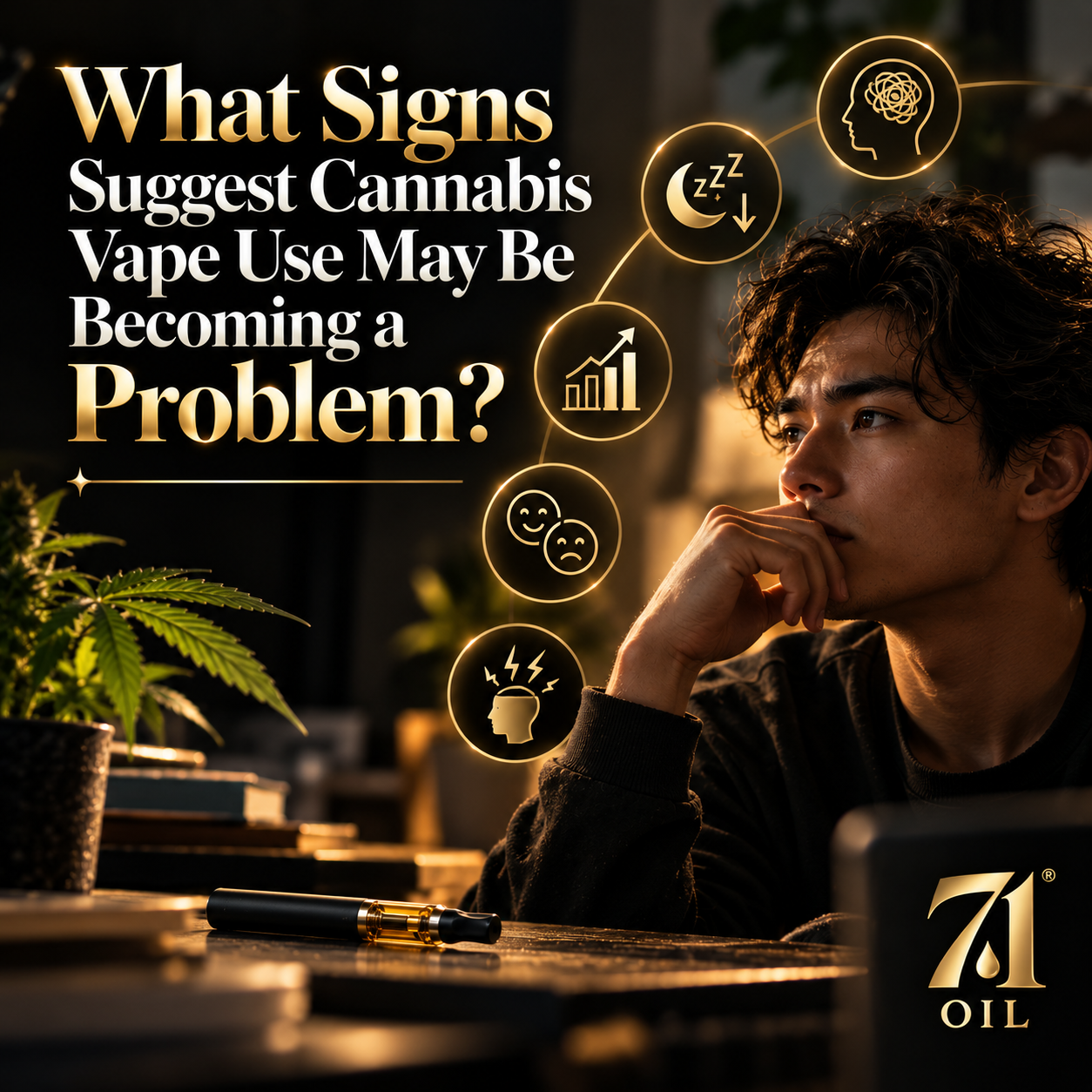
One sign alone does not prove a disorder. Patterns are more concerning when they repeat, intensify, or begin to affect control, responsibilities, relationships, health, or safety.
| Pattern to notice | What it can look like | Important caveat |
|---|---|---|
| Strong cravings or frequent thoughts about cannabis | Cannabis begins taking up more mental attention than intended, or the urge to use feels difficult to ignore. | Thinking about cannabis occasionally is not the same as persistent craving. |
| Using more or more often than intended | Frequency, amount, or timing regularly exceeds the plan a person set for themselves. | A single unplanned use does not establish CUD. |
| Repeated attempts to cut down that do not last | A person tries several times to reduce or stop but repeatedly returns to the same pattern. | Difficulty changing a pattern is a reason to seek support, not a reason for shame. |
| Needing more cannabis for similar effects | The same product or amount feels less noticeable over time, leading to higher exposure. | This is tolerance. Tolerance alone does not prove addiction. |
| Withdrawal-like symptoms after reducing or stopping | Irritability, anxiety, restlessness, sleep or appetite changes, low mood, headache, sweating/chills, or stomach discomfort. | Other conditions can cause similar symptoms; do not self-diagnose. |
| Continuing despite problems | Use continues even when it contributes to health concerns, conflict, missed responsibilities, or repeated consequences. | The pattern and impact matter more than one isolated event. |
| Giving up activities or responsibilities | Cannabis increasingly displaces work, school, home duties, hobbies, relationships, or social activities. | Functional change is an important signal to take seriously. |
| Spending increasing time around cannabis use | More time is spent obtaining, using, recovering from, or thinking about cannabis. | Time alone is not diagnostic, but a growing pattern can indicate reduced control. |
| Using in high-risk situations | Using before driving, operating machinery, or other safety-sensitive tasks. | Tolerance does not make impaired driving safe. |
The CDC’s current Cannabis Use Disorder guidance includes similar indicators, such as using more than intended, craving, failed attempts to quit, continuing despite problems, giving up important activities, high-risk use, tolerance, and withdrawal.
Does Vaping Cannabis Make Dependence Different From Other Cannabis Use?
The warning signs above are signs of problematic cannabis use. They are not a separate nicotine-style “vape addiction” syndrome. Cannabis and nicotine are different substances, and nicotine-specific dependence symptoms or quitting advice should not be transferred automatically to cannabis.
Health Canada’s current mental-health guidance advises avoiding inhalable cannabis products and states that people are more likely to use and become dependent on cannabis when they smoke or vape than when they use non-inhalable products such as oils, edibles, or capsules. That public-health guidance does not show that vaping is more addictive than smoking, and non-inhaled formats are not risk-free.
Vape cartridges and disposables may also contain concentrated THC. For a broader discussion of potency, read High THC Vape Risks: What Adults Should Know. For lung and hardware considerations, see What Are the Main Health Risks of Vaping Cannabis?.
Why Do Daily Use and High-THC Products Matter?
Health Canada identifies daily or most-days cannabis use as a pattern that can lead to dependence over time. The agency also advises avoiding products with higher THC levels, including many vapes and concentrates, because higher THC can increase the risk of dependence and mental-health harms.
That does not mean every daily user has Cannabis Use Disorder, or that every high-THC product will cause addiction. Frequency and potency are risk factors that need to be considered alongside control, consequences, individual vulnerability, and the broader pattern of use.
If you want more context on frequency, see What Happens If You Vape Cannabis Every Day?. For practical risk-reduction steps, read Cannabis Vaping Tips for Responsible Adult Use.
What Is Cannabis Withdrawal?
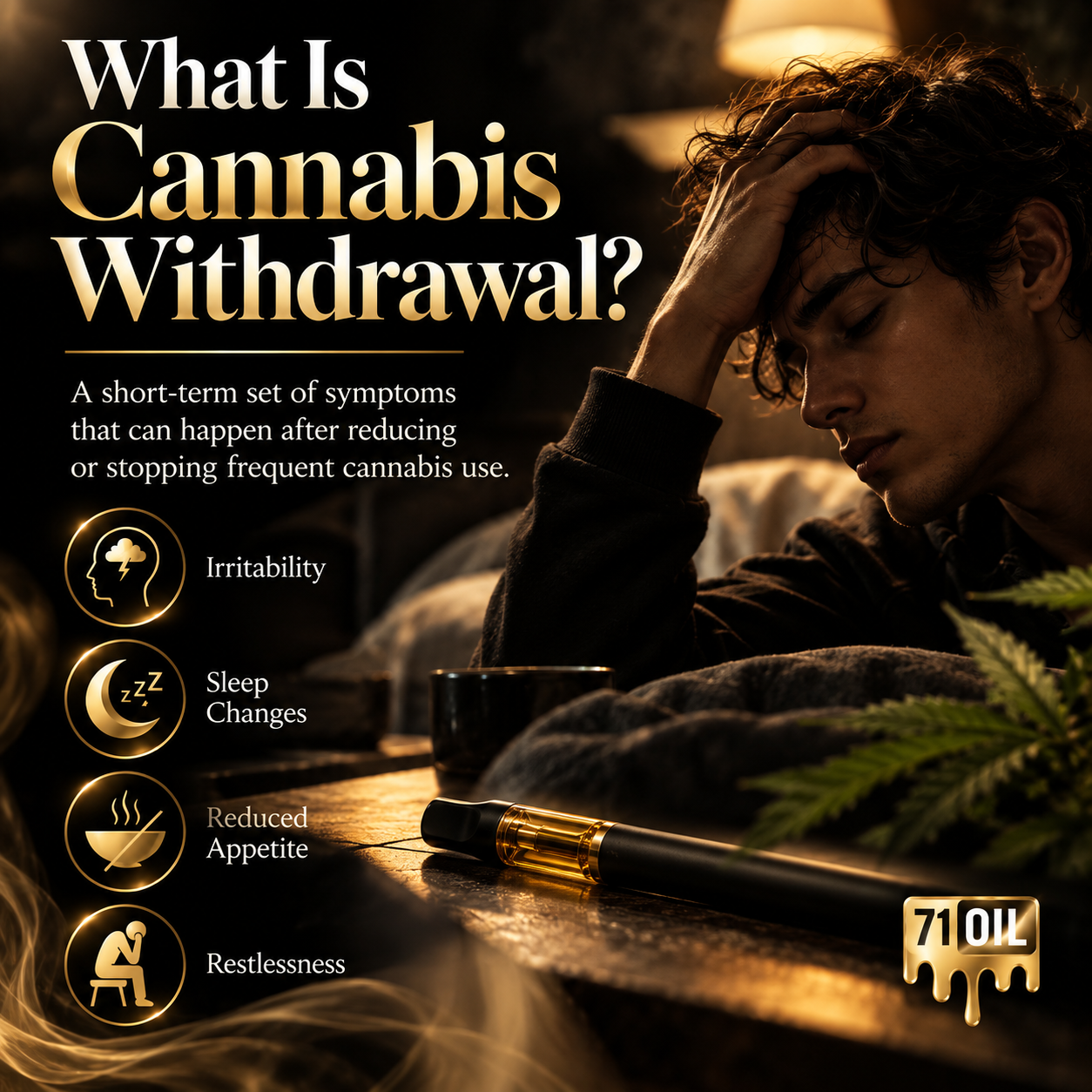
Cannabis withdrawal can occur when someone who has been using cannabis frequently or for a long period stops or significantly reduces THC exposure. It can include both mental and physical symptoms.
Health Canada lists symptoms such as craving, irritability or anger, nervousness or anxiety, sleep difficulty, decreased appetite, restlessness, depressed mood, headache, sweating or chills, shakiness, and abdominal discomfort.
A 2022 clinical review of cannabis withdrawal reported that symptoms often begin within 24–48 hours after stopping, commonly peak during days 2–6, and can last longer in some heavy users. Timing and severity vary, so these ranges should not be treated as a universal schedule.
| IMPORTANT DISTINCTION: Withdrawal can occur without a person having Cannabis Use Disorder. It is one part of the overall pattern, not a stand-alone diagnosis. |
When Should You Speak With a Healthcare Professional?
Consider speaking with a healthcare professional when cannabis use feels hard to control, repeated attempts to reduce have not worked, or use is beginning to affect health, relationships, work, school, finances, or safety. You do not need to wait until the problem feels “severe” or until you have a diagnosis before asking for help.
Health Canada’s Get help with substance use page lists Canada-wide and provincial or territorial support options. A healthcare professional can also help assess whether symptoms are related to cannabis, another health condition, or more than one factor.
| URGENT SUPPORT: If you or someone else is in immediate danger or needs urgent medical help in Canada, call 9-1-1 or go to the nearest emergency department. If you are thinking about suicide, call or text 9-8-8 for the Suicide Crisis Helpline. |
What Can You Do If You Want to Reduce or Stop Cannabis Vaping?
There is no single “fastest” approach that works for everyone. A practical first step is to look at the pattern: how often cannabis is used, what situations or triggers are linked to use, whether tolerance is changing, and what happens when you try to reduce.
Support can come from a healthcare professional, counsellor, trusted person, or substance-use service. Professional support may be especially useful if withdrawal symptoms, mental-health concerns, or repeated unsuccessful attempts to cut down are present.
If you use cannabis, avoid driving or other safety-sensitive activities while impaired. Do not use increasing tolerance as evidence that driving, work tasks, or machinery use is safe.
Frequently Asked Questions
Can cannabis vapes be addictive?
Yes. Cannabis can lead to physical dependence or Cannabis Use Disorder in some people. The risk is not the same for everyone, and using a cannabis vape does not mean addiction is inevitable. Warning signs are more meaningful when they involve repeated loss of control, cravings, failed attempts to cut down, or continued use despite problems.
Does tolerance mean you are addicted to cannabis?
No. Tolerance means that repeated exposure has reduced the effect of a given amount, so more cannabis may be needed to feel something similar. Tolerance can occur without addiction. It deserves closer attention when it appears with cravings, escalating use, unsuccessful attempts to reduce, or meaningful consequences.
Does vaping cannabis every day mean you have Cannabis Use Disorder?
No. Daily or near-daily use is a higher-risk pattern, but frequency alone does not diagnose Cannabis Use Disorder. Diagnosis considers the broader pattern of control, consequences, impairment, tolerance, withdrawal, and impact on daily life. Adults who are concerned about their use can discuss it with a healthcare professional.
What are common cannabis withdrawal symptoms?
Commonly reported symptoms include craving, irritability, anxiety, restlessness, sleep changes, decreased appetite, depressed mood, headache, sweating or chills, shakiness, and stomach discomfort. Symptoms can vary in timing and severity, and other health conditions can cause similar symptoms, so professional assessment may be appropriate.
How do you know when cannabis use is becoming a problem?
Look for patterns rather than a single event: using more than intended, repeated difficulty cutting down, cravings, continued use despite problems, giving up important activities, or using in high-risk situations. The clearest reason to seek help is when cannabis is becoming harder to control or is affecting health, responsibilities, relationships, finances, or safety.
Is cannabis vape addiction the same as nicotine vape addiction?
No. Cannabis and nicotine are different substances with different dependence patterns. Nicotine-vape symptoms and cessation advice should not automatically be applied to cannabis. For cannabis, focus on cannabis-specific indicators such as cravings, loss of control, tolerance, withdrawal, continued use despite problems, and functional impact.
Concerned About Your Cannabis Use?
Repeated loss of control or a meaningful impact on daily life deserves attention, but it does not deserve stigma. An online guide cannot diagnose Cannabis Use Disorder. If you are worried about your cannabis use, a healthcare professional or substance-use support service can help you assess what is happening and discuss appropriate next steps.
You can start with Health Canada’s substance-use support resources. You can also continue reading 71 Oil’s guides on daily cannabis vaping, high-THC vape risks, and responsible adult cannabis vaping.
Resources Used:
- Health Canada – Addiction to cannabis
- Health Canada – Cannabis and mental health
- Health Canada – Understanding cannabis health effects: How to reduce your risk
- Health Canada – Get help with substance use
- Government of Canada – Cannabis health effects
- CDC – Understanding Your Risk for Cannabis Use Disorder
- CDC – Cannabis Frequently Asked Questions
- Connor et al. (2022) – Clinical management of cannabis withdrawal
0 Responses