

What Is Cannabis Culture?
Cannabis culture is the shared language, communities, beliefs, habits, rituals, products, advocacy, and creative expression connected to cannabis.
For decades, cannabis culture existed outside legal retail. It was shaped by prohibition, stigma, underground access, activism, music, art, medical access, and changing public attitudes.
Today, cannabis culture also exists inside regulated adult-use markets. In Canada, that includes legal retailers, product labels, packaging rules, vape cartridges, concentrates, edibles, dried flower, and public-health information.
This guide explains what cannabis culture means, how it moved from counterculture to legal mainstream, and why responsible adult-use education is now part of the conversation.
TL;DR: What Cannabis Culture Means
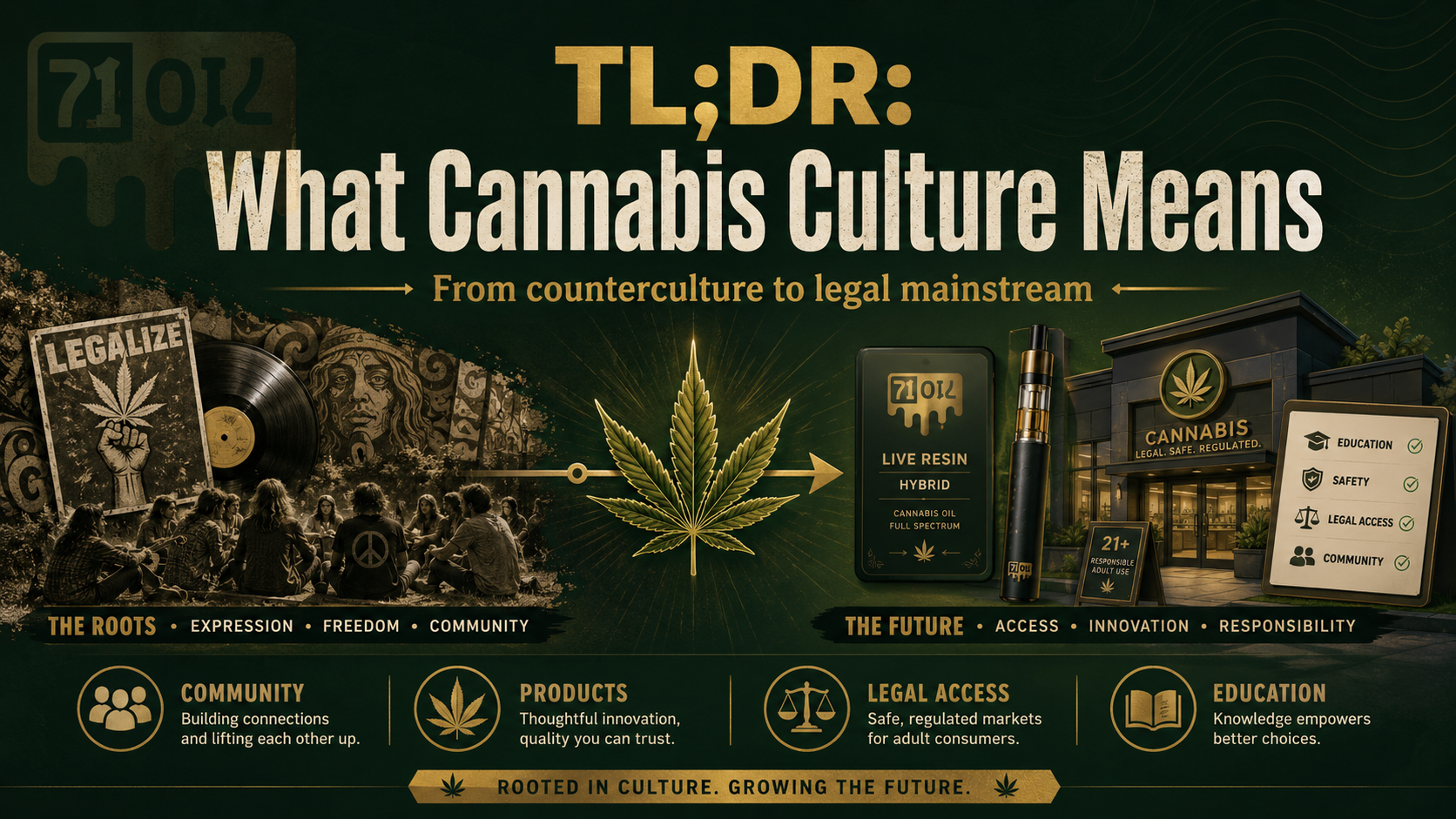
Cannabis culture refers to how people understand, discuss, buy, use, and represent cannabis within a social and legal context.
It includes history, community, stigma, activism, music, art, retail, product education, legal access, and responsible adult-use choices.
In Canada, legal cannabis products are subject to rules for packaging, labelling, promotion, production, distribution, and sale. Adults can also buy legal cannabis from authorized retailers.
Modern cannabis culture is not only about cannabis use. It is also about how cannabis is discussed, regulated, sold, understood, and used responsibly by adults in legal markets.
A Brief History of Cannabis Culture in Canada
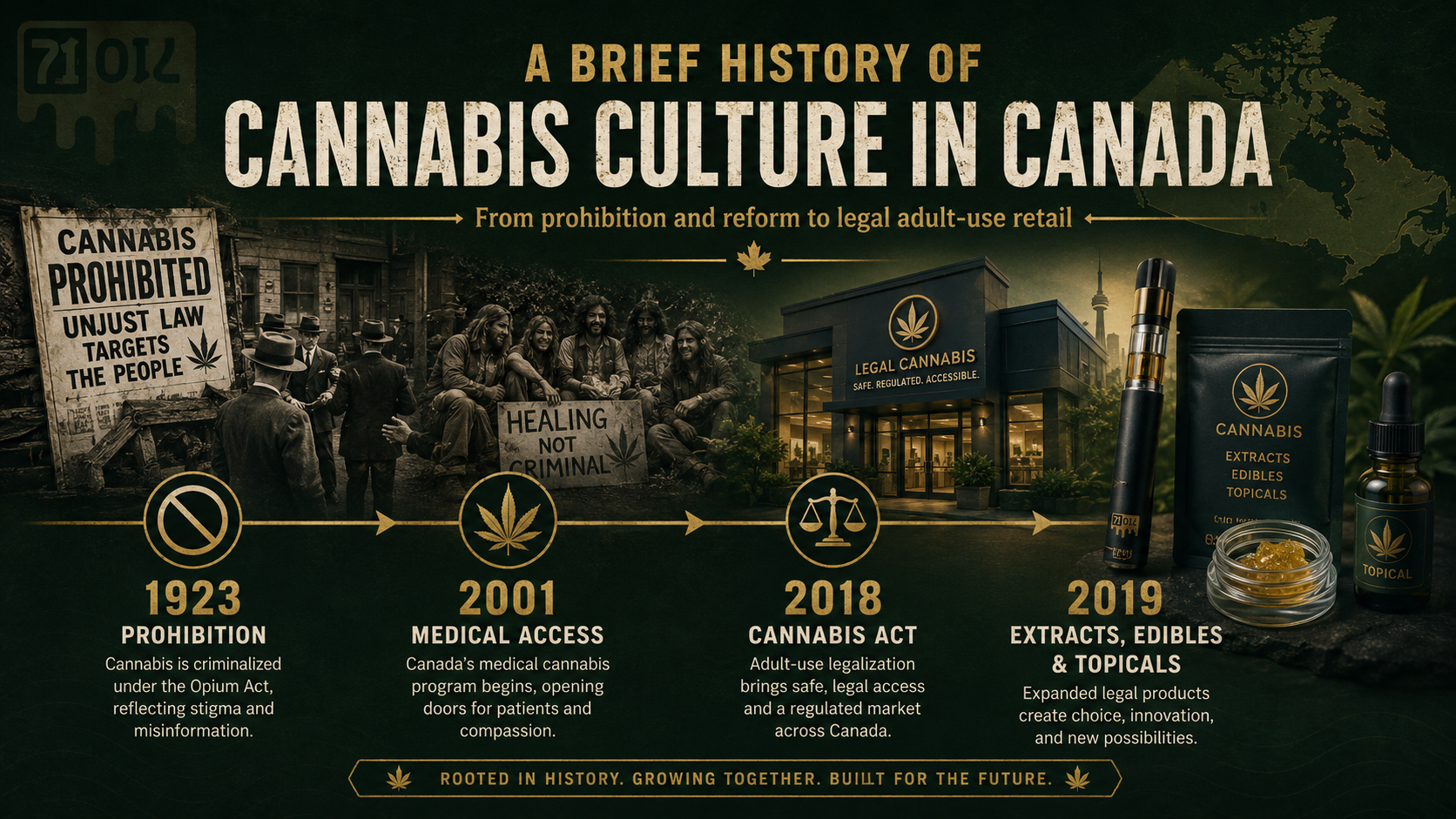
Cannabis culture in Canada developed through decades of prohibition, policy debate, medical access, legal reform, and public conversation.
The timeline below uses official Canadian sources, including the Competition Bureau’s cannabis legalization timeline and Health Canada information on the Cannabis Act and cannabis regulations.
| Year | What changed | Why it matters |
|---|---|---|
| 1923 | Cannabis was prohibited in Canada. | Cannabis moved into a criminalized legal category, shaping stigma and underground access. |
| 1969 | The Le Dain Commission was established. | Cannabis became part of a national policy debate on non-medical drug use. |
| 1972 | The Le Dain Commission recommended decriminalizing simple cannabis possession and cultivation for personal purposes. | Cannabis reform became part of public discussion. |
| 2001 | The Marihuana Medical Access Regulations were implemented. | Cannabis entered a more formal medical-access framework. |
| 2018 | The Cannabis Act came into force on October 17, 2018. | Canada created a legal framework for cannabis production, distribution, sale, and possession. |
| 2019 | The Cannabis Regulations were updated to allow legal production and sale of edibles, extracts, and topicals. | Legal cannabis expanded beyond dried flower into new product categories, including cannabis extracts. |
This history matters because cannabis culture was shaped by more than products. It was shaped by law, access, stigma, advocacy, medical use, and public debate.
Legalization did not erase that history. It changed where cannabis culture appears and how adults interact with it.
How Legalization Changed Cannabis Culture
Legalization moved cannabis from hidden access into regulated adult-use retail.
Before legal adult-use markets, cannabis culture often relied on informal names, personal recommendations, private networks, and underground supply. After legalization, adults began seeing cannabis through product categories, licensed retailers, packaging, labels, warning messages, cannabinoid information, and regulated promotion.
This changed the public conversation.
One way to understand modern cannabis culture in Canada is to look at how cannabis social acceptance in Canada has changed since legalization in 2018.
Cannabis was no longer discussed only through stigma or counterculture. It became part of retail, public health, product education, compliance, and adult-use decision-making.
In Canada, the Cannabis Act and Cannabis Regulations establish controls over cannabis production, distribution, sale, packaging, labelling, promotion, and possession.
Health Canada also explains how legal cannabis labels are structured so adults can review basic product information before buying.
That does not mean every legal product is the same. It means legal cannabis exists within a regulated system.
For adult consumers, legalization made product information more visible. Labels, package dates, cannabinoid details, product class, lot numbers, and legal source checks became part of cannabis culture in a way they were not before.
How Vaping Became Part of Modern Cannabis Culture
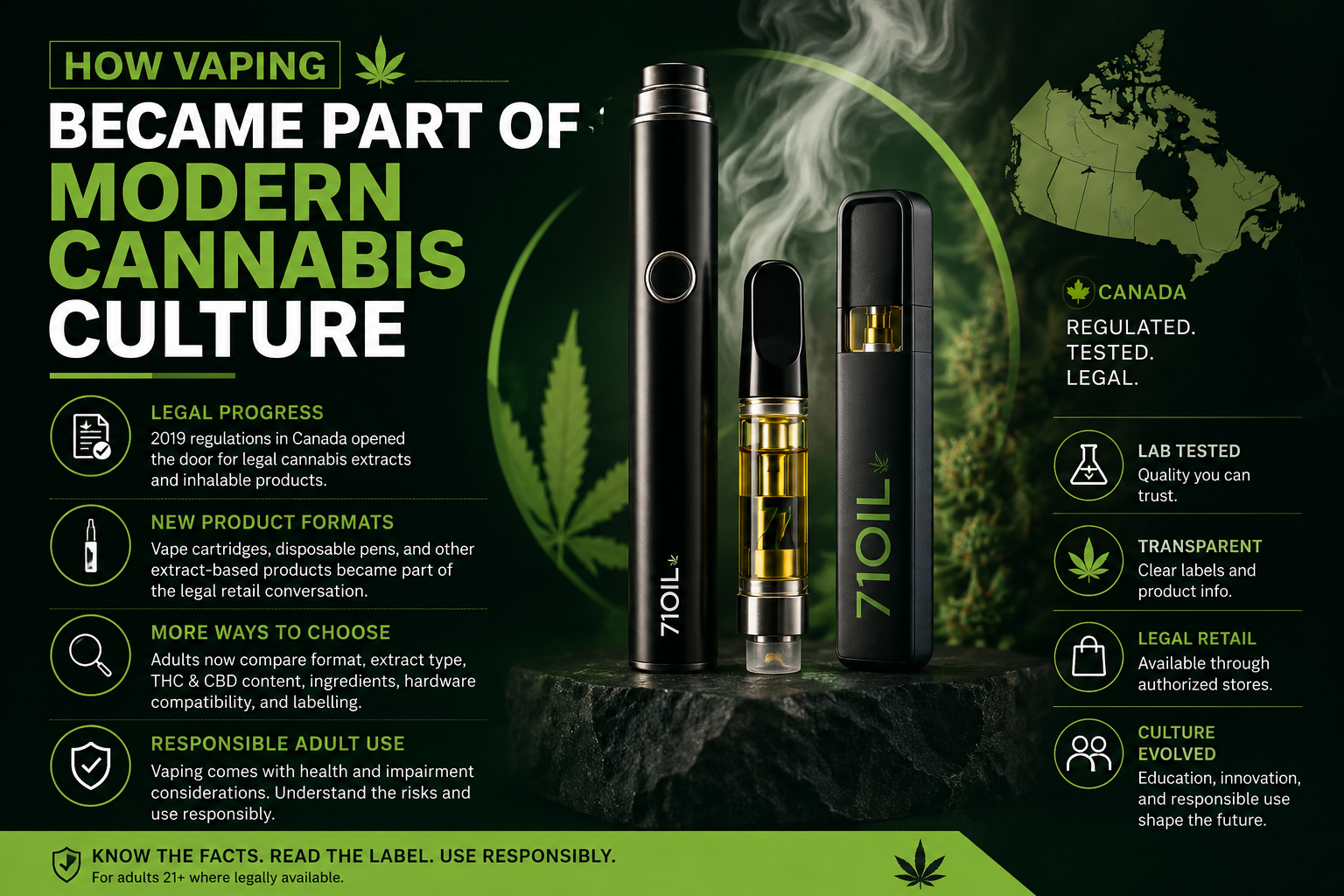
Vaping became part of modern cannabis culture as legal markets introduced more extract-based product formats. In Canada, the Cannabis Regulations were updated in 2019 to establish rules for edible cannabis, cannabis extracts, and cannabis topicals.
Cannabis extracts can include products made for inhalation. This helped bring vape cartridges, disposable vape pens, and other extract-based formats into the legal retail conversation.
This changed how some adults compare cannabis products.
Canadian cannabis habits now extend well beyond dried flower, with vaping, edibles, beverages, and other formats forming part of the legal adult-use market. See how Canadians consume cannabis and how those patterns have changed over time.
Instead of choosing only by dried flower or strain name, adults may now compare format, extract type, THC and CBD content, ingredients, cartridge compatibility, battery use, and label information.
However, vaping should not be treated only as a convenience trend.
Cannabis vaping still carries health and impairment considerations. Health Canada notes that cannabis can affect attention, coordination, memory, reaction time, and decision-making. Adults should not drive or operate machinery after using cannabis.
For a closer look at respiratory concerns, product-quality issues, and responsible-use reminders, read our guide to the main health risks of vaping cannabis.
Cannabis Culture Beyond Products
Cannabis culture is broader than retail.
It includes language, music, art, advocacy, social rituals, community identity, stigma, criminalization, medical access, and legal reform. It also includes how people talk about cannabis across generations, regions, and social settings.
Some parts of cannabis culture are historical. These include prohibition, underground access, activism, and the push for legal reform.
Some parts are creative. Cannabis has appeared in music, visual art, film, fashion, and public events.
Some parts are social. Cannabis has been connected to shared rituals, private gatherings, community language, and identity.
Some parts are political. Cannabis culture includes debates about policing, public health, legal access, medical use, impaired driving, retail regulation, and responsible adult-use education.
This is why cannabis culture should not be reduced to shopping behaviour. Products are now part of the culture, but they are not the whole culture.
Product Education and Responsible Adult Use
Product education also includes understanding common cannabis vape terms.
Many adults see phrases like weed cart, THC cart, and vape cartridge used in similar ways, but the terms are not always interchangeable. We explain the difference in our guide to weed cart vs THC cart terminology.
In legal markets, adults can review product labels before buying. Health Canada explains that cannabis labels can include THC and CBD amounts, lot number, packaging date, warning messages, and other required details.
Product listings may also include optional details that are not guaranteed on every label. These can include strain name, terpene information, aroma notes, extract subtype, or hardware details.
That distinction matters.
Required label details help adults understand regulated product information. Optional product details can help compare products, but they may vary by brand, retailer, or product page.
For vape products, education can include:
- THC and CBD information
- Extract type
- Cartridge or disposable format
- Ingredients
- Net quantity
- Lot number
- Packaging date
- Battery or device compatibility
- Storage guidance
- Available testing or product information
Responsible adult use also means understanding impairment. Cannabis can affect attention, memory, coordination, reaction time, and decision-making, and Health Canada provides specific information on cannabis impairment and safety risk.
A responsible cannabis culture does not ignore risk. It supports informed, risk-aware choices.
What Cannabis Culture Does Not Mean
Cannabis culture is not the same as encouraging cannabis use.
It is also not only about slang, stereotypes, or old counterculture images.
A serious view of cannabis culture recognizes both history and responsibility. It includes the communities that shaped cannabis before legalization and the regulations that now shape legal adult-use markets.
It also recognizes that cannabis products can cause impairment and may carry health risks. Legal status does not make cannabis risk-free.
Cannabis culture should be discussed with balance: history, access, reform, product knowledge, regulation, and responsible adult-use guidance all belong in the conversation.
How 71 Oil Fits Into Modern Cannabis Culture
71 Oil fits into the product-education side of modern cannabis culture.
As cannabis moved into legal retail, adult consumers began comparing more than strain names. They also started looking at product format, extract type for example HTFSE, cartridge compatibility, THC and CBD details, disposable vape options, concentrates, 510-thread batteries, and product information.
71 Oil’s role is to make that information clearer for adults in legal markets.
The focus is not hype. It is product clarity: what the format is, how the product is positioned, what adults should check before buying, and how vape products fit into responsible adult-use decisions.
Modern cannabis culture is stronger when legal sourcing, product education, and responsibility are part of the same conversation.
Frequently Asked Questions
What does cannabis culture mean?
Cannabis culture means the shared language, communities, history, beliefs, products, advocacy, rituals, and creative expression connected to cannabis.
How has cannabis culture changed?
Cannabis culture has moved from prohibition-era stigma and underground access into legal adult-use markets. Today, it includes both older cultural elements and newer legal-market elements such as licensed retail, product labels, vape formats, extracts, and responsible-use guidance.
Is cannabis culture only about smoking?
No. Cannabis culture includes dried flower, vape cartridges, disposable vape pens, concentrates, edibles, accessories, music, art, advocacy, medical access, legal reform, retail education, and community identity.
How does vaping fit into cannabis culture?
Vaping fits into cannabis culture through legal extract-based products, vape cartridges, disposable vape pens, 510-thread batteries, hardware compatibility, and label literacy. It should also be discussed with health and impairment risks in mind.
Why does legal sourcing matter?
Legal sourcing matters because adults can buy from authorized retailers, and legal cannabis products must follow Canadian rules for packaging, labelling, production, distribution, sale, and promotion.
Does legal cannabis mean cannabis is risk-free?
No. Legal cannabis is still cannabis. It can cause impairment and may carry health risks. Adults should read product information, avoid driving after use, and follow legal-use guidance.
Conclusion
Cannabis culture has changed from underground counterculture into a broader legal-market conversation.
It still includes history, activism, language, music, art, stigma, community, and social identity. It now also includes legal access, product labels, regulated retail, vape formats, concentrates, and responsible adult-use education.
For adults in legal markets, understanding cannabis culture means understanding both sides: where cannabis came from and how legal cannabis works today.
71 Oil supports that modern side of cannabis culture through clear product information for vape cartridges, disposable vape pens, concentrates, and 510-thread batteries.
Explore 71 Oil cannabis vape products and compare formats with clear product details before choosing.
0 Responses