

Why Do Cannabis Vape Cartridges Clog?
A cannabis vape cartridge that suddenly feels hard to draw from can be frustrating, but a clog is only one possible explanation. Restricted airflow can develop when material collects in the airway, when cooler conditions make some extracts more viscous, or when storage, battery compatibility, or hardware condition affects normal operation.
The useful first step is to identify the symptom before trying to force the cartridge to work. A tight draw is different from a dead battery, an empty cartridge, a leaking seal, or a failed heating element. Basic checks can help narrow down the cause without puncturing, dismantling, or overheating sealed hardware.
This guide is for adults of legal age in legal cannabis markets. Hardware care may reduce avoidable device problems, but it does not make cannabis vaping safe or risk-free.
| QUICK ANSWER: Cannabis vape cartridges can develop restricted airflow when extract or other material collects in the airflow path. Cooler conditions may also make some extracts move more slowly. Storage, battery settings, compatibility, and hardware condition can contribute, so identify the likely cause before troubleshooting. |
What Does a Clogged Cannabis Vape Cartridge Actually Mean?
A clogged cartridge usually means airflow through the intended airway has become restricted. Health Canada describes cannabis vaping accessories as having core parts such as a battery, mouthpiece, heating element, and chamber or cartridge. In a typical cartridge setup, those parts work together with an airflow path that carries the generated aerosol toward the mouthpiece.
If that airflow becomes restricted, the draw may feel unusually tight or blocked. That is different from a battery that cannot activate, a cartridge that is empty, or hardware that is leaking or damaged. Understanding how cannabis vapes work makes it easier to separate an airflow problem from an electrical or hardware problem.
Why Do Cannabis Vape Cartridges Become Clogged?
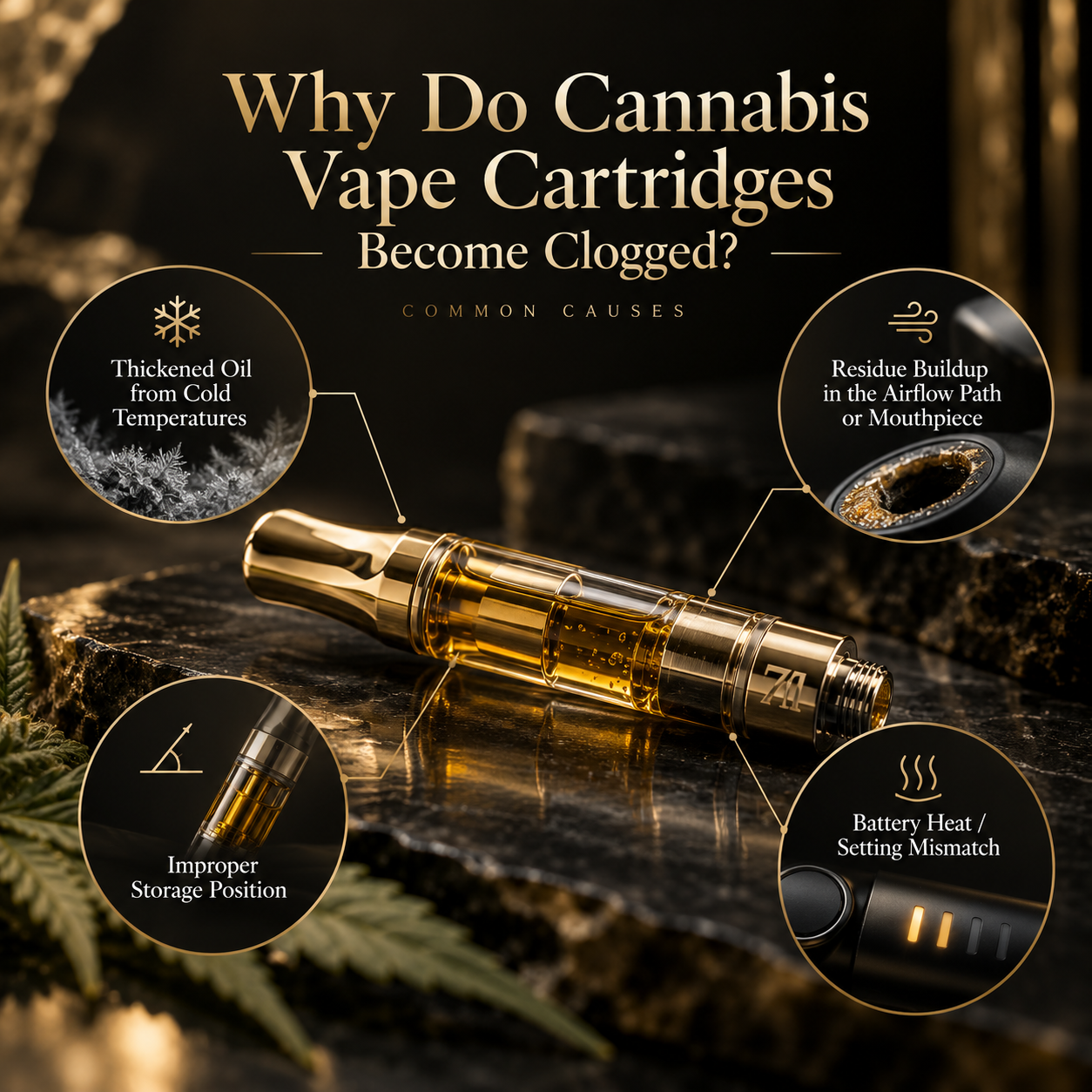
There is no single cause of cartridge clogging. The most useful approach is to treat it as a flow or hardware problem with several possible contributors rather than assuming one diagnosis from a hard draw alone.
1. Material Can Collect in the Airflow Path
As a cartridge heats and cools during normal operation, material can collect around the airway or mouthpiece. If enough accumulates in a narrow section of the airflow path, the draw can become more restricted. Visible residue near the mouthpiece does not automatically prove that the oil is defective or that the entire cartridge has failed.
2. Cannabis Extract Can Become More Viscous in Cooler Conditions
Cannabis vape extracts are not all formulated the same way. Cooler conditions can make some viscous extracts move more slowly inside a cartridge, which can affect how easily material reaches the heating area or passes around internal openings. If a cartridge has been exposed to unusual cold, let it return naturally toward normal indoor conditions rather than applying uncontrolled direct heat.
3. Storage Position and Oil Movement Can Affect the Cartridge
Storage can influence where the extract settles inside the cartridge. Follow the instructions for the actual product. Upright storage is commonly recommended for many cartridge designs, but it should not be treated as a universal rule for every device. Long periods of side storage, transport, and large temperature changes can also affect oil movement.
4. Airflow Openings or the Mouthpiece Can Become Restricted
A restriction does not always sit deep inside the cartridge. Material around the mouthpiece or another accessible airflow opening may affect the draw. If the manufacturer allows routine cleaning, limit it to accessible surfaces and the recommended method. External cleaning is different from pushing metal objects or tools into sealed hardware.
5. Battery Settings and Heat Can Affect Cartridge Performance
Battery output affects how the cartridge heating element operates. Too much or otherwise inappropriate output can contribute to abnormal heat, burnt flavour, leaking, or inconsistent performance. There is no single voltage that is correct for every cartridge. Review the best voltage for a cannabis cartridge and follow the operating guidance for the actual cartridge and compatible battery rather than treating maximum output as the goal.
6. Hardware Design or Damage Can Also Be Involved
A persistent problem may be related to the cartridge itself rather than ordinary residue or viscosity. Damaged seals, cracks, poor fit, failed heating hardware, or another manufacturing or mechanical issue can all affect operation. Do not dismantle a sealed cartridge to diagnose an internal fault. If basic checks do not resolve the problem, move to retailer or manufacturer support.
Clogged Cartridge or Something Else?
Several cartridge and battery problems can look similar at first. Use the symptom to narrow down what should be checked before assuming the cartridge is clogged.
| Symptom | Possible Explanation | First Thing to Check |
| Tight or restricted draw | Airflow restriction or clog | Check accessible airflow areas and product instructions |
| Normal airflow but no vapour | Battery, connection, setting, or empty cartridge | Check charge, seating, compatibility, and cartridge level |
| Battery flashes | Model-specific status, connection issue, or protection response | Check the battery manual and connection |
| Persistent burnt taste | Excess heat, low oil, or heating problem | Stop increasing heat and inspect the cartridge condition |
| Visible oil outside cartridge | Leak or damaged seal | Stop if damaged and follow retailer/manufacturer guidance |
| Unusual heat | Battery or hardware problem | Stop using the device and allow it to cool |
| Little or no extract visible | Cartridge may be finished | Do not repeatedly heat an empty cartridge |
If the battery is blinking, review why a vape battery may be blinking before treating the problem as an airflow clog. If the setup itself is uncertain, start with 510-thread battery compatibility.
How Can You Help Prevent Cannabis Vape Cartridge Clogs?
Not every clog can be prevented, but basic storage and hardware habits can reduce avoidable problems. The goal is normal operation within product instructions, not a promise that any cartridge will remain clog-free.
Follow the Cartridge and Battery Instructions
Health Canada recommends following the manufacturer’s instructions for proper use and disposal of cannabis vaping accessories. Start there for storage, operating settings, preheat functions, cleaning, charging, and cartridge installation. Instructions for one battery or cartridge should not be generalized to completely different hardware.
Avoid Extreme Temperature Conditions
Protect cartridges from extreme heat, direct sunlight, and freezing conditions. Large temperature changes can alter how an extract flows and how the hardware performs. Avoid leaving a cartridge inside a hot vehicle or using uncontrolled heat to change the oil consistency.
Store the Cartridge Correctly
Follow the cartridge manufacturer’s storage guidance. Cannabis products should also be stored securely. Health Canada advises keeping cannabis locked, out of sight and reach of children and pets, and in its original packaging.
Keep Accessible Airflow Areas Clean
Inspect the mouthpiece and other accessible areas for visible buildup. If cleaning is permitted, use the method specified for the product. Do not puncture, probe, or dismantle sealed components to reach internal passages.
Use Compatible Battery Hardware
A shared 510 thread is only the starting point. Fit, airflow, electrical contact, operating requirements, and battery design can still affect the pairing. Review whether 510 batteries are compatible with cannabis cartridges before connecting unfamiliar hardware.
Avoid Unnecessary Heat
More heat is not the solution to every restricted draw. Do not repeatedly increase voltage or run preheat cycles simply to force output. If normal cartridge operation requires increasingly aggressive settings, identify the underlying problem instead.
Can Preheat Mode Help a Clogged Vape Cartridge?
Sometimes, but not always. A manufacturer-supported preheat cycle may help when a minor restriction is related to cooled or thickened material and the cartridge is compatible with that function. Preheat cannot repair a cracked cartridge, failed heating element, damaged seal, persistent leak, or incompatible hardware.
Use preheat only when the battery and cartridge support it, and follow the model-specific instructions. Do not assume every device uses the same button sequence or cycle length. For the full distinction, read what preheat mode does on a vape battery.
What Should You Do If Your Vape Cartridge Is Already Clogged?
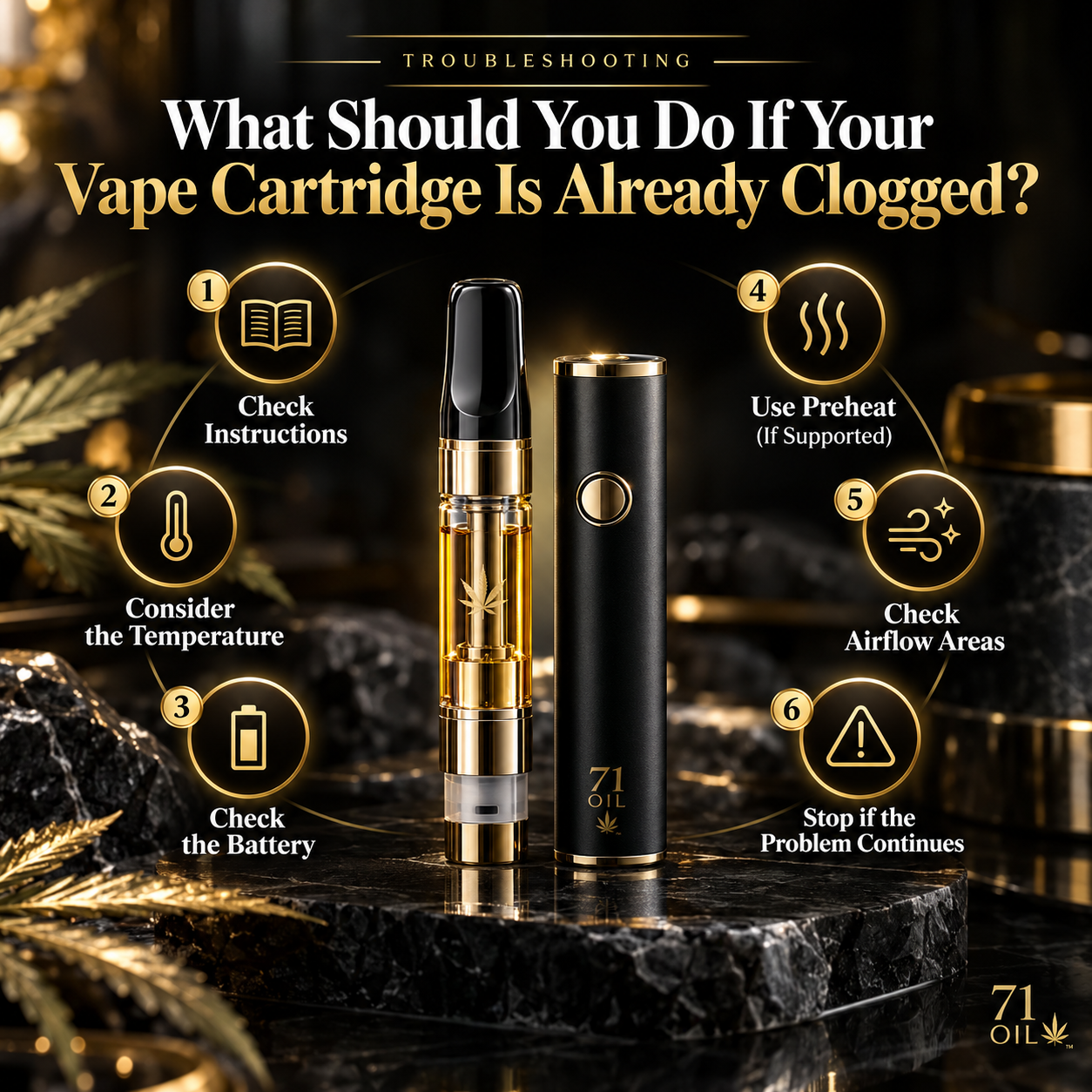
Use a conservative troubleshooting sequence. Stop if the hardware is damaged, becomes unusually hot, or continues to malfunction after basic checks.
Step 1: Check the Cartridge Instructions
Review the product guidance for storage, operating settings, airflow, preheat, cleaning, and battery requirements. This prevents a generic online fix from being applied to hardware it was never designed for.
Step 2: Consider the Temperature
If the cartridge has been exposed to unusually cold conditions, allow it to return naturally toward normal indoor conditions. Do not use a lighter, torch, microwave, boiling water, or another uncontrolled heat source.
Step 3: Check the Battery and Connection
Confirm that the battery is charged, the cartridge is seated correctly, and the hardware is intended to work together. Inspect only the accessible external connection. Do not pry or modify electrical contacts to force a connection.
Step 4: Use Preheat Only if Supported
If the manufacturer documents a preheat mode and the cartridge is compatible with it, use the function exactly as directed. Repeatedly cycling an unexplained malfunction can add unnecessary heat without addressing the cause.
Step 5: Inspect Accessible Airflow Areas
Check the mouthpiece and other accessible airflow openings for visible buildup. Clean only as permitted by the manufacturer. Avoid pushing pins, wires, needles, or other objects deep into a cartridge.
Step 6: Stop if the Problem Continues
If the draw remains restricted after basic checks, contact the retailer or manufacturer rather than escalating to invasive repair methods. A cartridge that repeatedly malfunctions may have a hardware issue that routine maintenance cannot correct.
What Should You NOT Do With a Clogged Vape Cartridge?
Avoid troubleshooting methods that add uncontrolled heat, damage sealed hardware, or bypass built-in protections.
- Do not use a lighter, torch, microwave, or boiling water to heat the cartridge.
- Do not puncture, dismantle, or probe sealed cartridge hardware.
- Do not keep increasing voltage or repeatedly running preheat to force vapour production.
- Do not modify battery contacts or bypass device protection features.
- Do not continue using a cartridge that is cracked, leaking, unusually hot, or visibly damaged.
Health Canada’s vaping product safety guidance advises consumers not to modify vaping devices and to follow manufacturer instructions for storage and recharging. The same manufacturer-first approach is appropriate when a cartridge is not operating normally.
When Should You Stop Using the Cartridge?
A clog by itself does not automatically mean a cartridge is unsafe or defective. The more important question is whether the hardware shows signs of damage or persistent abnormal behaviour.
Stop troubleshooting and follow retailer or manufacturer guidance if you notice persistent leaking, cracks, abnormal heat, damaged battery components, persistent burnt or unusual flavour, repeated malfunction, or other visible structural damage.
If the battery itself is swollen, damaged, or overheating, stop using it. Health Canada advises against using lithium-ion batteries that show signs of damage such as swelling or overheating.
How to Reduce Cartridge Problems Before They Start
A short pre-use and storage check can help catch avoidable hardware issues before they become troubleshooting problems:
- Confirm the cartridge is from a legal, authorized source and inspect its condition.
- Follow the product’s storage instructions and protect it from extreme temperatures.
- Confirm the battery and cartridge are compatible before attaching them.
- Use only supported settings and manufacturer-documented functions.
- Keep accessible airflow areas clean according to product instructions.
- Watch for leaks, cracks, abnormal heat, or repeated malfunction.
These practices can support normal hardware care, but they do not make cannabis vaping safe, healthy, or risk-free.
Frequently Asked Questions
Why does my cannabis vape cartridge keep clogging?
Repeated restriction can be related to material in the airflow path, extract viscosity, temperature changes, storage conditions, cartridge design, or hardware condition. Because several problems can create a tight draw, identify the symptom before assuming one cause.
Can cold weather cause a vape cartridge to clog?
Cold conditions can make some cannabis extracts more viscous and slower to move, which may contribute to restricted performance. Let cold hardware return naturally toward normal indoor conditions instead of applying uncontrolled direct heat.
Does preheat unclog a vape cartridge?
Preheat may help some minor restrictions on compatible hardware, especially when cooled or thickened material is involved. It will not repair cracked, leaking, failed, or incompatible hardware. Use only the preheat function documented for the specific battery and cartridge.
Is a clogged vape cartridge the same as a leaking cartridge?
No. A clog generally refers to restricted airflow, while a leak means extract is moving outside the area where it is intended to remain. The two problems can occur together, but they should not be treated as the same issue.
Why does my cartridge feel clogged even though the battery works?
The restriction may be in the cartridge airflow path rather than the battery. Temperature, oil position, residue, cartridge condition, or internal hardware can also affect the draw.
Can battery settings affect cartridge performance?
Yes. Battery output can affect heating behaviour, but there is no universal setting for every cartridge. Follow the operating guidance for the cartridge and compatible battery rather than assuming one voltage or colour mode is correct for all hardware.
How should I store a cannabis vape cartridge?
Follow the manufacturer’s storage instructions and protect the cartridge from extreme temperatures, direct sunlight, and physical damage. Store cannabis securely, out of sight and reach of children and pets.
Should I keep using a cartridge that repeatedly clogs?
If the cartridge continues to malfunction after basic manufacturer-supported checks, stop forcing it to operate. Contact the retailer or manufacturer, especially if the hardware is leaking, cracked, unusually hot, or otherwise damaged.
Keep the Airflow Problem in Perspective
A clogged cannabis vape cartridge is usually an airflow problem, but a hard draw does not identify the cause by itself. Material in the airflow path, extract viscosity, temperature, storage, battery compatibility, settings, and hardware condition can all affect how a cartridge performs.
Start with the product instructions and simple external checks. Avoid improvised heating, invasive repair, or repeatedly increasing battery output. If the cartridge is damaged, leaking, unusually hot, or repeatedly malfunctioning, stop using it and follow retailer or manufacturer guidance.
Adults comparing cartridge options can browse 71 Oil 510 cartridges and review the product specifications before pairing a cartridge with compatible battery hardware.
Resources Used:
- Health Canada — Cannabis accessories for inhalation: Minimizing your risk when smoking, vaping and dabbing
- Health Canada — Vaping product safety
- Health Canada — Safe storage of cannabis
- Health Canada — Lithium-ion battery safety factsheet
- 71 Oil — How Do Cannabis Vapes Work?
- 71 Oil — What Is a 510-Thread Battery?
- 71 Oil — Are 510 Batteries Universal?
- 71 Oil — Best Voltage for a Cannabis Cartridge
- 71 Oil — What Does Preheat Mode Do on a Vape Battery?
- 71 Oil — Why Is My Vape Battery Blinking?
Source note: Government guidance and 71 Oil internal pages checked October 5, 2026. Recheck product-specific hardware instructions and live category inventory before a future substantive refresh.
0 Responses