

How Does Vaping Cannabis Make You Feel?
Vaping cannabis can feel different from one adult to another, and even from one occasion to the next. THC-containing cannabis vapes can cause intoxication and impairment, but there is no single, predictable “vape feeling.”
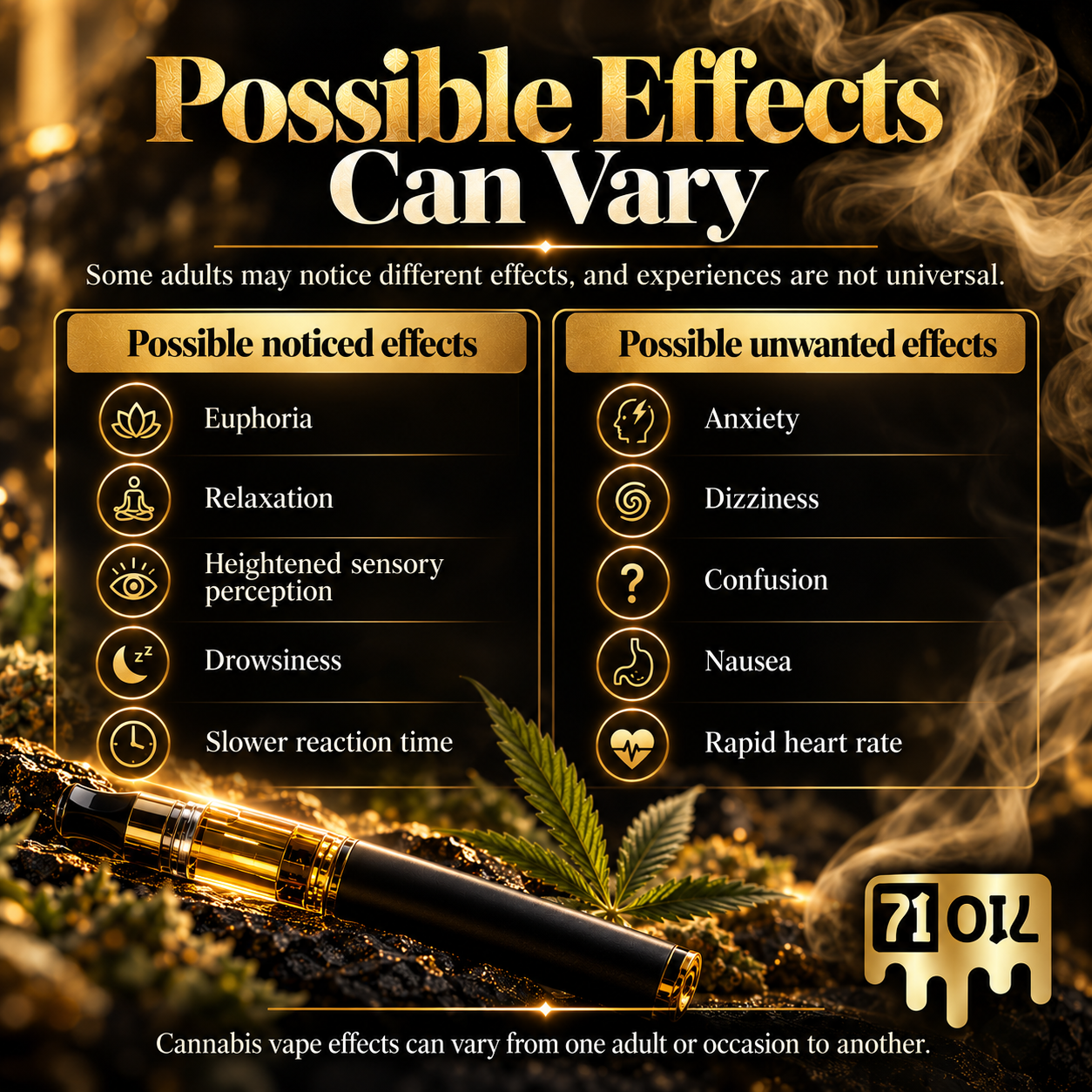
Some adults may notice euphoria, relaxation, changes in sensory perception, or drowsiness. Others may experience unwanted effects such as anxiety, dizziness, confusion, nausea, or a faster heart rate.
What you notice can depend on the product’s THC and CBD content, how much is used, prior cannabis experience, frequency of use, other substances, and individual factors. The most useful approach is to compare verified product information and understand the variables instead of expecting a strain name or THC number to predict an identical experience every time.
| IN THIS GUIDE | Click a section to jump directly | |
| 01 Quick Answer: What Can Vaping Cannabis Feel Like? | 02 How Quickly Can Effects Begin? |
| 03 Why Can the Same Vape Feel Different? | 04 Does Higher THC Mean Stronger or Better? |
| 05 Do Strain Names or Terpenes Predict the Feeling? | 06 What Can a Cannabis Vape Label Tell You? |
| 07 Responsible Adult Use | 08 Frequently Asked Questions |
Quick Answer: What Can Vaping Cannabis Feel Like?
| QUICK ANSWER
THC-containing cannabis vapes can cause intoxication and impairment. Some adults may notice euphoria, relaxation, heightened sensory experiences, or drowsiness, while others may experience anxiety, dizziness, confusion, nausea, or increased heart rate. The experience is not universal and can change with THC/CBD content, amount used, frequency, tolerance, other substances, and individual response. |
THC is the main cannabinoid associated with cannabis intoxication. If you want the foundational answer to whether a THC-containing vape can cause a high, see our guide: do cannabis vapes get you high.
| Some adults may notice | Possible unwanted effects |
|---|---|
| Euphoria or a sense of well-being | Anxiety, fear, or panic |
| Relaxation | Dizziness or feeling faint |
| Heightened sensory experiences | Confusion or disorganized thinking |
| Drowsiness, fatigue, or slower attention/reaction | Nausea, vomiting, increased heart rate, or stronger-than-expected impairment |
These are examples reported in Health Canada consumer information. They are possibilities, not a checklist or a promise of what every person will feel.
How Quickly Can Cannabis Vape Effects Begin?
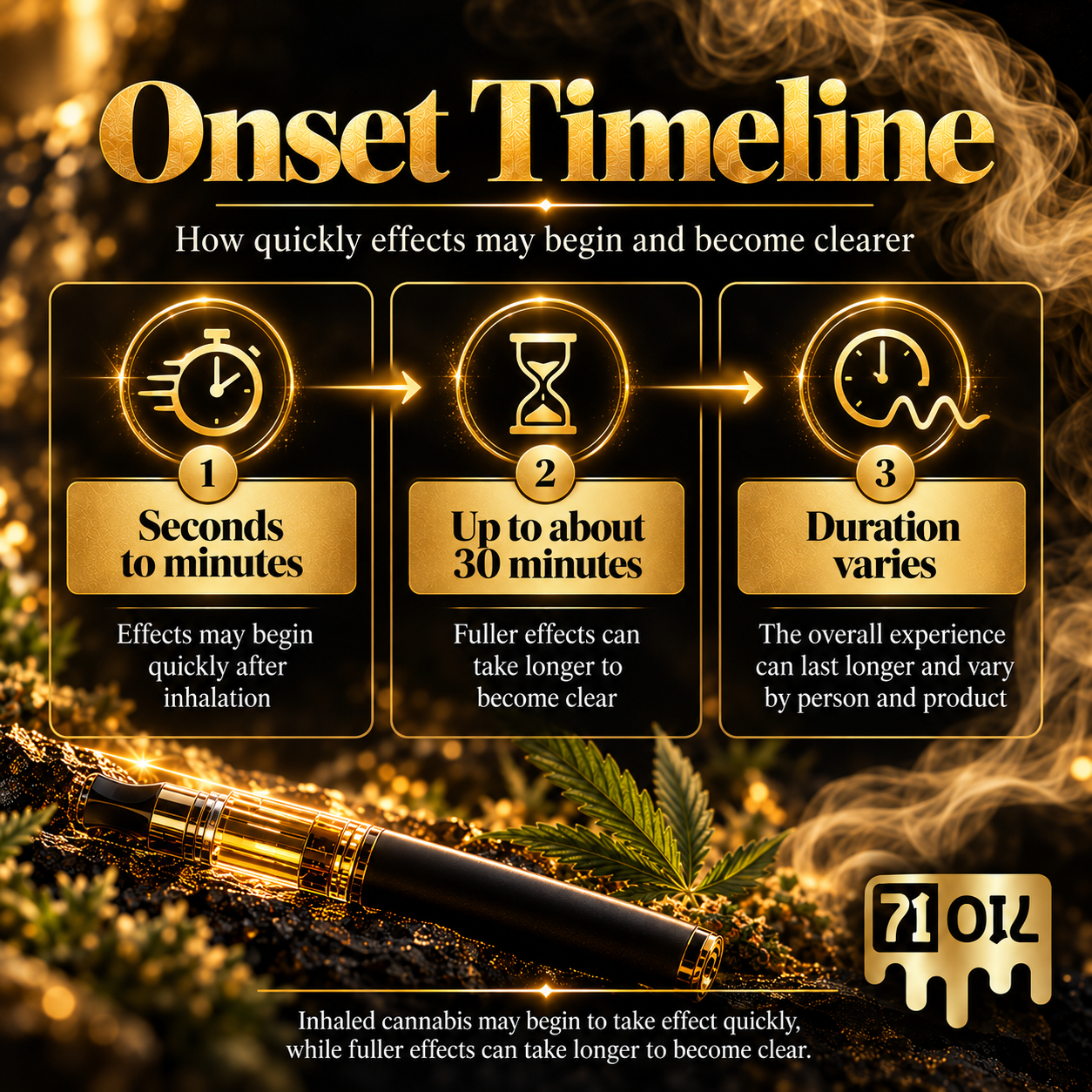
Inhaled cannabis can begin to produce effects within seconds to minutes. Cannabinoids are absorbed through the lungs, which is why inhaled products generally have a faster onset than edible cannabis. For a simple explanation of the device and inhalation pathway, see how cannabis vapes work.
Health Canada guidance notes that the full effects of smoking or vaping may take up to about 30 minutes to become clear. That distinction matters: feeling an initial effect does not necessarily mean the experience has fully developed.
| Timing | What it means |
|---|---|
| Seconds to minutes | Initial effects from inhaled cannabis may begin. |
| Up to about 30 minutes | The fuller effect may take longer to become clear. |
| Beyond onset | Effects and impairment can continue after the initial onset, and timing varies by person and product. |
This article focuses on onset and experience rather than the full duration window. For that topic, read how long cannabis vape effects last.
Why Can the Same Cannabis Vape Feel Different?
The central point is variability. Health Canada states that everyone’s response to cannabis is different and can change from one time to the next. That is why two adults can use the same product and report different experiences, or why the same adult may not experience a product exactly the same way on a different day.
THC and CBD Content
THC is the main cannabinoid responsible for cannabis intoxication. It can also affect attention, coordination, reaction time, memory, and decision-making. CBD does not produce a high or intoxication in the same way as THC, although it can still have effects on the brain and body.
Cannabinoid information therefore matters when comparing products, but it is context, not a precise prediction. A THC number cannot tell you exactly how euphoric, relaxed, anxious, alert, or impaired one person will feel.
Amount Used and Speed of Use
The amount of cannabis consumed and how quickly it is used can influence intensity and the chance of adverse effects. Rapid repeat use before the effects are clear can make the experience stronger than expected. Rather than relying on a universal puff count, adults should follow product instructions and current public-health guidance.
Tolerance, Frequency, and Cannabis Experience
Previous cannabis experience and frequency of use can affect response. Health Canada notes that some people can develop tolerance, meaning the same amount may have less noticeable effect over time. Tolerance is not a reliable measure of impairment, and it should not be used to define a “safe” amount.
Frequency matters for another reason: frequent or near-daily use is associated with higher risks, including dependence and other longer-term harms. This article does not use tolerance as a reason to recommend increasing intake.
Individual Factors
Health Canada identifies several personal and situational factors that can change the cannabis experience, including age, sex, pre-existing medical conditions, prior cannabis experience, frequency of use, food, alcohol, other drugs, and health products. These variables help explain why the same product can feel different across people or occasions.
Product Formulation and Hardware Context
The product itself provides additional context. Extract type, THC/CBD concentration, ingredients, and device performance can affect what is delivered and what the user notices. They still do not guarantee one subjective outcome.
A distillate, HTFSE, live resin, cartridge, or disposable vape should not be marketed as automatically producing a specific mood or intensity. Product format and extract category can help describe what the product is, not predict exactly how one adult will feel.
Does Higher THC Mean a Stronger or Better Experience?
Higher THC does not automatically mean a better experience or a higher-quality vape. Health Canada notes that products with higher THC levels are more likely to produce greater impairment and adverse effects. “Better,” however, is subjective and should not be treated as a potency ranking.
Total THC is useful because it helps adults compare cannabinoid concentration between regulated products. It does not tell you the exact intensity, mood, onset, or duration one person will experience. Product quality also depends on more than potency, including clear labelling, ingredients, formulation, hardware, consistency, and traceability.
Do Strain Names, Terpenes, Indica, or Sativa Predict the Feeling?
Strain names, terpene information, and indica/sativa labels can provide product identity and flavour or aroma context. They should not be treated as a guarantee that a vape will make every adult relaxed, energetic, focused, sleepy, creative, or otherwise produce a specific mood.
Terpenes are aromatic compounds that contribute to the sensory character of cannabis. When terpene information is available, it can help describe what a product may smell or taste like. 71 Oil does not use terpene names as stand-alone promises of a medical benefit or a predictable psychoactive effect.
The same principle applies to strain categories. They can be useful descriptive labels, but the finished product, cannabinoid content, formulation, amount used, frequency, and individual response remain more relevant than assuming one label guarantees one feeling.
What Can a Cannabis Vape Label Tell You, and What Can It Not Predict?
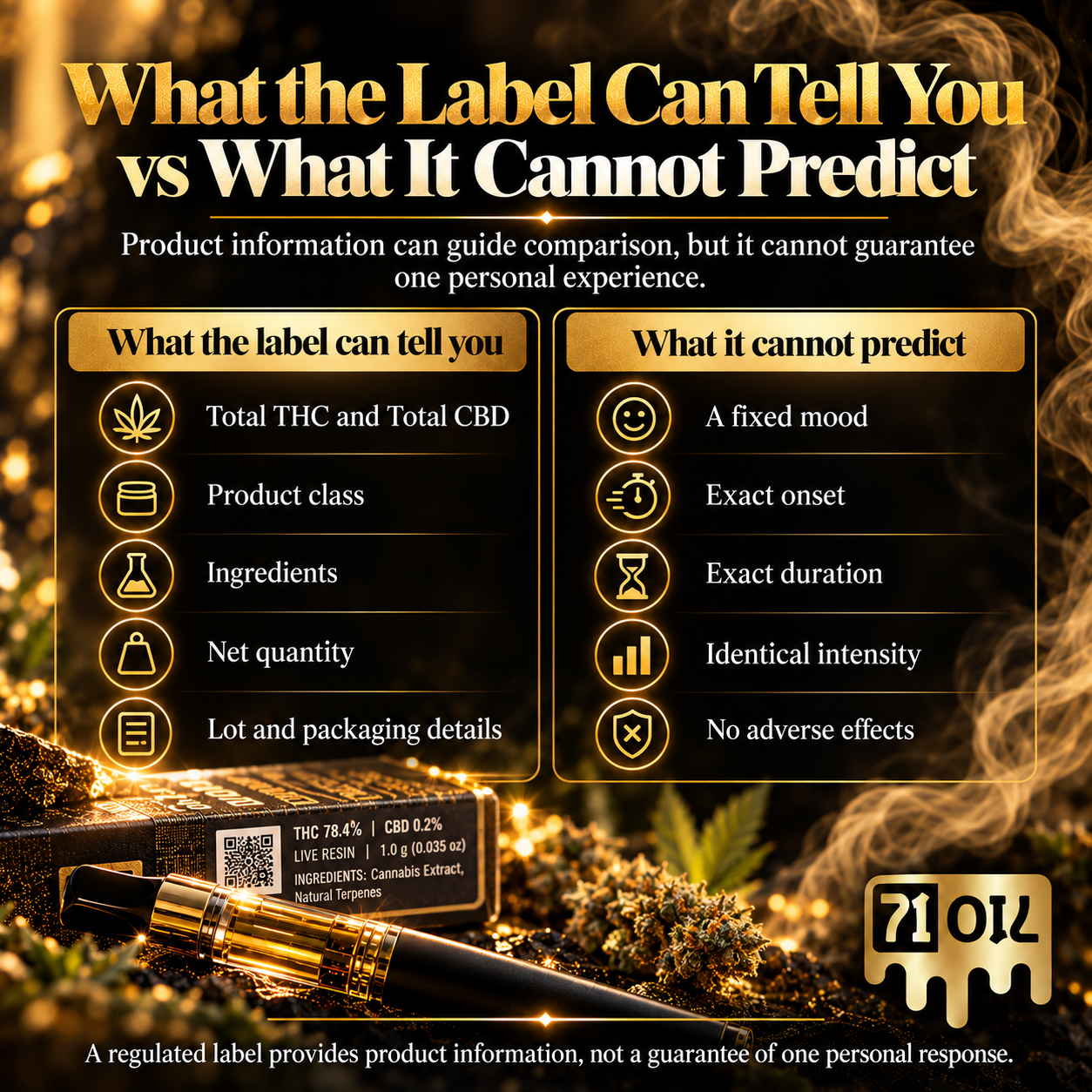
A regulated cannabis label is one of the most useful tools for comparing products because it provides standardized information. Health Canada requires legal cannabis products to display key details such as Total THC and Total CBD, product class, net quantity, health warnings, storage information, and other identifiers. Cannabis extracts also require an ingredient list.
| The label can tell you | The label cannot guarantee |
|---|---|
| Total THC and Total CBD | A fixed mood or emotional response |
| Cannabis product class and net quantity | Identical intensity for every adult |
| Ingredients for cannabis extracts | An exact onset or duration for one person |
| Required health warning and storage information | No unwanted or adverse effects |
| Lot / packaging identifiers and licence-holder information | That a product is “premium” based on THC alone |
| Optional information such as a strain name | That a strain name will create one predictable effect |
For a step-by-step breakdown of Canadian packaging, Total THC, Total CBD, ingredients, warnings, and other required information, see how to read a cannabis vape product label in Canada.
Responsible Adult Use When Effects Are Unpredictable
Cannabis use is not risk-free, and the experience can be difficult to predict precisely. Adults who choose to use cannabis can reduce avoidable risk by using legal products from authorized retailers, reading the label, following device instructions, and avoiding rapid repeat use before the effects are clear.
Do not drive or operate machinery while impaired. THC can affect attention, coordination, reaction time, judgment, and decision-making. Mixing cannabis with alcohol can increase impairment, and combining cannabis with other psychoactive substances can also increase risk.
Keep cannabis products secured and out of sight and reach of children and pets. If effects become severe or concerning, stop use and seek appropriate help. Health Canada advises calling 9-1-1 or contacting a poison centre when serious symptoms or poisoning are suspected.
For the broader checklist on source verification, labels, mixing substances, storage, driving, and device care, read our cannabis vaping tips for responsible adult use.
Frequently Asked Questions
How fast does a cannabis vape make you feel effects?
Inhaled cannabis effects can begin within seconds to minutes. Health Canada notes that the full effect of smoking or vaping may take up to about 30 minutes to become clear. Timing varies by person, product, and amount used.
Does a THC vape feel the same for everyone?
No. THC can cause intoxication and impairment, but the experience varies. THC/CBD content, amount used, prior experience, frequency, food, alcohol, other substances, health factors, and individual response can all matter.
Why can the same cannabis vape feel different on another day?
Cannabis response can vary from one occasion to the next. Changes in frequency of use, tolerance, food, alcohol or other substances, health products, and other individual factors can change what a person notices even when the product is the same.
Does higher THC always mean a stronger experience?
Higher THC increases the potential for greater impairment and adverse effects, but it does not allow anyone to predict one exact subjective response. THC percentage is a comparison point, not a universal quality score or a guarantee of intensity.
Do indica, sativa, or terpene labels predict how a vape will feel?
They should not be treated as guarantees. Strain and terpene information can help describe product identity, flavour, and aroma, but individual experience depends on more than a category name. A specific label should not be used to promise relaxation, energy, focus, sleep, or another fixed outcome.
How long do cannabis vape effects last?
Duration varies. Health Canada consumer information lists inhaled cannabis effects as typically lasting several hours, with some lingering effects lasting longer. For the dedicated timing breakdown, use the duration guide linked in the onset section above.
Compare the Product, Not a Promised Feeling
How vaping cannabis feels cannot be reduced to one strain name, one terpene, one device type, or one THC number. THC can cause intoxication and impairment, but the exact experience varies with product details, amount used, use history, other substances, and individual response.
For adults comparing cannabis vapes, the stronger approach is to review the full product: Total THC, Total CBD, ingredients, extract information, hardware format, label details, and the source of the product. Clear information supports a more informed choice than marketing that promises one predictable feeling.
71 Oil focuses on accurate product language, clear comparison points, and responsible adult-use education. Product information can provide context. It cannot promise exactly how cannabis will feel for every person or every occasion.
Resources Used
- Health Canada — What you need to know if you choose to consume cannabis
- Health Canada — Consumer information: Cannabis
- Health Canada — Health effects of cannabis
- Government of Canada — Cannabis and your health
- Health Canada — Cannabis: lower your risks
- Health Canada — How to read and understand a cannabis product label
- Health Canada — Reduce your risk: Choose legal cannabis
- Health Canada — Cannabis impairment and safety risk
- Health Canada — Addiction to cannabis
| SOURCE NOTE
Health and safety statements were rechecked against live Government of Canada / Health Canada pages on 25 September 2026. Recheck official guidance again at the time of any future substantive refresh. |
0 Responses